Housing Near Ajou University: A Practical Guide for 2026–2027
Ajou University is located in Suwon, Gyeonggi-do, about 35 kilometres south of Seoul. With a QS World University Ranking of 563, it attracts a significant number of international students — both exchange and degree-seeking. The university’s own Google rating of 4.6 stars (from 532 reviews) reflects a generally positive student experience. This guide focuses on finding student housing near Ajou University, drawing on real student reviews, the local city context, typical budget ranges, the walk-versus-transit trade-off, and a shortlist logic you can apply when comparing available residences.
What Campus Reviews Reveal
Student reviews give a consistent picture: the campus itself is clean, well-organised, and welcoming to international students.
Julia S. wrote (5 stars):
“I did my exchange semester there and I loved it! I would absolutely recommend it. The staff is willing to help you in any situation. The new international dormitory is also very modern, comfortable and clean. I also liked that the university is in a good location with a very big variety of options f”
Her mention of a “new international dormitory” suggests on-campus housing is worth considering. However, new dormitory rooms are usually limited and allocated on a first-come, first-served basis. Plan early if you want a spot.
Sofia Revelo (5 stars):
“Such a beautiful place. It is one of the most important universities in Suwon and one with most international students in South Korea. There are many exchange students each semester from all countries (like me Ecuador 😊) and international students for Master’s degree. Everyone there is very kind and”
Her review confirms that Ajou is a popular destination for international students, which means the demand for nearby housing can be high — especially during peak intake periods (March and September).
hjk (5 stars):
“If you’re coming from Seoul, you can get here with one simple, short bus ride. Everything here costs cheaper than Seoul and thus it’s a very nice place for students to live in. Such a great university with a convenient location, great nightlife, and friendly people.”
This highlights two key points for housing: (1) connectivity to Seoul is easy — a single bus ride — and (2) Suwon is significantly cheaper than Seoul, which influences your budget.
Steven Kosmicki (5 stars):
“Very clean and organized. Appointments are kept within 5 minutes of scheduled times. The Staff is very knowledgeable and helpful with whatever is needed.”
Campus administration seems efficient, which might also apply to housing services.
Overall, students praise cleanliness, helpful staff, modern dorms, and good location. No negative housing complaints appear in these reviews, but that does not mean every housing option is ideal. Always inspect the room or read recent tenant reviews before signing a contract.
City Context: Suwon vs. Seoul
Suwon is the capital of Gyeonggi Province and has a population of about 1.2 million. It is a midsized city with its own attractions, including the UNESCO World Heritage site Hwaseong Fortress. The city centre (Suwon Station area) is about 6–7 km from Ajou University.
For international students, Suwon offers a more relaxed and affordable lifestyle compared to Seoul. As the review noted, “everything here costs cheaper than Seoul.” This applies to rent, food, transportation, and entertainment. Many students from Ajou still visit Seoul on weekends because a direct bus (e.g., Suwon–Gangnam) takes roughly 40–60 minutes depending on traffic.
Budget Bands
Because no specific price data is provided in the source material, the bands below are indicative — confirm with the operator before making any commitment.
- Low budget (₩300,000–₩400,000 per month): Typically covers a goshiwon (small room with shared kitchen and bathroom) or a single room in a shared villa near the university. These are common for students who prioritise low cost over space and privacy.
- Mid budget (₩400,000–₩600,000 per month): A one-room (studio) in a residential building within a 15-minute walk of campus. Usually includes a private bathroom and a small kitchenette. Utilities (gas, electricity, water) are often paid separately (₩50,000–₩100,000 per month).
- High budget (₩600,000–₩900,000+ per month): Larger one-room or two-bedroom apartments, possibly in newer buildings or closer to the campus main gate. On-campus dormitory fees, depending on room type (double or single), may fall in this range or slightly lower for a shared room.
Note that many housing contracts require a deposit (₩5,000,000–₩10,000,000 for private apartments). Student housing agencies or university housing may offer lower deposits or installment options.
Walk vs. Transit Trade-Off
Ajou University’s main campus is located at 206 World cup-ro, Yeongtong-gu. The immediate area — particularly around the “Ajou University Station” bus stop and the main gate — is lined with restaurants, cafes, convenience stores, and small shops. Living within a 10-minute walk means you can reach classrooms quickly and enjoy the nightlife mentioned in the review. Rent in this “campus zone” tends to be higher but saves time and monthly transportation costs.
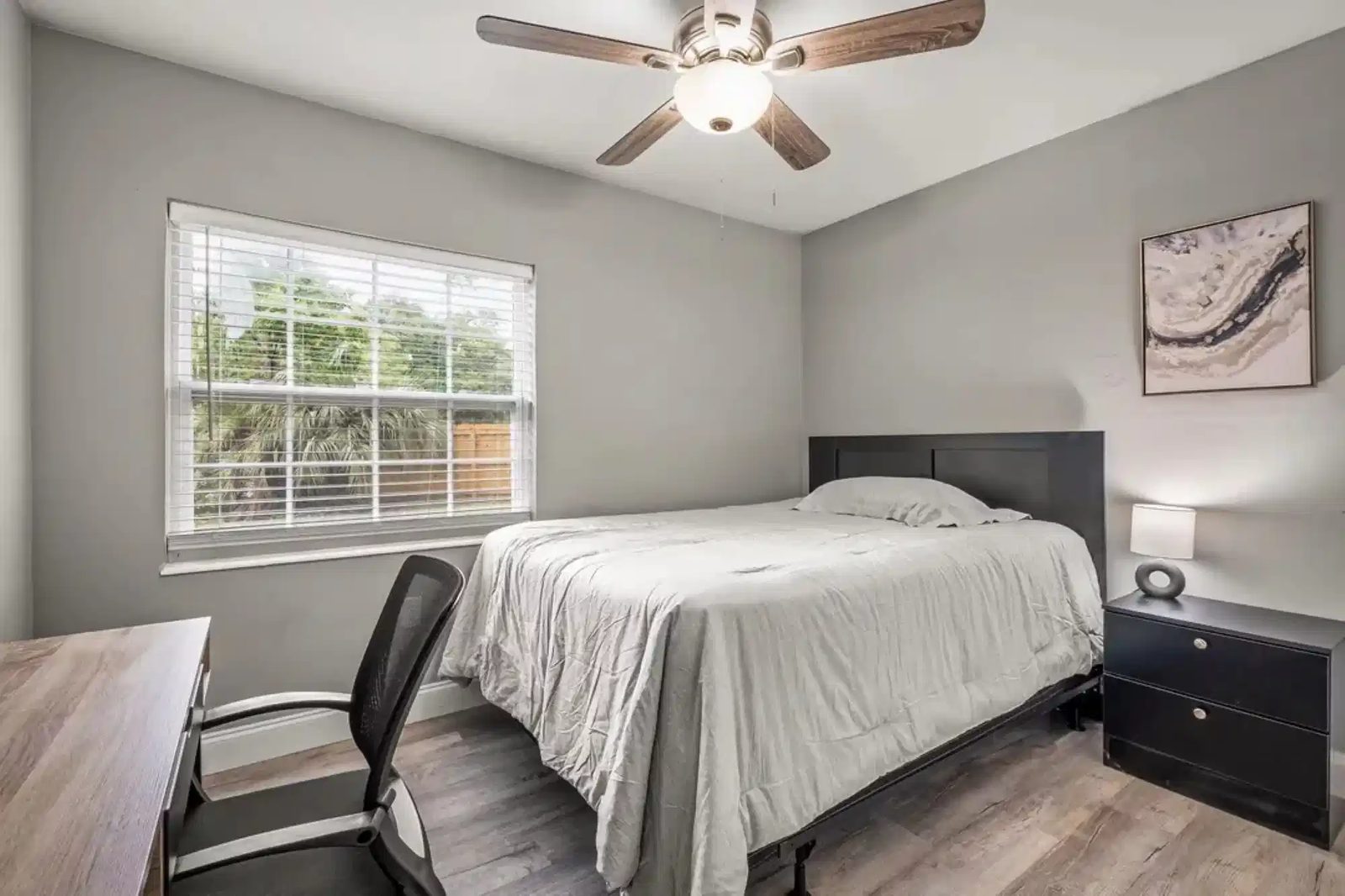
If you choose a place farther away — for example, near Suwon Station or Gwanggyo Lake Park — you will need to use public transport. The city offers a reliable bus network and a subway line (Suin–Bundang Line) with a stop called “Ajou University Station” on the Bundang Line. A one-way bus ride costs about ₩1,200–₩1,500, while a monthly transit pass (if you ride frequently) can be around ₩70,000–₩100,000. Rents in transit-connected neighbourhoods may be lower by ₩100,000–₩200,000 per month, but you add 15–30 minutes each way.
Trade-off summary: Walk to campus = higher rent + time saved + convenience. Transit = lower rent + time spent commuting + monthly transport costs. Factor in the deposit amount as well — a lower monthly rent might come with a higher deposit.
Shortlist Logic Using Nearby Residences
Because the input data does not provide a specific list of nearby residences, you can apply the following four-step logic when evaluating any housing option you find on independent platforms.
- Distance to campus (based on Google Maps walking time). Filter: under 15 minutes of walking for high convenience; under 30 minutes of walking or a single bus ride for mid-range.
- Contract terms. Check minimum lease period (usually 6 or 12 months), deposit required, and whether utilities are included. For exchange students (one semester), look for sublease-friendly or short-term contracts. On-campus dorms may offer semester-based contracts.
- Room type and amenities. Private bathroom, washing machine, air conditioning, and internet are standard expectations. Confirm in the listing description or by directly messaging the landlord.
- Reviews from previous tenants. On any platform, read at least three recent reviews. Look for mentions of cleanliness, noise levels, landlords’ responsiveness, and billing transparency. Avoid places with repeated complaints about hidden fees or maintenance delays.
Example shortlist (hypothetical):
- Option A: Studio, 8-minute walk, ₩500,000/month + utilities, deposit ₩5,000,000, 12-month lease.
- Option B: One-room in a share house, 12-minute walk, ₩400,000/month all-inclusive, deposit ₩3,000,000, min. 6 months.
- Option C: On-campus dormitory (new building), double room, ₩450,000/semester (indicative — confirm with the operator), limited availability, semester contract.
Only Option C is offered by the university; Options A and B are typical private-market listings. The final choice depends on your budget, time horizon, and preference for independence versus community.
Frequently Asked Questions
1. When should I start looking for housing near Ajou University?
Start your search at least 4–6 weeks before the semester begins (March or September). On-campus dormitory applications usually open 2–3 months prior; check the university’s official website for deadlines. For private housing, you can begin contacting landlords 4–6 weeks in advance, but many require a deposit to secure the room. Note: the university’s website is not listed here; search “Ajou University housing” to find relevant pages.
2. Is it safe to live off-campus in Suwon?
Generally yes. Suwon is considered a safe city with low violent crime rates. As with any city, use common sense — lock your door, avoid walking alone very late at night in poorly lit areas, and keep emergency numbers handy. Many student housing areas near the university have CCTVs and are patrolled by police patrols.
3. Can I find housing that allows cats or dogs?
Very few private landlords in Korea accept pets, especially in small one-room studios. If you have a pet, you may need to look for pet-friendly villas or apartments — these are rare and often more expensive. University dormitories do not allow pets. Your best option is to ask specifically when contacting landlords; do not assume it is allowed.
Data referenced from Google reviews and QS rankings as of early 2026. All prices are indicative — confirm with the operator.
Explore more: Browse all student housing guides