What Campus Reviews Reveal
Queen’s University Belfast is consistently praised by visitors and students for its striking red‑brick architecture and well‑maintained grounds. One reviewer, Akhil Jacob, gives it 5 stars and notes: “Queen’s University Belfast is an impressive and historic institution that beautifully blends academic excellence with stunning architecture. Located in the vibrant city of Belfast, the university is best known for its iconic Lanyon Building, which gives the campus a classic and elegant feel.” Another 5‑star review from Abul Hassan Ali Quddusi highlights the teaching: “Queen’s University Belfast is an outstanding university with a beautiful and historic campus. The teaching quality is excellent, and the staff are highly knowledgeable, supportive, and approachable.” A third, Vincenzonzorro (4 stars), describes the building itself: “A stunning university building. Beautiful Victorian architecture and spotless green grass.” The same reviewer, however, adds a caveat about the immediate surroundings: “Very clean although the same can sadly not be said about the surrounding area. Maybe the most beautiful building in Belfast.” Prashant Shukla (5 stars) calls it “one of the most noticeable buildings you will see in Belfast” and notes its “prestigious, well known, and research driven university” status, also appreciating the “massive campus” and “well maintained garden”.
These reviews tell a prospective student two things: the campus itself is a landmark of beauty and quality, but the areas directly outside might be less pristine. When choosing where to live, you may want to prioritise streets that feel safe and clean, while still being close enough to enjoy the campus daily. The strong academic reputation also means that many students value quiet study spaces and easy access to the library and labs.
City Context: Belfast as a Student City
Belfast is the capital of Northern Ireland and offers a relatively compact, affordable urban environment compared to other UK university cities. The city has a population of around 340,000, and Queen’s University sits in the Queen’s Quarter, a historic neighbourhood south of the city centre. The Botanic Gardens, the Ulster Museum, and the Crescent Arts Centre are all within a few minutes’ walk. The city centre (including shops, restaurants, and transport hubs) is about 1.5 miles north – a 25‑minute walk or a short bus ride.
Public transport is handled by Translink buses, with frequent services along the Malone Road, Stranmillis Road, and Ormeau Road corridors. Many students living within a mile of campus simply walk or cycle. The city has a growing cycle‑lane network, though some roads can be busy.
Belfast is generally considered a safe city, but as with any urban area, some streets are quieter than others. Students tend to cluster in the areas south of the university – Stranmillis, Malone, and the Botanic area – as well as in the Holylands district (a grid of streets between the university and the River Lagan). Purpose‑built student accommodation (PBSA) blocks are concentrated near the university and in the city centre.
Budget Bands for Student Housing
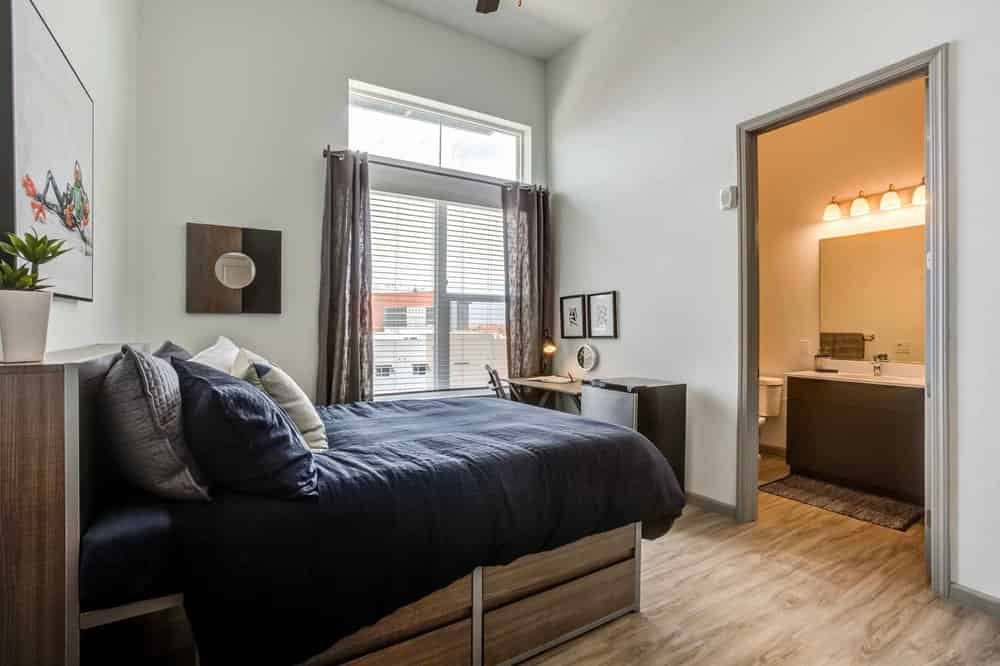
Student rents in Belfast vary significantly by property type and distance from campus. Because exact figures change each year, it is essential to treat all prices as indicative and confirm them directly with the operator at the time of booking. Broadly, three budget bands exist:
- Lower budget: Sharing a house or flat in the Holylands or Stranmillis area. These are typically older Victorian terraces converted into multiple bedrooms. Rents are generally lower than PBSA, but you may need to factor in utility bills and a longer search. Indicative monthly rent – confirm with the operator.
- Mid‑range: En‑suite rooms in purpose‑built student accommodation close to campus. Many PBSA blocks include bills, internet, and often a gym or common room. This option offers convenience and a ready‑made social environment. Indicative monthly rent – confirm with the operator.
- Higher budget: Studios or one‑bedroom flats in modern developments, either near the university or in the city centre. These provide privacy and are popular with postgraduate students. Indicative monthly rent – confirm with the operator.
Always check what is included (utilities, contents insurance, laundry) and what additional deposits or fees apply. The best way to compare is to request a quote from several providers for the same academic year (e.g. 2026/27).
Walk vs Transit Trade‑Off
Proximity to campus is the biggest factor in daily convenience. Living within a 10‑minute walk lets you roll out of bed and attend a 9 am lecture without stress. The area immediately around the university – along University Road, Malone Road, and the Stranmillis end – is popular but can be more expensive. The trade‑off is that you pay a premium for being able to walk.
If you are willing to walk 15–20 minutes, options open up in the Holylands, lower Ormeau, or even south towards the Lisburn Road. These areas often have larger houses and more green space. A 20‑minute walk is still very manageable, and you will save on rent compared to the immediate campus fringe.
Public bus routes are useful if you live further out. The Glider (Belfast’s rapid transit) runs along the main corridors; a student smartcard (iLink) offers discounted unlimited travel. A typical bus journey from the city centre or south Belfast to the university takes 10–15 minutes. Bicycles are another good option – the city is relatively flat near campus, and bike storage is usually available in PBSA.
The main trade‑off is time versus money: walking saves money and gives you exercise, but may limit your housing choices to a smaller radius. Transit widens your options but adds a daily cost and schedule dependency.
Shortlist Logic for Nearby Residences
When shortlisting student housing, start by identifying your maximum acceptable walking distance. Using a mapping tool, draw a circle around the Lanyon Building. Within a 0.5‑mile radius you will find many PBSA blocks and student houses. The next step is to filter by budget and amenities.
For lower‑budget shared houses: Look in the streets south of the university, especially in the Holylands (e.g. Adelaide Park, Donegall Park Avenue, Fitzwilliam Street). These are classic student areas with a mix of students from both Queen’s and other institutions. Expect older houses with character (and sometimes quirks). Visit in person if possible to check noise levels and property condition.
For mid‑range PBSA: Several operated buildings are clustered on or near the Malone Road, Dublin Road, and Botanic Avenue. They often have security, on‑site laundry, and social spaces. You can compare by room type (standard, en‑suite, studio), contract length (44 weeks vs 51 weeks), and whether summer storage is offered. Read the tenancy agreement carefully – some providers charge a high fee for early termination.
For higher‑budget studios: The city centre has newer PBSA with roof terraces and gyms. These are a longer walk (20–25 minutes) but put you close to shops, nightlife, and transport. Alternatively, look at the Malone / Stranmillis area for self‑contained flats in converted Victorian houses.
A logical shortlist might include: three or four PBSA blocks within 0.5 miles for comparison, plus two or three streets for private renting. Book viewings early – many popular properties are reserved by March for a September start.
Frequently Asked Questions
1. Should I live on campus or in private housing?
Queen’s University Belfast does offer some university‑managed accommodation (e.g. halls of residence), but many students choose private housing for greater independence. On‑campus accommodation is convenient for first‑year students who want a built‑in social network. Private housing (shared houses or PBSA) offers more choice in price and location. Compare total costs: university halls often include bills and a meal plan, while private housing requires you to budget separately for utilities. Always check what the contract includes.
2. What is the typical commute from the city centre to the university?
From Belfast city centre, the university is about 1.5 miles south. Walking takes around 25 minutes. A bus journey (e.g. the Glider or Metro services) takes 10–15 minutes, plus waiting time. Many students cycle, which takes 10–12 minutes. The city centre is a popular residential area for postgraduates and those who prioritise nightlife and shopping. However, you will need to factor in the daily travel time and cost.
3. Which areas are safest for students near Queen’s?
No area is entirely free of petty crime, but the streets around the university – especially Stranmillis, Malone, and the Botanic area – are generally well‑lit and frequented by students. The Holylands has a reputation for high turnover and occasional noise, but is broadly safe. Always check local crime maps and talk to current students. Avoid streets with many vacant properties or poor street lighting. When viewing a property, visit both during the day and after dark to gauge your comfort level.
Data accurate as of March 2026. Prices and availability are indicative – confirm with the operator before committing.
Explore more: Browse all student housing guides