Campus Reviews and What They Tell You About Housing
Saint Petersburg State University (SPbU) holds a QS World University rank of 375 and a Google rating of 4.3 from 491 reviews. However, student reviews about housing and administration paint a mixed picture that any prospective resident should consider carefully.
One reviewer, Tisha, gave a 1‑star rating and wrote: “Email responses are very slow and caused delays in my visa process. Replies in Russian tend to be faster, while emails in English can take over a week.” This suggests that international students relying on English correspondence may face administrative friction, which could affect housing arrangements such as contract signing or residence permit paperwork.
Another 1‑star review from Mounia Azougaghe highlights a specific housing issue: “My brother came to study at Saint Petersburg University after an agent recommended it, saying their student residence was ‘the best.’ The reality is shocking: the kitchens, bathrooms, and rooms are extremely dirty. Nothing like what was promised. It’s unacceptable for a university that hosts interna…” This critique points to a gap between marketing and actual conditions in university‑owned dormitories. If you choose to apply for university‑managed housing, it is wise to request recent photos or arrange a virtual tour through current students.
On the positive side, Dr. Khimlal Devkota (Senior Advocate) gave a 5‑star review: “Found one of the best University during the time of my visiting professorship in september 17‑19 2024.” While this does not address housing directly, it suggests a positive academic environment that may attract researchers and visiting faculty.
Key takeaway from reviews: Student housing provided by the university may not meet expectations, and communication delays can complicate the process. Many students thus opt for private rentals near campus.
City Context: St. Petersburg and Student Life
St. Petersburg is Russia’s second‑largest city, built across the Neva River delta. The university’s main address is University Embankment, 7/9, on Vasilyevsky Island. This historic building (the Twelve Collegia) houses the humanities and natural sciences faculties. However, SPbU has two major clusters: the central campus on Vasilyevsky Island and a larger campus in Peterhof, about 30 km southwest of the city centre. Fields such as mathematics, computer science, and applied mathematics are often located in Peterhof. The Peterhof campus also includes most of the university dormitories.
This split is critical for housing decisions. If you study humanities, law, or economics, you will most likely attend classes on Vasilyevsky Island. If you study STEM fields, you may need to commute to Peterhof. Some courses have lectures in both locations, so confirm your schedule before signing a lease.
The city has an extensive metro system (five lines), plus trams, buses, and marshrutkas (shared minibuses). The central metro stations nearest to the main campus are Vasileostrovskaya (on the green line) and Admiralteyskaya (on the blue line). Peterhof is served by the suburban train from Baltiysky Vokzal or by bus from Avtovo metro station. A typical commute from the city centre to Peterhof takes 40–60 minutes each way.
Cost of living in St. Petersburg is lower than in Moscow, but has risen in recent years. Groceries, utilities, and transport are affordable, while rents near the historic centre can be comparable to those in mid‑sized European cities.
Budget Bands for 2027 (Indicative – Confirm with the Operator)
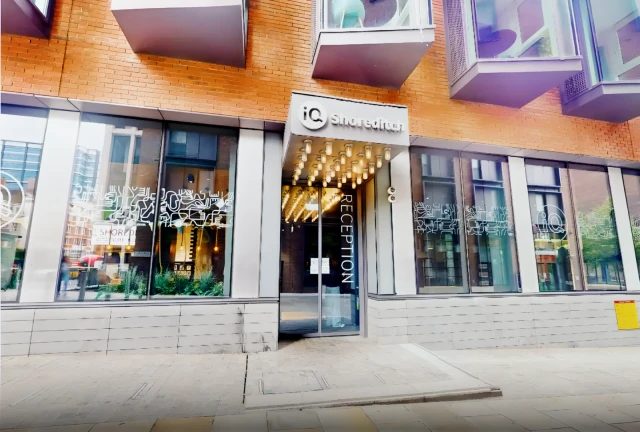
Below are typical monthly rent ranges for private accommodation near the main campus and in accessible districts. All prices are indicative. Actual rents vary by season, contract duration, and included utilities. Always confirm the final amount with the landlord or agency.
- Low budget (shared apartment/dormitory‑like private room): 15,000 – 25,000 RUB per month
This usually means a room in a shared flat with 2–4 housemates, a shared kitchen and bathroom. Close to metro stations but often in older Soviet‑era buildings. Utility bills (electricity, water, internet) may be separate – check the contract. - Medium budget (private studio or one‑bedroom apartment): 25,000 – 40,000 RUB per month
A separate apartment, typically with a kitchen corner and private bathroom. Found on Vasilyevsky Island or in the adjacent Admiralteysky District. Studios closer to the University Embankment tend to be at the upper end. - Higher budget (modern apartment in central neighbourhoods): 40,000 – 60,000 RUB per month
Fully renovated flats, often in pre‑revolutionary buildings with high ceilings. Located in the historic centre near Nevsky Prospekt or the Petrogradskaya Side. Suitable for students who prioritise a short walk to university or want more space.
For Peterhof campus, rents are lower: a studio may cost 15,000 – 25,000 RUB, and a room in a shared flat around 10,000 – 15,000 RUB. However, amenities and nightlife are limited compared to the city centre.
Walk vs. Transit Trade-off (2026/2027 Reference)
Walk to the main campus (Vasilyevsky Island)
Living within a 10–15 minute walk of the University Embankment eliminates daily transport costs (no metro fare) and saves 30–60 minutes per day. The area around Bolshoy Prospekt V.O. and Sredny Prospekt V.O. has grocery stores, pharmacies, and a few cafes. Drawbacks: fewer international student hangouts compared to the city centre, and flats may be older. Rents are moderate to high due to proximity to the university.
Transit commute from the city centre
Neighbourhoods such as Admiralteysky (around Nevsky Prospekt) or Petrogradskaya Side offer a wider choice of restaurants, nightlife, and cultural institutions. The metro ride to Vasileostrovskaya station takes 10–15 minutes from central stations; add 5–10 minutes walk at each end. Total one‑way: 20–30 minutes. This is acceptable for most students and opens more rental options. The trade‑off is higher rent in the centre and a small monthly metro cost (approximately 1,200 RUB for a student travel card in 2027).
For Peterhof campus
Living in Peterhof village is cheaper but isolating. Many students choose to live nearer the city centre and commute, especially if they have friends or part‑time jobs in town. The commute via marshrutka from Avtovo station takes about 40 minutes in normal traffic. A monthly pass for suburban trains costs around 1,500–2,000 RUB.
Shortlist Logic: Choosing an Area (Using Nearby Residences)
Since the data does not list specific apartment complexes, this guide uses the following logic to help you shortlist areas:
-
Identify your main teaching campus.
- Humanities / Natural Sciences → focus on Vasilyevsky Island (V.O.) or central districts within 30 minutes by metro.
- STEM / Applied Sciences → consider Peterhof or the western edge of the city (Kirovsky District) to reduce commute.
-
Set your budget and check utility inclusion.
- Low budget → prioritise shared flats on V.O. or in nearby Moskovsky District (close to metro).
- Medium budget → look for studios on V.O. or in Admiralteysky.
- Higher budget → search for renovated flats on Petrogradskaya or at the northern end of V.O.
-
Balance walkability and lifestyle.
- If you prefer a quiet academic atmosphere, stay on V.O. near the embankment.
- If you want a vibrant urban life, choose the city centre (Admiralteysky) and accept the 20‑minute metro ride.
-
Read recent tenant reviews carefully.
- As the ratings above show, promises from agents can differ from reality. Visit the flat in person or ask for a video call before signing.
-
Check the distance to the nearest metro and grocery store.
- A 15‑minute walk to a metro station is fine in St. Petersburg’s summer, but in winter (-10°C or colder) proximity matters more.
Example shortlist scenario:
A student in the Faculty of Philology (main campus) with a medium budget might shortlist:
- Shared flats on 7‑ya Liniya V.O. (walk 12 min to university)
- Studios on Bolshoy Prospekt V.O. (walk 15 min)
- One‑bedroom apartments in Admiralteysky near Nevsky Prospekt (metro 10 min + walk 5 min)
No “best” option exists – the choice depends on whether you value saving time or having more city life.
FAQ
1. Is it safe to rent a private apartment near Saint Petersburg State University?
Generally, central and Vasilyevsky Island districts are safe during the day and evening. Always lock doors, avoid unlit courtyards late at night, and use trusted rental platforms or real‑estate agencies. The review from Mounia shows that agents may exaggerate conditions, so verify through independent sources.
2. What is the typical deposit and contract duration for student rentals?
Most landlords require a deposit equal to one month’s rent, plus payment for the first month. Contracts are usually for 11 months (to avoid long‑term registration obligations). Some offer month‑to‑month after the first term. Indicative deposit in 2027: 15,000–60,000 RUB depending on rent. Confirm with the operator before transferring money.
3. How can I find verified apartments without using agency brands?
Join local student groups on social media (search “SPbU students” or “rooms in St. Petersburg”) and ask for sublets from graduating students. Alternatively, walk around districts like Vasilyevsky Island and look for “сдаётся” (for rent) signs – but always get a written contract. For Peterhof, the university’s international office can sometimes share lists of private landlords, though they do not endorse any.
Data-date: 2026 (ratings and reviews as of time of writing; prices indicative for 2027 and must be confirmed with the operator).
Explore more: Browse all student housing guides