Housing Near Sorbonne University: A Practical Guide for 2026/2027
Sorbonne University, formed by the merger of Paris-Sorbonne (Paris IV) and Pierre and Marie Curie (UPMC), sits at 4 Place Jussieu in the 5th arrondissement of Paris. With a QS World University ranking of 72, it attracts a large international student body. The main Jussieu campus is in the lively Latin Quarter, surrounded by bookshops, cafés, and historic institutions. This guide uses real student reviews and local accommodation data to help you choose where to live for the 2026/2027 academic year.
What Campus Reviews Reveal
Student feedback highlights both the academic atmosphere and the living environment. A five-star review from Big Hoss reads:
“The Pierre et Marie Curie campus of Sorbonne University is an exceptional blend of architectural intelligence and academic excellence. Its matrix-like corridor system creates a seamless navigation experience, allowing you to easily move across the campus. This thoughtful design maximizes both space.”
Another five-star reviewer, Choudhary Vikar Ahmad, notes:
“The Jussieu Campus of Sorbonne University is truly one of the most beautiful and accessible university campuses in Paris. The campus is well laid out, clean, and thoughtfully maintained. One of its highlights is the small but well-kept park within the grounds, offering students and visitors a peaceful…”
A former master’s student, Xin ZHENG, adds a concise memory: “beautiful campus, famous professors, difficult exams… lots of unforgettable memories.”
Not all feedback is positive. One reviewer, Gloria, gave a one-star rating and wrote:
“I was genuinely shocked by the level of ideological propaganda in certain English courses at Sorbonne University. Scientific doubt or nuance seems completely forbidden: – Questioning aspects of climate change orthodoxy? Unacceptable. – Expressing the slightest reservation about vax or their links to…”
This indicates that some students may encounter a strongly held academic consensus in certain subjects. Prospective students should research individual course content to align with their expectations.
Overall, the campus itself earns high marks for aesthetics and functionality. The park within the grounds and the architectural design contribute to a pleasant daily experience.
City Context: Paris and Student Housing
Paris is one of Europe’s most expensive student cities. The private rental market is competitive, especially in central arrondissements. Sorbonne University’s Jussieu campus is served by metro line 7 (station Jussieu) and line 10 (Cardinal Lemoine or Jussieu). RER lines B and C also pass through the area, connecting to suburbs.
Based on available accommodation data, the indicative starting price for a student room near Sorbonne University is around €365 per week (indicative — confirm with the operator). This figure is at the lower end of the market; many private studios or shared apartments in the Latin Quarter cost significantly more. The university does not own significant housing, so most students rely on private providers, residence halls, or roommate arrangements.
The supply sample includes residences in Villejuif, Noisy-Le-Grand, and areas coded as XO 92800, XO 94800, and XO 75017. These are spread across the Paris region, from the southern suburbs to the eastern outskirts and the 17th arrondissement. Prices and distances vary considerably.
Budget Bands (Indicative — Confirm with the Operator)
Using the entry price of €365/week as a baseline, here are rough budget ranges for 2026/2027:
- Economy (under €400/week): Typically a room in a shared apartment or a small studio in the outer suburbs (e.g., Villejuif, Noisy-Le-Grand). Travel time to Jussieu is 30–50 minutes by metro/RER.
- Mid-range (€400–€550/week): A private studio or a larger shared flat in inner suburbs or less central arrondissements (12th, 13th, 14th, 15th). Travel time 20–35 minutes.
- Premium (€550+/week): A studio or one-bedroom apartment in the 5th, 6th, or 4th arrondissements, walking distance to campus. These are rare and often go quickly.
Remember that rents in Paris are usually quoted per month, but student residences often charge weekly. Always confirm the total monthly cost and what utilities are included.
Walk vs. Transit Trade-Off
Living within walking distance of Jussieu (10–20 minutes) offers the shortest commute but at the highest rent. The 5th and 6th arrondissements are historic and picturesque, but a 20 m² studio can exceed €1,200/month. For many students, the trade-off is not worthwhile.
Living a 30-minute transit ride away reduces rent by 25–40%. The southern suburbs (e.g., Villejuif, line 7 extension) are particularly convenient: metro line 7 goes directly to Jussieu station. Villejuif has a lower cost of living and more green spaces. The eastern suburb Noisy-Le-Grand is served by RER A, which connects to Châtelet–Les Halles, where you can transfer to line 7. That journey takes about 40 minutes door-to-door.
The 17th arrondissement (code XO 75017) is closer to central Paris but still less expensive than the Latin Quarter. It is served by metro lines 2 and 3, requiring a transfer to reach Jussieu (about 30 minutes total).
Shortlist Logic: Using Given Nearby Residences
The accommodation sample includes five identifiers: Villejuif, XO 92800, Noisy-Le-Grand, XO 94800, and XO 75017. These likely represent specific student residence complexes or postal codes. When shortlisting, consider:
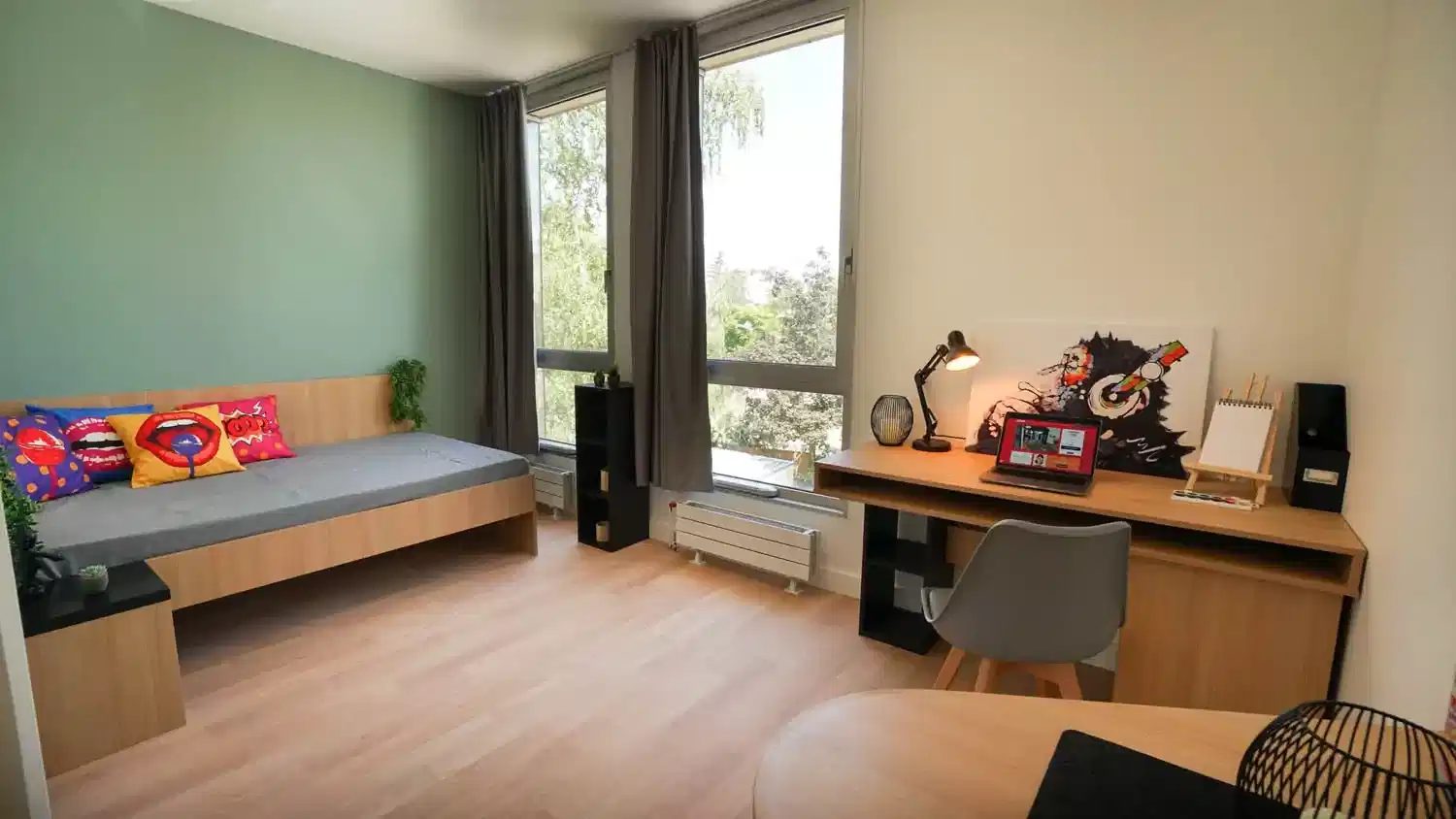
- Villejuif (postcode 94800): This area is directly accessible via metro line 7 (Villejuif – Louis Aragon or Villejuif – Paul Vaillant-Couturier). The journey to Jussieu takes about 25–30 minutes. Villejuif has modern residence halls and a suburban feel. It is a strong choice for budget-conscious students who want a reliable metro connection.
- XO 92800: This postcode corresponds to Puteaux, in the western suburbs (La Défense area). It is served by RER A and tramway lines. Travel time to Jussieu is around 35 minutes via RER A to Charles de Gaulle – Étoile, then transfer to metro line 6 or 1, then line 7. Puteaux is convenient if you also work or study in the business district.
- Noisy-Le-Grand (postcode 93160): Located east of Paris, served by RER A (Noisy-le-Grand – Mont d’Est). The ride to Châtelet–Les Halles takes about 25 minutes, then line 7 to Jussieu adds 10 minutes. Noisy-Le-Grand has a large student residence cluster and lower rents. However, RER A is often crowded during peak hours.
- XO 75017: The 17th arrondissement is more central. Access to Jussieu via metro line 2 (to Place de Clichy) then line 13 or 7, or line 3 (to Opéra) then line 7. Travel time around 30 minutes. This option offers a balance between proximity and cost, with many shops and restaurants nearby.
When comparing, check the exact address and travel time using a route planner at the specific time of your commute. Some residences may be a 10-minute walk from the metro station, which adds to the total journey.
Final Practical Notes
- Lease terms: Student residences usually offer 12-month contracts with a possible break clause. Check whether the operator provides a “cession de bail” (transfer of lease) if you leave early.
- Guarantees: Most private landlords and residences require a guarantor with French income. International students can use services like Garantme or Visale (free government guarantee for eligible students).
- Utilities: Confirm whether rent includes water, electricity, heating, and internet. In shared apartments, bills may be separate.
- Deposit: Typically one month’s rent, refundable upon move-out after an inventory check.
The Paris rental market moves fast. Start your search at least two months before your intended move-in date. Book viewings (virtual or in-person) early, and have your documents ready: ID, proof of enrolment, visa, and financial guarantees.
FAQ
What is the typical rent for student housing near Sorbonne University?
Indicative weekly rents start from €365, but this is at the lower end of the market. A standard room in a shared apartment or a small studio in the suburbs costs €400–€550 per week. Central Latin Quarter studios can exceed €600 per week. Always confirm the total monthly cost with the operator, as some rents are quoted weekly but charged monthly. The figure is indicative and may change by the 2026/2027 academic year.
How far should I consider living from campus?
Living within 20 minutes’ walk is expensive but possible in the 5th and 6th arrondissements. A more realistic option for most students is a 25–45 minute commute by metro or RER. The southern suburb Villejuif is a good candidate because metro line 7 runs directly to Jussieu station. Noisy-Le-Grand and Puteaux (XO 92800) are also viable but require one transfer. Consider the trade-off between rent savings and daily travel time.
What should I look for in a rental agreement in Paris?
Check the lease type: “contrat meublé” (furnished) or “contrat vide” (unfurnished). Student residences typically use furnished, 12-month lease with a one-month notice period. Ensure you understand the deposit amount, included utilities (water, electricity, internet), and whether you need a guarantor. International students without a French guarantor should apply for Visale (free) or use a private guarantor service. Also verify the exact address and distance to the nearest metro or tram stop.
Data as of early 2026. Prices and availability are indicative — confirm with the operator before signing any contract.
Explore more: Browse all student housing guides