Housing Near Sungkyunkwan University: A 2026 Guide from Campus Reviews
Sungkyunkwan University (SKKU) holds a unique position in South Korea. It is the oldest university in the country, with its main humanities and social sciences campus located in the historic Jongno District of central Seoul. Globally, SKKU is ranked 126th in the QS World University Rankings, and it attracts a diverse student body. For anyone planning to study here in 2026 or 2027, understanding the neighbourhood and finding suitable housing is a critical first step. The campus itself receives a Google rating of 4.6 from over 529 reviews, reflecting its appeal not only as a place of study but also as a cultural landmark. Below we examine what recent visitors and students have said, then lay out a practical framework for choosing accommodation nearby.
What Campus Reviews Reveal
The atmosphere around SKKU’s Seoul campus is shaped by its deep history and striking natural features. Reviewers consistently mention the preserved 700-year-old buildings and the famous ancient ginkgo tree. Yuvraj Kakade noted, “It is the oldest university in South Korea. They have preserved the 700 years old ancient campus building here. It also have the oldest known tree here in campus.” He added that the campus is “wide spread over a largest area” and contains around 40 buildings. This tells future residents that the campus is large enough to require walking between departments, so proximity to different gates matters.
Another reviewer, Tung Pham, offered a practical warning: “Nice campus with rich history. It also attracts a lot of visitors. Recommend not to walk in shortcut you may get lost or end up having to hike up hills.” The hilly terrain means that a property that looks close on a map may involve steep climbs. A seemingly short walk could take 15–20 minutes uphill. This should factor into your search.
Trân shared an experience that highlights the campus’s seasonal beauty: she visited twice to see the ginkgo trees turn yellow, but the second time she was blocked by entrance exams. “I came on a day when they had entrance exams, so I couldn’t get inside.” For students, this means the campus is occasionally closed to non‑students, but daily life is not disrupted. The presence of many visitors also adds foot traffic to surrounding streets.
Jade Estavillo summed up the blend of old and new: “SKKU is a combination of traditional and modern.” This mix extends beyond the campus into the Jongno district, where ancient palaces, traditional hanok houses, and modern apartments coexist. Your housing options will reflect the same range — from older studio units in converted houses to newer officetels.
City Context: Jongno District, Seoul
SKKU’s humanities campus sits at 25-2 Seonggyungwan-ro, Jongno-gu. This is the historic heart of Seoul, home to Gyeongbokgung Palace, Changdeokgung Palace, and Bukchon Hanok Village. The area is well‑connected by Seoul’s subway system. The nearest stations are Hyehwa Station (Line 4) and Anguk Station (Line 3), both within a 10–15 minute walk. A longer walk (about 20 minutes) reaches Jongno 3‑ga Station, a major transfer hub for Lines 1, 3, and 5.
Living in Jongno means you are close to cultural landmarks, but the trade‑off is that the area can be crowded with tourists, especially on weekends. Grocery stores, convenience shops, restaurants, and cafes are abundant along the main streets, but quiet alleyways also offer hidden eateries. The neighbourhood has a mix of old low‑rise buildings and newer high‑rises. Many students choose to live in the area bounded by Hyehwa‑ro, Dongsung‑gil (the university street), and the hillier sections north of the campus.
Budget Bands (Indicative — Confirm with the Operator)
Housing costs in central Seoul vary widely depending on type, size, and distance from the campus. No single price fits all, but you can think in three rough bands:
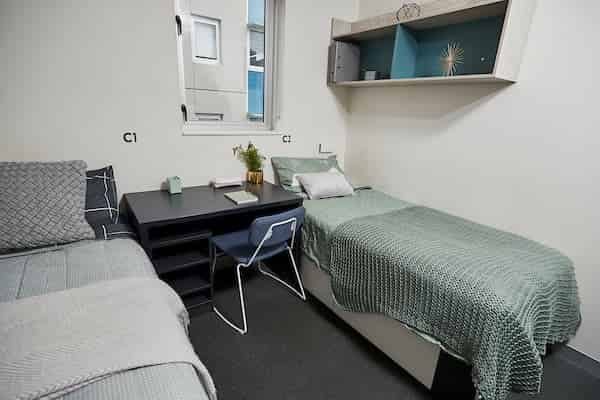
- Lower budget (shared or gosiwon): Compact rooms (often 3–7 pyeong, or 10–23 m²) in shared houses or gosiwons (study rooms with basic furnishings). These are usually within a 15‑minute walk or short bus ride. Typical rent for a gosiwon ranges from 350,000 KRW to 550,000 KRW per month (indicative — confirm with the operator). Utilities are often included, but amenities are minimal.
- Mid budget (one‑room or studio): A private studio (one‑room) in a multi‑family villa or officetel. These are common in the alleys behind Hyehwa Station or along Dongsung‑gil. Rent generally falls between 550,000 KRW and 800,000 KRW per month (indicative — confirm with the operator). You may need to pay a deposit (typically 5–10 million KRW), though some landlords accept a lower deposit in exchange for higher monthly rent.
- Higher budget (officetel or larger apartment): Newer officetels or two‑bedroom apartments in buildings near Anguk or Jongno 3‑ga. Monthly rent can exceed 1,000,000 KRW (indicative — confirm with the operator). These units are closer to subway lines and offer better soundproofing and amenities, but the walk to campus may be longer because the nearest modern towers are farther from the university gates.
Remember that rent in Korea is usually quoted as “monthly rent” (wolse) with a large refundable deposit, or “key money” (jeonse) where you pay a large lump sum and no monthly rent. For international students, wolse is more practical. Always ask the operator for the exact deposit amount and whether utilities (electricity, gas, water, internet) are included.
Walk vs. Transit: The Trade‑Off
Choosing between walking and taking public transit depends on your tolerance for hills and your budget.
Walking distance (under 15 minutes) Living within a 10–15 minute walk of the main gate gives you the most convenience. The campus has about 40 buildings spread over a large area, so even if your accommodation is close to one entrance, you may still need to walk across campus to reach your lecture hall. The hilly terrain noted by reviewers means that a “shortcut” can involve steps and unpaved paths. Many students prefer the main streets along Seonggyungwan‑ro or the Dongsung‑gil area, which are flatter and well‑lit at night. Properties in this zone tend to be older and slightly more expensive per square metre because of the convenience. You save on transit costs (around 1,400 KRW per ride) and gain time.
Transit‑dependent (15–30 minutes by subway or bus) If you are willing to take the subway one or two stops, your housing options expand significantly. Stations like Jongno 3‑ga (Lines 1, 3, 5), Jonggak (Line 1), or even Euljiro 3‑ga (Lines 2, 3, 5) offer more modern officetels and lower rent per square metre. A one‑room near Jongno 3‑ga might be several hundred thousand won cheaper than a similar unit near Hyehwa. The trade‑off is the extra commute time (including walking to the station, riding, and walking to campus) — roughly 10–20 minutes each way. However, the subway is frequent and reliable. Some students also use the local bus (e.g., routes connecting Hyehwa to Anguk or Jongno) to cover the hilly northern parts.
Bicycles and scooters Seoul’s public bike system (Ttareungyi) has docking stations near Hyehwa and Anguk. A few students bike to campus, but the steep hills around SKKU make cycling less common. Electric scooters (e‑scooters) are available through apps, but you should confirm whether your accommodation allows parking.
Shortlist Logic: How to Choose Among Nearby Residences
Your final shortlist should be based on three criteria: budget, walking distance tolerance, and the type of building you prefer. Since every student’s needs differ, here is a logical process you can follow when browsing listings on the platform:
- Filter by walking time. Use the platform’s map view to select properties within 1 km (about a 12‑minute walk) of the main gate at 25-2 Seonggyungwan‑ro. Note that Google Maps walking times may be optimistic; add 2–3 minutes for slopes.
- Check the building type. If you value quiet and modern amenities, look for officetels (often have a security guard, elevator, and in‑unit laundry). If you prefer lower rent and don’t mind shared facilities, consider villas or gosiwons. Read the building description carefully: some older buildings have thin walls and no elevator.
- Confirm the deposit. Many listings require a deposit of 5–10 million KRW. If that is not feasible, look for “short‑term” or “foreigner‑friendly” options that accept lower deposits, but expect higher monthly rent. Always request the exact terms from the operator.
- Read recent reviews of the building. The platform may have reviews from previous tenants. Look for comments about noise, landlord responsiveness, and the condition of appliances.
- Consider the direction of the hill. Properties on the south side of Seonggyungwan‑ro (towards Anguk) tend to be flatter. Properties north of the campus (behind the humanities buildings) are on a steeper slope, which may be tiring after a full day of classes. Use the platform’s street view to check the gradient.
A typical shortlist for a mid‑budget student might include two or three one‑room studios in the Dongsung‑gil area (under 10 minutes walk) and one or two officetels near Hyehwa Station (about 12 minutes walk, flatter route). Compare the rent, deposit, and included amenities before contacting the operators.
Frequently Asked Questions About Housing Near SKKU
Q1: What is the closest subway station to the main campus? The main entrance at 25-2 Seonggyungwan‑ro is about a 10‑minute walk from Hyehwa Station (Line 4, exit 2 or 3) and a 12‑minute walk from Anguk Station (Line 3, exit 2). Hyehwa is on a slightly flatter path, while Anguk passes through a cultural district. The walk from Jongno 3‑ga Station is around 20 minutes.
Q2: What is the average monthly rent for a one‑room near the campus? Rent varies significantly depending on the building’s age and deposit. A typical one‑room (about 20–30 m²) in the immediate vicinity (within 10 minutes walk) ranges from 550,000 KRW to 750,000 KRW per month with a deposit of 5–10 million KRW (indicative — confirm with the operator). Slightly farther away, rents can drop by 100,000–200,000 KRW.
Q3: Should I live in a gosiwon or a studio near SKKU? If your budget is tight (under 550,000 KRW per month) and you do not mind very small rooms and shared kitchens/bathrooms, a gosiwon can be a practical choice. However, for long‑term comfort and better privacy, a studio (one‑room) is recommended. Many students start in a gosiwon for the first few weeks and then move to a studio after securing a lease. Always inspect the room in person or request a video tour.
Data date: 2026-05-01
Explore more: Browse all student housing guides