Universität Hamburg ranks 193rd globally and holds a 4.1-star rating from 634 Google reviews. The university’s main campus sits in the Rotherbaum district, a leafy area close to the Alster lakes and about 2 km from the city centre. Students living in Hamburg generally find the city both affordable relative to other major German cities and well connected by public transport. This guide covers what real reviews say about the university, the local housing market, budget bands, the walk‑versus‑transit decision, and a shortlist of nearby residences that are commonly used by students.
What campus reviews reveal
The 634 Google reviews give an average of 4.1 out of 5. Comments highlight strong academics and a positive environment, but also point out administrative friction and the impersonal scale of a large university.
Joseph Kerski (5 stars):
“I have taught here for several weeks and it is a wonderful environment with great students, facilities and faculty.”
This review echoes the general sentiment around teaching quality and campus atmosphere. The university is large – over 40,000 students – so personal attention can vary by department.
Frank Schneider (4 stars):
“Academic level is, as a rule of thumb, high to excellent (although this of course varies somewhat by the course of study in question). The buildings are quite old and it’s a pretty big university. This means that everything is sort of quite impersonal, but on the other hand this is compensated by a …”
Schneider’s comment reflects the trade‑off: excellent academics in an older, sprawling campus. Students who value a tight‑knit community may need to seek that in their housing or student groups.
Karol (1 star):
“This university website is horrible and not easy to navigate. I wanted to apply for a place at the university and three times my password stopped working. I sent an email to recover the password, they didn’t reply for two days (which is supposedly an automated e‑mail) …”
Karol’s experience with the online application system is a reminder that administrative processes can be frustrating, especially for international applicants. It is worth allowing extra time for registration and document submission.
Public transport in Hamburg is reliable, and many students live in neighbourhoods like Eimsbüttel, St. Pauli, or Altona, which are 15–30 minutes from campus by U‑Bahn or bus. The university’s own facilities, including the main library and the canteens, are spread across several locations, so the daily commute may involve moving between buildings.
Hamburg as a student city
Hamburg is Germany’s second‑largest city, with a strong economy, a vibrant cultural scene, and a large port. For students, the city offers many part‑time job opportunities, numerous parks, and a nightlife focused around the Reeperbahn and Schanzenviertel. Rent levels are moderate compared to Munich or Frankfurt, but have risen over the past decade.
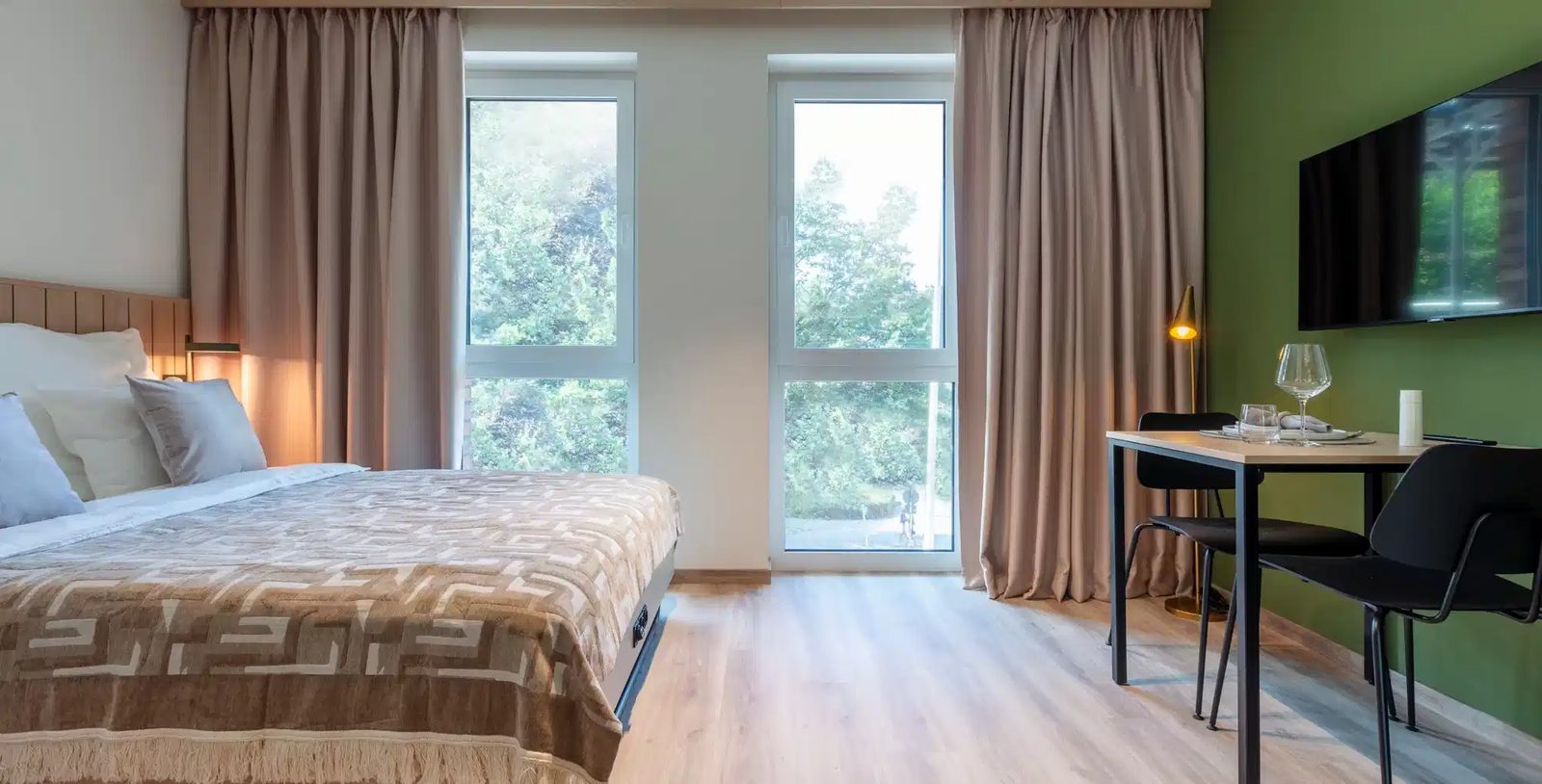
Student housing in Hamburg is in high demand. The university itself does not own dormitories; instead, rooms are offered by independent operators, student unions (Studierendenwerk), and private landlords. The Studierendenwerk Hamburg runs several halls of residence with waiting lists that can extend to several semesters. Many international students turn to private purpose‑built student accommodation (PBSA) for faster move‑in and shorter contracts.
The typical budget for a room in a shared flat (WG) in Hamburg is between EUR 400 and EUR 650 per month (indicative — confirm with the operator). For a studio or one‑bedroom apartment, prices start around EUR 700 and can exceed EUR 1,000 in central districts. PBSA options, which often include furniture, utilities, and internet, generally start from EUR 680 (indicative — confirm with the operator).
When comparing costs, remember that many PBSA contracts are all‑inclusive (rent, utilities, internet), while WG rooms usually require separate payments for electricity, heating, and a GEZ broadcasting fee. Annual rent increases are common, so a fixed‑term contract can provide budget certainty.
Budget bands for student housing
Below are typical monthly rent ranges for different housing types in Hamburg in 2026. All prices are indicative; always confirm with the operator.
- Shared flat (WG) room, outer districts (e.g., Barmbek, Eidelstedt): EUR 350–500 (indicative — confirm with the operator).
- Shared flat (WG) room, central or trendy areas (e.g., Eimsbüttel, St. Pauli, Sternschanze): EUR 450–650 (indicative — confirm with the operator).
- Private studio (1‑room apartment), unfurnished, any district: EUR 550–800 (indicative — confirm with the operator).
- Purpose‑built student residence (studio or en‑suite room, all‑inclusive): EUR 680–1,100 (indicative — confirm with the operator).
- One‑bedroom apartment (2‑room‑flat including kitchen/bath): EUR 700–1,200 (indicative — confirm with the operator).
Most PBSA properties in the list below fall into the EUR 680–900 range. They tend to offer 12‑month contracts with flexible start dates, which suits international students who arrive outside the traditional winter semester.
Walk vs transit trade‑off
Universität Hamburg’s main campus is located at Mittelweg 177, directly on the U‑Bahn line U1 (station: Hallerstraße) and a 15‑minute walk from Dammtor railway station. The central lecture halls are within a 20‑minute walk of many districts in the west of the city centre.
Walking distance (≤20 minutes to campus): neighbourhoods such as Rotherbaum, Harvestehude, Eppendorf, and parts of Sternschanze. These areas are expensive but offer the shortest commute. Students living here can easily walk to the main library, sports facilities, and the student cafeteria.
Transit‑accessible (15–30 minutes): districts like Altona, St. Pauli, Barmbek, and Eimsbüttel are well served by U‑Bahn, S‑Bahn, or bus. A semester ticket (about EUR 350 per semester) covers all public transport in the Hamburg metropolitan area. Students who live farther out trade time for lower rent, but the difference between a EUR 500 WG in Altona and a EUR 700 PBSA near Hallerstraße is about 15–20 minutes each way.
Cycling: Hamburg is cycle‑friendly, with bike lanes along most main roads. A bicycle can reduce commute time and eliminate waiting for buses. Many PBSA properties offer bike storage.
When choosing a residence, consider not only the distance to the university but also to supermarkets, laundry, and social venues. Some properties listed below are located near S‑Bahn stations that connect to campus in under 20 minutes, while others are within walking distance.
Shortlist of nearby residences
Below are five purpose‑built student accommodation options in Hamburg. They are not ranked or recommended — these are examples of what is available near the university. Always visit the operator’s website directly for current availability and terms.
- PHNX
Located in the Sternschanze district, about 3 km from the main campus (10 minutes by U‑Bahn). PHNX offers fully furnished studios and shared flats. Common facilities include a lounge, study areas, and rooftop terrace. Rent all‑inclusive. Approximate walk to U‑Bahn station: 3 minutes.
Price range: EUR 680–900 per month (indicative — confirm with the operator). - Canvas Living Hamburg
Situated in the Altona district, near the S‑Bahn station Altona. Canvas offers studios with kitchenettes and private bathrooms. It is about 20 minutes by S‑Bahn/U‑Bahn to the university. The building has a fitness room and co‑working spaces.
Price range: EUR 700–950 (indicative — confirm with the operator). - The FIZZ Hamburg Hammerbrook
Set in the Hammerbrook business district, approximately 4 km southeast of the university (15–20 minutes by S‑Bahn). The FIZZ provides studios and shared apartments with all bills included. Communal areas include a cinema room and laundry.
Price range: EUR 680–850 (indicative — confirm with the operator). - Havens Living Hamburg Altona
Also in Altona, close to the Elbe river and about 25 minutes from campus via public transport. Havens Living offers studios and two‑bedroom apartments. Facilities include a rooftop garden and bike storage.
Price range: EUR 750–1,050 (indicative — confirm with the operator). - LX 20357
Located in the Eimsbüttel district, one of the most popular student areas. The address (20357) corresponds to the postcode for Eimsbüttel, which is within walking or cycling distance of campus (20 minutes on foot, 8 minutes by bike). LX 20357 offers furnished studios and WGs.
Price range: EUR 690–880 (indicative — confirm with the operator).
When comparing these options, check the exact distance to the lecture hall you will use most often, as some departments (e.g., medicine, natural sciences) are located at different sites like the University Medical Center (UKE) or the Bahrenfeld campus.
Frequently asked questions
1. How far is Universität Hamburg from the city centre, and how does that affect housing choice?
The main campus is about 2 km northwest of the city centre (Rathausmarkt). Central districts like Neustadt or Altstadt are a 20‑minute walk or 10‑minute U‑Bahn ride. If you prefer a lively urban environment, consider housing in Sternschanze or St. Pauli, which are slightly farther from campus (15–20 minutes) but close to restaurants, shops, and nightlife. If you prioritise a short commute, look in Rotherbaum or Eppendorf.
2. Are utilities and internet included in the rent for these PBSA properties?
Most listed residences (PHNX, Canvas Living, The FIZZ, Havens Living, LX 20357) offer all‑inclusive contracts that cover water, heating, electricity, and internet. This is typical for purpose‑built student accommodation. Always read the contract carefully: some operators may cap electricity usage or charge extra for parking. Shared flats (WGs) in the private market usually do not include utilities — you will need to pay electricity, heating, and the broadcasting fee separately.
3. When should I start searching for housing to secure a place near the university?
Demand is highest in August–October (winter semester start) and March–April (summer semester start). For PBSA, applications often open 3–4 months before the move‑in date. For WG rooms, start looking 2–3 months in advance; listings appear on platforms like WG‑Gesucht.de. Since waiting lists for Studierendenwerk dorms can be 1–2 semesters long, consider applying as soon as you receive your admission letter. Many PBSA operators also accept bookings without a confirmed visa — check their cancellation policy.
Data date: 2026. All prices and availability mentioned are indicative and may have changed since publication. Confirm directly with each housing operator before making any commitment.
Explore more: Browse all student housing guides