What Campus Reviews Reveal About Universität Innsbruck
The Google rating of Universität Innsbruck currently sits at 4.6 out of 5 stars, based on 579 reviews. This score indicates general satisfaction among students and visitors, but the individual reviews paint a more nuanced picture.
One five-star review from Mohsin Fareed (4 weeks ago) praises the staff: “Best Experience with staff, so friendly and helping. As always.” Christopher Standley (8 months ago) also highlighted the English department: “The English department is outstand(ly)ing especially those who work in language development.” Such feedback suggests that students who engage actively with faculty and departmental resources often find strong support.
However, the experience is not universally positive. A one-star review from Ashkan JBR (2 years ago) raises serious concerns for non-EU students: “If you are a non-EU student considering applying to this university, I would strongly advise considering alternative options. Unfortunately, my personal experience of this university has been marked by a lack of support, poor quality of education, per-determined grading, a lack of assessment for exa…” The review cuts off but clearly points to issues with administrative support and academic fairness that international applicants should investigate before enrolling.
Another five-star review from matteo gibiino (5 years ago) appears to refer to a hospital (“Amazing Hospital….People that working in are professional and gently”), which may be a misattributed review. It does not reflect the university itself.
Key takeaway for housing seekers: the campus environment includes both helpful staff and potential challenges for non-EU students. If you are considering studying here, it is wise to contact the international office directly about student services and housing assistance before committing to a lease. The mixed feedback should prompt you to visit the campus or speak with current students through online forums to verify the current atmosphere.
Innsbruck City Context: A Student’s Perspective
Innsbruck is a mid-sized Alpine city of about 130,000 residents, including roughly 30,000 students spread across multiple higher education institutions. The city is famous for its mountain backdrop, winter sports, and historical old town. Living here comes with a higher cost than other Austrian cities such as Graz or Linz, largely due to tourism demand.
The university’s main campus at Innrain 52 is located just west of the historic centre, within walking distance of the central train station (Hauptbahnhof), shopping streets, and the river Inn. Most student life revolves around the area between the university and the old town. You will find plenty of cafes, supermarkets, and budget-friendly eateries suitable for students.
Because Innsbruck is a compact city, the student accommodation market is tight. Supply is limited, especially for international students arriving without a local rental history. Many students live in purpose-built student residences (Studentenheime) run by the Austrian Student Union (ÖH) or private providers, while others rent private apartments or shared flats (Wohngemeinschaften). Rents have risen steadily over the past five years, and early booking is strongly advised.
Budget Bands for Student Housing Near Universität Innsbruck
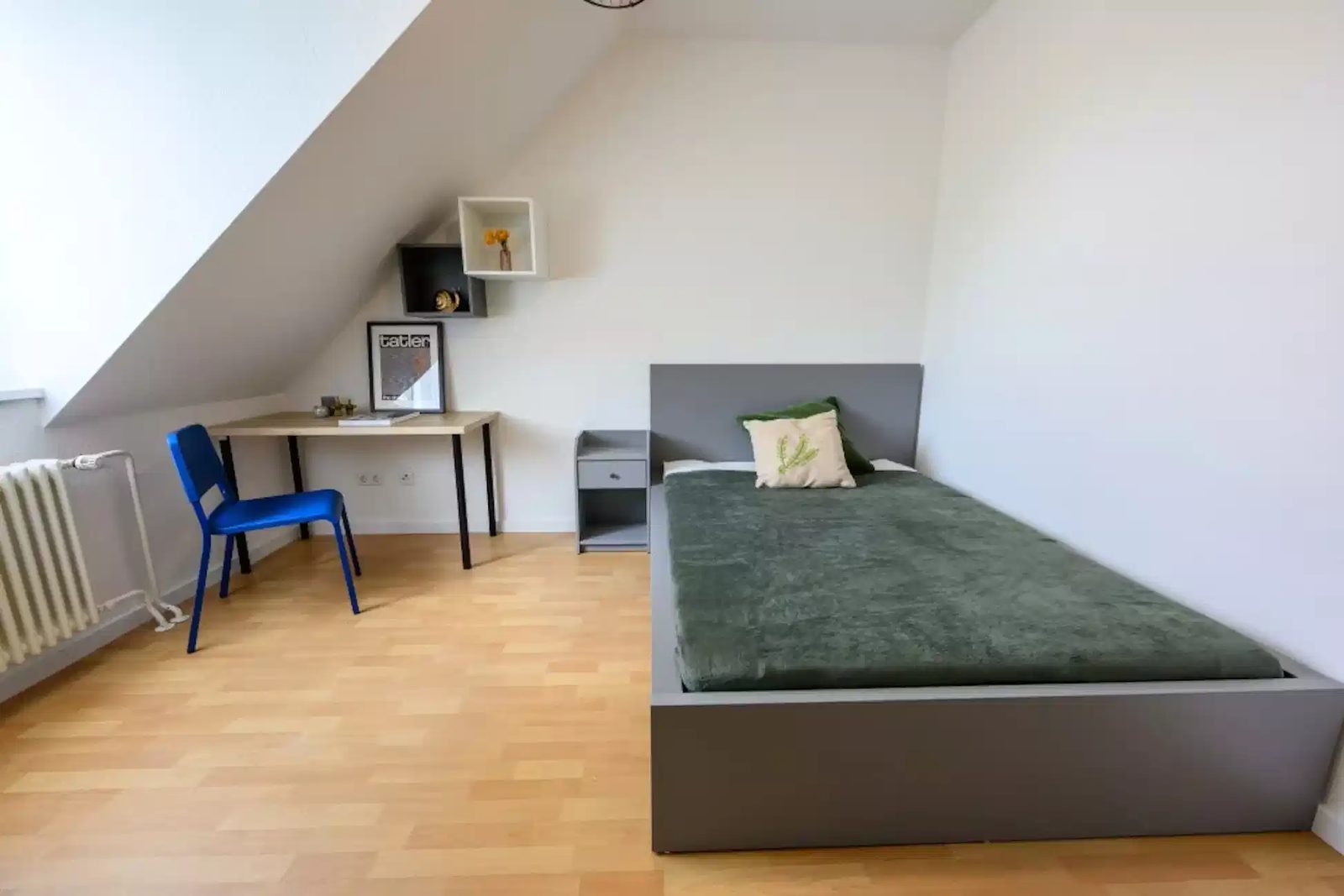
All prices below are indicative — confirm with the operator. Rents vary by location, room type (single, double, studio), and amenities. Use these bands as a starting point for your 2026/2027 search.
Low Budget (up to €450 per month)
- Shared room in a student residence (often with shared kitchen and bathroom).
- Basic private room in a WG (shared flat) further from campus, e.g., in districts like Reichenau or Hötting.
- Limited availability; requires early application and flexibility on move-in dates.
Mid Budget (€450–€650 per month)
- Single room in a well-located student residence with private or ensuite bathroom.
- Small studio or one-room apartment (Garçonnière) within a 20-minute walk or tram ride.
- Most popular band; offers a balance between cost and comfort.
High Budget (€650–€900 per month)
- Larger studio or one-bedroom apartment near the old town or directly across from campus.
- High-end student residences with additional facilities (gym, common rooms, cleaning service).
- Suitable for those who prioritise space and location over savings.
Above €900 per month, you are likely looking at premium private apartments with mountain views or large flats shared by two people.
Walk vs. Transit: Getting to Campus
The university’s central location means walking is the most common mode for students living within a 2–3 km radius. A 20-minute walk covers roughly 1.5 km. From the districts of Wilten, Pradler, or the south side of the city, the walk takes 25–35 minutes.
Public transport in Innsbruck consists of trams and buses operated by IVB. A semester ticket (Semesterticket) for students costs around €180–€200 (indicative for 2026/2027 — confirm with the university), covering unlimited travel within the city zone and often to neighbouring villages. With this ticket, you can live further out in areas like Hall in Tirol (15 minutes by train) or Völs (20 minutes by bus) and commute easily.
Walk advantages: no extra cost, keeps you active, reliable. Good for those who value spontaneity and liver closer to campus.
Transit advantages: allows cheaper rents in outlying districts while still enabling a commute of 30 minutes or less. The tram line 1 and bus lines F, R, and K serve the university area directly.
Trade-off: walking saves about €200 per year (semester ticket cost) but may require a higher rent to live centrally. If your rent difference between a central studio and an outer district studio is less than €50 per month, the central option may be more cost-effective. If the difference is greater, living further out and using transit makes financial sense.
How to Shortlist Housing Options
Because every student has different priorities, here is a logical framework you can use to narrow your search for the 2026/2027 academic year. This approach assumes you have a list of available residences or rental listings (you can find them through local portals, the university’s housing office, or student forums).
Step 1: Define your budget and room type
First, decide the maximum monthly rent you can afford (including utilities). Then choose between a private room in a shared flat, a single room in a residence, or a studio. Write down your hard maximum.
Step 2: Set a maximum commute time
Decide the longest time you are willing to travel door-to-campus each day. 15 minutes is ideal; 30 minutes is manageable. If you choose public transit, ensure the residence is within 5 minutes’ walk of a stop that directly serves the university (tram 1 or bus F, R, K).
Step 3: Check lease length and flexibility
Many student residences offer contracts for the academic year (October to June) with the option to extend. Private flats often require a 12-month commitment. If you plan to leave for the summer, look for shorter-term options.
Step 4: Read current tenant reviews
Before signing, search online for recent reviews of the specific residence. Look for comments about cleanliness, noise, maintenance responsiveness, and landlord communication. The campus reviews above remind us that staff quality can vary — apply the same scrutiny to housing staff.
Step 5: Visit or video-call if possible
Photos can be misleading. Ask for a video walkthrough. In person, check the condition of the kitchen, bathroom, windows (insulation matters in cold Alpine winters), and heating system.
Step 6: Compare the final 3–5 options
Create a simple comparison in your notes (not a table) listing rent, distance, amenities, lease terms, and review sentiment. Choose the one that best balances your budget and comfort.
Frequently Asked Questions About Student Housing Near Universität Innsbruck
How far in advance should I search for housing for the 2026/2027 academic year?
For student residences, applications often open in March or April for the following October start. Some private rooms may appear later. To secure a good option, start looking at least 4–5 months before your intended move-in date. For the 2027 winter semester (starts October 2027), begin in mid-2026. Early booking gives you a better chance at mid-range options.
Is it cheaper to live in a student residence or a shared flat?
Generally, student residences offer fixed prices that include utilities, internet, and sometimes cleaning. Their rents are often lower than private WGs for the same level of privacy. However, private shared flats may offer more space and flexibility. For 2026/2027, residence single rooms range from €420–€550 (indicative — confirm with the operator), while private WG rooms start around €380 but can go higher depending on location. Compare total costs (including bills) before deciding.
What should I do if I cannot find housing before arriving?
Innsbruck has a limited supply, so arriving without a room is risky. Consider booking a short-term rental (e.g., via a student hostel or a temporary room sublet for the first month) while you search in person. The university’s housing office sometimes maintains a list of available rooms, but it is not guaranteed. Another option: look for Facebook groups for “Innsbruck Wohnungssuche” where local residents offer rooms. Always be cautious of scams and never transfer money without seeing the room first.
Data as of March 2026. Prices and reviews are subject to change.
Explore more: Browse all student housing guides