What Campus Reviews Reveal
University College Cork (UCC) holds a Google rating of 4.6 from 999 reviews. The campus itself is a recurring character in student and visitor feedback. “I was here just to walk and explore. I loved it. Beautiful building, nice gardens and you can feel the student vibe. You can walk some corridors. It was nice!” wrote Manushak Karapetyan in a 5‑star review. Another reviewer, Em CY W., added: “While exploring Cork, we walked through the University College Cork campus and found it a lovely place for a stroll. The campus has a relaxed atmosphere, with plenty of green space, attractive historic buildings, and well-kept grounds. It feels welcoming and is easy to wander around, even as a visit.”
October, who visited on a rainy Saturday, noted: “I planned to go to the student restaurant and the library but they were closed for a holiday. However the view of the main building was great. I felt like i was in Harry Potter.” The comment reflects the campus’s gothic‑revival architecture that many compare to a film set. For incoming students, the setting suggests that living nearby means you can integrate this atmosphere into daily life. RAJ MODI, starting a Master’s programme, captured the transition: “Feeling grateful to start my Master’s journey at one of Ireland’s most beautiful and historic campuses … Cork has already started to feel like home, and UCC is more than just a university—it’s a place full of culture, learning, and opportunities.”
The reviews consistently mention the “student vibe” and the ease of walking through the grounds. That sense of community and heritage is a key pull for students choosing accommodation. A ten‑minute walk to the main building means you can use the library, the restaurant, and the gardens as study spaces and meeting points without relying on transport.
Cork City Context for Students
Cork is Ireland’s second‑largest city, with a population of about 210,000. It’s a compact, walkable city built around the River Lee. The city centre is roughly 1.5 km from UCC’s main entrance on College Road, so many students opt to live in the city centre and walk or cycle. Cork has a moderate climate (cool winters, mild summers) and a lively food and music scene. Public bus services (Bus Éireann) cover the city and suburbs, but most student accommodation clusters are within a 20‑minute walk of campus.
UCC’s ranking of 246 in the QS World University Rankings places it among Ireland’s top universities. The student population is around 23,000, including a significant number of international students. That diversity shows in the housing market: purpose‑built student accommodation (PBSA) has grown rapidly in the last decade, offering en‑suite rooms, studios, and shared apartments. Private rentals (houses and flats) are also available but often require a deposit and a guarantor, and competition can be high during the September intake.
Typical lease periods for the 2026/27 academic year run from September to May or June, with some PBSA offering shorter semesters. The city’s infrastructure is being upgraded with new cycle lanes, and UCC itself has a campus bike‑share scheme. When choosing accommodation, consider not only the rent but also the cost and availability of groceries, laundry, and social life. The city centre has supermarkets (Tesco, Dunnes, Lidl) that are open late, while suburban areas near UCC have smaller convenience stores.
Budget Bands for Student Housing
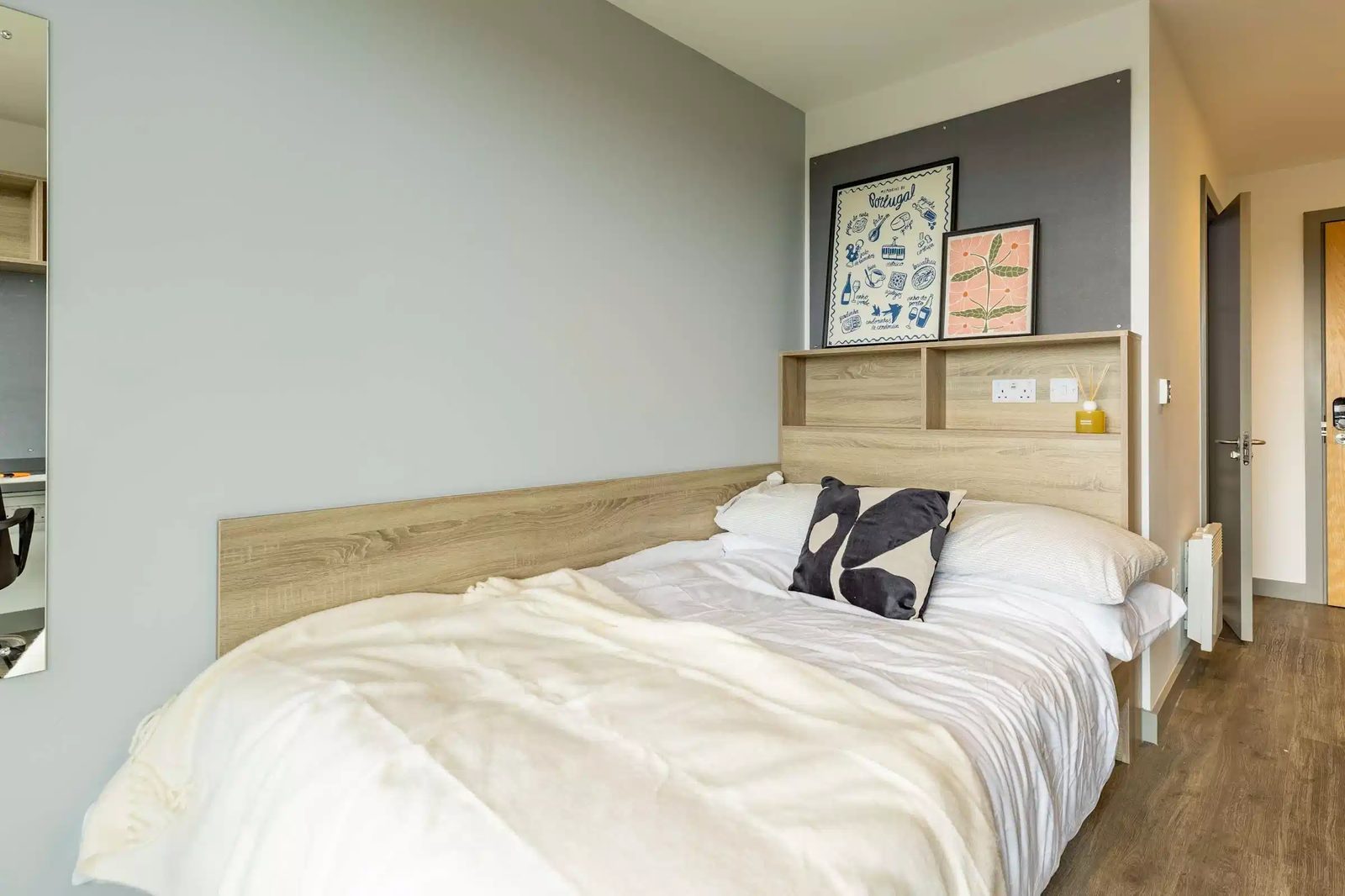
Rent in Cork varies by location, room type, and amenities. The following bands are based on 2026/27 indicative prices for the PBSA mentioned in this guide. All prices are indicative—confirm with the operator before making any commitments.
- €200–€280 per week – Typically a room in a shared apartment (non‑en‑suite) in PBSA, or a double room in a private house. Examples: a standard room in Ashlin House or Curraheen Point may fall at the lower end. Utilities (electricity, heating, water, internet) are usually included in PBSA; private rentals may add bills separately, so factor in an extra €20–€40 per week.
- €280–€350 per week – En‑suite rooms in PBSA like Yugo Lee Point or Yugo Amnis House. This is the most common band for a single person with a private bathroom. Many PBSA in this band include a shared kitchen/living area, gym, and social spaces. Curraheen Point also offers en‑suite options in this range.
- €350–€450 per week – Studio apartments (self‑contained with kitchenette) in PBSA. Examples include Yugo Melbourn Point and some studios in Yugo Amnis House. Studios suit students who prefer complete privacy and are willing to pay a premium.
- €450+ per week – Larger studios, one‑bedroom apartments, or premium features (e.g., balconies, top‑floor views). Only a few residences, like the higher‑tier studios in Yugo Lee Point, reach this level.
When comparing, note that “bills included” is common in PBSA but not always in private rentals. The Cork Student Accommodation portal (run by the university) lists approved off‑campus houses, but private landlords may require a deposit of one month’s rent and a pre‑payment of the first term’s rent for international students without an Irish guarantor. Always confirm the total upfront cost.
Walk vs Transit: Choosing Your Location
UCC is situated on the south side of the city centre, making it easy to reach from most residential areas. The two main residential corridors are:
- South of campus (e.g., Magazine Road, Glasheen, Victoria Cross) – Walkable (10–20 minutes to the main gate). Many PBSA such as Ashlin House and Curraheen Point are in this zone. The walk is along illuminated streets with few hills. This area also has the highest concentration of student‑targeted housing. The trade‑off is slightly higher rent per square metre, but you save on bus fares and time.
- City centre (e.g., Paul Street, Washington Street, the South Mall) – Walkable (15–25 minutes) or a short bus ride (bus 202, 205, 213 stop at UCC). Rent in the city centre is often comparable to southside PBSA, but you have quicker access to shops, restaurants, and nightlife. The disadvantage is a longer walk (especially uphill from the city to the university) and more street noise.
- North side (e.g., Blackpool, Montenotte, St. Luke’s) – Requires a bus ride (20–30 minutes). Rent tends to be €30–€60 per week cheaper than the south side or city centre, but you must budget for a bus pass (€80–€100 per month for an adult ticket). Limited PBSA; most are private houses.
For most students, the walk vs transit decision comes down to how much you value leisure time and convenience. A location within a 15‑minute walk means you can go home for lunch, use the campus library until 10 p.m. without worrying about bus schedules, and avoid transport costs. If your budget is tight, north side flats can save you money but add 30–40 minutes of commuting each day. Consider also that Cork’s winter means dark evenings and occasional rain—walking 20 minutes in the rain may be tiresome. A compromise is living near a bus stop along a frequent route (e.g., route 203 to Brickfield Road or route 214 to Wilton).
Shortlisting from Nearby Residences
The following residences are within a 20‑minute walk of UCC and are examples of available student housing for the 2026/27 academic year. All are purpose‑built student accommodation (PBSA) unless noted. Indicative prices are provided—confirm with the operator and check for availability, as rooms vary in size and inclusions.
Yugo Lee Point
- Location: Lee Point, Cork city, near the River Lee. About a 12‑minute walk to UCC.
- Room types: En‑suite rooms and studios.
- Indicative price: En‑suite from €299/week; studios from €399/week.
- Highlights: On‑site gym, common room with pool tables, bike storage. Reviews mention friendly staff and a quiet atmosphere.
Yugo Amnis House
- Location: Amnis House, close to the city centre and a 10‑minute walk to campus.
- Room types: En‑suite rooms, studios, and cluster apartments.
- Indicative price: En‑suite from €279/week; studios from €379/week.
- Highlights: Supermarket and bus stops within 5 minutes, study lounges on each floor. Residents note it is “convenient for both city and university.”
Ashlin House
- Location: Ashlin House, College Road (adjacent to UCC). 2‑minute walk to the main gate.
- Room types: Mostly standard rooms (shared bathroom) and a few en‑suites.
- Indicative price: Standard room from €210/week; en‑suite from €289/week.
- Highlights: The closest PBSA to campus, historic building with high ceilings. Some rooms overlook the university grounds.
Yugo Melbourn Point
- Location: Melbourne Point, about 15 minutes’ walk from UCC.
- Room types: Studios and one‑bedroom apartments.
- Indicative price: Studios from €369/week; one‑bedroom from €459/week.
- Highlights: Newer development (built 2022), includes a shared cinema room. Suites have private kitchenettes.
Curraheen Point
- Location: Curraheen, on the western fringe of the city, about a 20‑minute walk from UCC (or quick bus via route 212).
- Room types: En‑suite rooms and cluster flats with shared kitchens.
- Indicative price: En‑suite from €245/week.
- Highlights: Lower price point, on‑site laundry and common areas. A short bus ride to Aldi and Lidl.
When shortlisting, start by deciding your budget band and whether you prefer en‑suite or standard. Then filter by walk distance. For those willing to walk 20 minutes, Curraheen Point offers a cheaper option without sacrificing the PBSA safety net. For those wanting the shortest commute, Ashlin House is ideal. Yugo Lee Point and Yugo Amnis House strike a balance between proximity and amenities. Yugo Melbourn Point is better for students seeking self‑contained living.
All residences offer 24/7 security and most have social programmes (movie nights, yoga, etc.). Book early—many rooms are allocated by March for the September intake. Viewing is recommended if you are in Cork ahead of time.
FAQ
1. When should I start looking for housing for the 2026/27 academic year?
Most PBSA open bookings in November 2025 for the following September. Private rentals often appear on sites such as Daft.ie or Rent.ie from February 2026. For the best choice, aim to secure a room by March 2026. Late applications may have fewer options, especially for en‑suite rooms under €300/week.
2. Are utilities included in the indicative prices?
For PBSA like those listed above, yes—electricity, heating, water, Wi‑Fi, and building insurance are usually included. Private rentals almost never are, so factor in an extra €25–€50 per week for bills. “Indicative” means the price may change slightly depending on room size or floor, so always confirm with the property manager.
3. Can I bring a guarantor if I’m an international student?
PBSA typically accept a one‑time up‑front payment of the full year’s rent (in two instalments) for international students without an Irish guarantor. Some operators (e.g., Yugo) offer an alternative guarantee scheme through an insurance partner. Private landlords are stricter—they often require a guarantor living in Ireland or a substantial deposit. Ask each operator directly about their policy.
Data as of 2026. Prices are indicative and subject to change. Verify all details with the accommodation provider before committing.
Explore more: Browse all student housing guides