Housing Near University of Coimbra: What Campus Reviews Reveal
Data as of 2026
With a QS World University rank of 347 and a 4.6-star rating from 3,450 Google reviews, the University of Coimbra (UC) attracts both local and international students. Located at Paço das Escolas, 3004-531 Coimbra, Portugal, the university sits in the historic heart of a city known for its medieval architecture and vibrant student life. Reviews frequently highlight the campus’s visual grandeur and academic atmosphere, which directly influence where students choose to live. This guide unpacks what those reviews say, the city context, budget considerations, the walk vs. transit trade-off, and a logical shortlist for finding accommodation near UC.
What Campus Reviews Reveal About Living Nearby
Student and visitor reviews offer practical clues about the realities of studying at UC. One five-star review by Yulia calls it “an absolutely stunning historic university — the beauty of it is truly breathtaking.” The review notes that “the views and architecture can be quite overwhelming in the best way,” and recommends a professional guided tour. For a student living nearby, such a campus means daily exposure to iconic buildings like the Joanina Library and the Royal Palace. However, living close also means navigating a hillside location — the university sits atop the city’s upper town (Alta), which requires climbing steep streets.
Carrie Jeske’s review mentions visiting on “parade day where all the floats were there and the students were dressed in interesting top hats, crowns, and Harry Potter like capes.” This tradition reflects the university’s deep-rooted cultural events, which spill into the surrounding streets. Neighbourhoods near Paço das Escolas become lively during ceremonies, so students should expect occasional noise and crowds.
Alina Pusca highlights that UC was “founded in 1290,” making it one of the oldest universities in the world, and notes it operates across “12 campuses and 22 organic units.” While the main historic buildings are concentrated in the Alta area, some faculties are located on other campuses around the city (e.g., the Polo II science campus in the south). Housing choices depend on which faculty you attend.
Marek Lenartowicz comments: “Library is worth the money. If only we could take pictures… Copyright laws preventing it is a very lame excuse. In general University is worth seeing.” The Joanina Library is a major attraction, and many students want to live within walking distance to enjoy the site when it’s less busy. However, the review also implies that the university imposes strict rules — something to be aware of when considering off-campus life.
City Context: Coimbra as a Student Hub
Coimbra is a compact city of around 140,000 residents, with students making up a significant share of the population — roughly 25% according to university estimates. The historic centre is built on a hill, with the university at the top, the “Baixa” (lower town) at the bottom, and residential neighbourhoods fanning out in all directions. The Mondego River runs along the southern edge of the centre, with the Santa Clara neighbourhood on the opposite bank.
The city’s public transport system includes buses (SMTUC) and a light-rail line (Metro Mondego, currently partially operational). The main train station (Coimbra-B) is about 3 km from the university, with a connecting shuttle to Coimbra-A station in the city centre. Coimbra is well connected to Lisbon (1.5 hours by train) and Porto (1 hour), making it convenient for weekend travel.
Cost of living in Coimbra is generally lower than in Lisbon or Porto. Rent for a room in a shared apartment typically ranges from €250 to €450 per month (indicative — confirm with the operator), while a studio or one-bedroom starts around €400–€700. Prices have been rising since 2023, but still remain below most European student cities. Groceries, eating out, and public transport are affordable — a monthly bus pass costs around €40 (indicative — confirm with the operator).
Budget Bands
Because exact rental figures fluctuate frequently and depend on lease terms, no fixed prices can be guaranteed. Based on typical listings across Portuguese student platforms, students can expect the following indicative ranges:
- Shared room (shared apartment): €250–€400 per month, all bills included or not. This is the most common choice for first-year students and those on a tighter budget. Rooms closer to the Alta area tend to be pricier.
- Private room in a shared apartment: €350–€550 per month, often with a higher standard of furnishing and sometimes en-suite.
- Studio or one-bedroom apartment: €500–€800 per month. Ideal for couples or those who prefer solitude.
- Entire apartment (for groups): €700–€1,200 per month for a 2–3 bedroom unit, splitting costs among flatmates.
All prices are indicative — confirm with the operator before signing any contract. Keep in mind that utility costs (electricity, water, internet) may add €50–€100 per month unless included.
Walk vs. Transit Trade-off
Walking to the university from the lower town (Baixa) involves a steep uphill climb of about 15–20 minutes. Many students find this tiring, especially after a full day of lectures. However, living in the Alta area (the hilltop district where the university is located) means a 5–10 minute walk but often higher rents and less grocery/convenience store options. The Alta is also quieter during evenings because shops are mostly in Baixa.
Public buses run frequently between Baixa and the university, with routes 1, 7, 18, and 24F serving stops like “Praça da República” and “Rua da Sofia.” A journey from Baixa to the university takes about 10 minutes, including waiting. The bus is a good option in rainy weather or for those with mobility concerns. Monthly passes are subsidised for students, costing around €30–€40 (indicative — confirm with the operator).
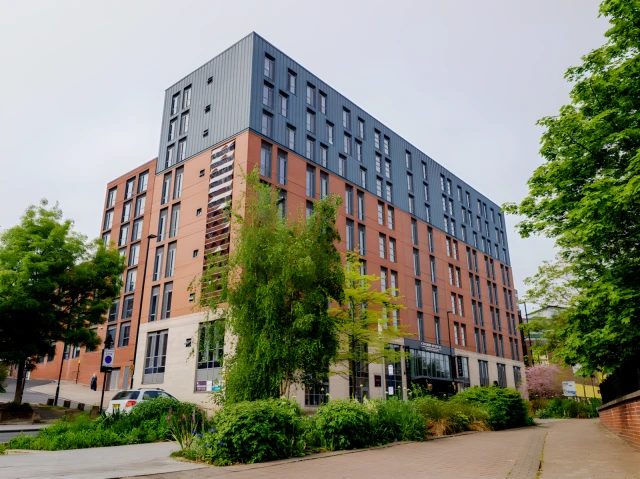
The walk vs. transit trade-off also depends on which campus you need to reach. Students attending Polo II (sciences and technology) in the southern suburbs will rely on bus line 4 or 15, which takes about 20 minutes from the city centre. Driving or cycling is possible but street parking is limited in the centre. Bicycle use is common on the flat riverbanks, but the hill to the university is a challenge.
Shortlist Logic for Choosing Accommodation (Using the Given Data)
When compiling a housing shortlist near the University of Coimbra, students should prioritise the following criteria. No specific residence names are provided in the available data, so the logic below helps you evaluate options using general principles.
- Distance to Paço das Escolas (or your faculty building): Use Google Maps walking time. Aim for under 20 minutes if you plan to walk; under 30 minutes if relying on bus. Two reviews mention the “stunning architecture” and “library” — living within a 10-minute walk lets you enjoy the campus daily.
- Google review score of the residence: Check the landlord or building’s rating on platforms like Uniplaces or HousingAnywhere. Look for scores above 4.0 and read recent comments.
- Included amenities: Ask about heating (Coimbra gets cold and damp in winter), internet speed, and whether cleaning is included. The university’s historic buildings often have thick stone walls, which can be chilly.
- Contract flexibility: Short-term (month-to-month) rentals are rarer; most leases run for 12 months. The school year runs from September to June. Ensure you can break the lease without heavy penalties.
- Flatmate compatibility: Many shared apartments have mixed gender and age groups. University housing services or local Facebook groups can help you find compatible housemates.
- Proximity to transport and shops: The Baixa area offers abundant grocery stores, restaurants, and bus stops. Alta has fewer shops but is quieter. Consider your daily needs.
As a general rule, students who prefer an authentic, lively environment choose Baixa (e.g., Rua Ferreira Borges, Rua da Sofia, or near Praça do Comércio). Those who value silence and immediate campus access choose Alta (Rua dos Flores, Largo da Sé Velha). No single area is “best”; it depends on your budget and lifestyle.
Frequently Asked Questions
Q1: How do I find student housing near University of Coimbra in 2026?
You can use global and local housing platforms (e.g., Erasmusu, Uniplaces, or Portuguese sites like imovirtual) and filter by “Coimbra” and “university.” Join Facebook groups such as “Alojamento para Estudantes em Coimbra” where current students often sublet rooms. Always visit the room in person or request a live video tour before paying any deposit. Avoid transferring money to unverified accounts. The university’s own accommodation office (Serviços de Ação Social) may offer limited rooms in its residences — apply early, as demand is high.
Q2: What is the average rent for a student room in Coimbra in 2026?
As of 2026, a room in a shared apartment typically costs between €250 and €500 per month, depending on location, size, and utility inclusion (indicative — confirm with the operator). Studios start at around €450 per month. Prices in the Alta and Baixa premium areas are higher, while neighbourhoods slightly farther out like Solum or Quinta das Flores are more affordable. Always ask if the price includes internet and water/electricity — many listings exclude utilities.
Q3: Is it better to walk or take public transport to the university?
Walk if you live in the Alta (upper town) or the lower part of Baixa within 15 minutes. The main disadvantage is the steep hill. If you live in Baixa or farther areas (e.g., Santa Clara, Solum), taking the bus is recommended, especially in winter. A monthly student bus pass costs around €35–€45 (indicative — confirm with the operator). Cycling is possible but challenging on the hill — an electric bike can be a good compromise. Many students use a combination: walk downhill to the shops and take the bus uphill back home.
data-date: 2026-07-01
Explore more: Browse all student housing guides