Campus Reviews: What Students Say
The University of Lausanne (UNIL), set on a leafy campus at Quartier Centre, draws consistent praise for its environment. A five-star reviewer, Dariusz Prokopowicz, calls it “a luminous sanctuary of interdisciplinary research” that “approaches the academic arts with a distinctive Swiss moxie.” Another student, Jakhongir Alikhanov, appreciates the natural setting: “Wonderful campus, a lot of nature, animals and birds on it. I wish there were more buildings on the campus, as it has a lot of free space. Anyway, I often go for a walk, and visit the campus. Lovely place.” Alina Jin adds historical context: “The university buildings are quite hasty but worth to visit the view like this!” — noting the campus’s donation origin. The Google rating stands at 4.3 out of 5 from 291 reviews, reflecting strong overall satisfaction.
These reviews hint at a campus that is both serene and somewhat spread out. The abundance of open space means housing within walking distance is limited, but the natural beauty offsets longer commutes for some. When choosing accommodation, understanding this campus character is key.
City Context: Lausanne
Lausanne is a mid-sized city on the northern shore of Lake Geneva (Lac Léman), with a population around 140,000. It is the capital of the Vaud canton and a major hub for education, research, and international sport (home to the International Olympic Committee). The city is built on three hills, which means steep streets and many staircases. Public transport is efficient: the Metro m2 line runs north–south, connecting the main train station (Lausanne Gare) with the Ouchy lakeside and the Epalinges area near the university hospital. Buses and the LEB train serve the wider region.
UNIL’s main campus is in the western suburb of Dorigny, about 4 km from the city centre. The campus is directly served by bus lines (e.g., 1, 31, 32) and the m1 light rail line (not to be confused with metro m2), which runs from the train station to the campus in about 15 minutes. Cycling is also popular, with dedicated bike lanes along the lake.
Budget Bands for Student Housing
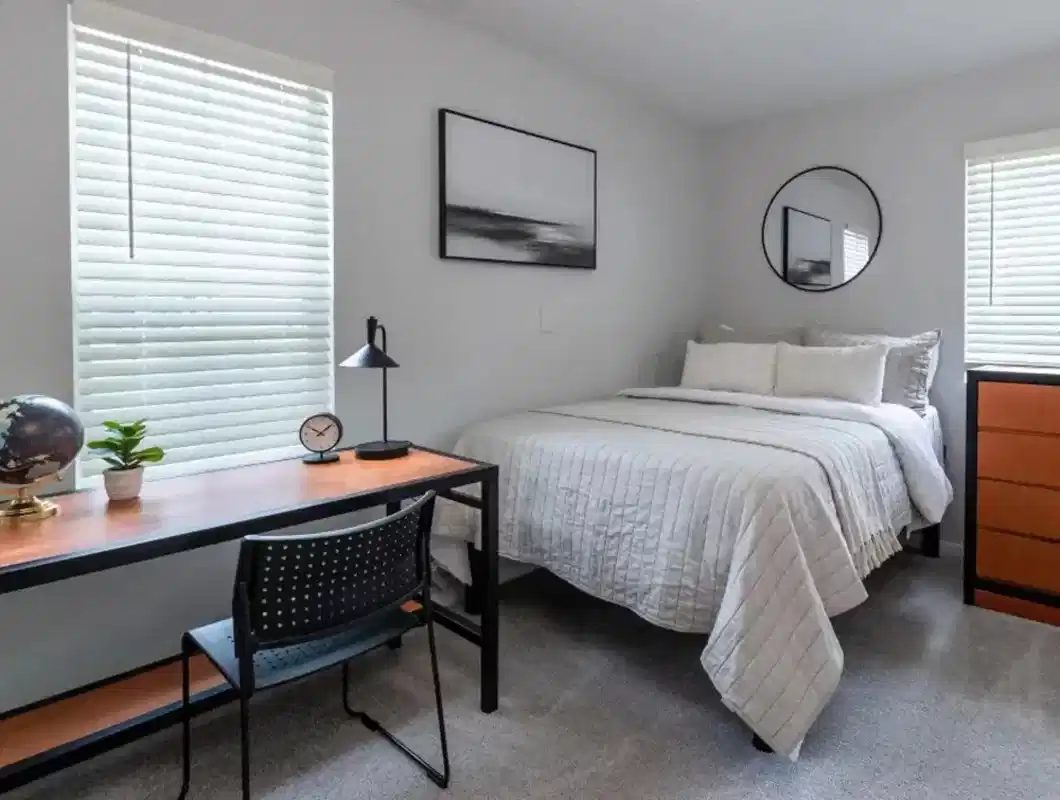
Student housing costs in Lausanne are relatively high compared to other European cities, though slightly lower than in Zurich or Geneva. The most common accommodation options fall into three broad categories. Shared apartments (colocations): renting a room in a flat with other students. This is the most affordable option. Studio or one-bedroom apartments: more private but significantly more expensive. Student residences: purpose-built dormitories managed by the university or private operators, offering single rooms or small studios with shared kitchens/bathrooms, typically at mid-range prices.
Because actual rents vary by location, size, and amenities, any figures mentioned here are indicative only — confirm with the operator for current rates. The university’s housing office (Service du Logement) provides a platform for listing and searching, and it strongly recommends applying early, especially for the start of the academic year in September.
Walk vs Transit Trade-Off
Walking distance to campus is limited. The immediate area around Dorigny is residential and quiet, with few apartment buildings. Most students who walk need to live within a 15–20 minute walk (roughly 1–1.5 km), which includes the neighbourhoods of Chavannes-près-Renens, Renens (to the east), and parts of Ecublens. The advantage is zero commuting cost and the ability to go home between classes. The trade-off: smaller rental supply and usually higher prices per square metre.
Taking public transit dramatically widens the search area. The m1 line connects UNIL to Lausanne Gare (centre) in about 12 minutes, and trains run every 6–10 minutes during peak hours. Living near a metro m1 station (e.g., Prilly, Malley, Lausanne Gare) or along bus lines 1, 31, or 32 keeps the commute under 25 minutes. Students who live further out, such as in Pully or the north of the city (along m2), can transfer at the station and still reach campus within 40 minutes. The cost: a monthly transport pass for students (unireso) is about CHF 60–80 for the canton, or you can buy an all-zone pass for around CHF 100–120. Many students consider this a worthwhile expense given the rental savings.
The key is to decide how much time you are willing to commute. If you attend most of your classes on campus and need quick access to the library, aim for a walking distance or a 1–2 stop ride. If you prefer a quieter, cheaper flat further from the university hub, plan for a 20–30 minute commute.
Shortlist Logic for Nearby Residences
When narrowing down housing options near UNIL, use the following logic based on your priorities.
- Proximity to campus – If walking to class is essential, focus on the Dorigny, Chavannes, Ecublens, and Renens neighbourhoods. Check if the address is within a 10-minute walk to any bus stop serving lines 1, 31, or 32, or within 15 minutes to the UNIL-Mouline or UNIL-Sorge stops of m1.
- Transport connectivity – If you are willing to use public transport, widen to all apartments within 5 minutes’ walk of an m1 station (from Prilly to Lausanne Gare) or a bus line that runs to campus. The m1 is faster and more reliable than buses during peak hours.
- Budget sensitivity – Shared apartments (colocations) are typically CHF 200–400 less per month than a studio. Look for listings on the university housing platform or local sites (e.g., anibis.ch, immobilier.ch).
- Ancillary costs – Factor in utilities (sometimes included in rent), internet, and the annual taxe d’habitation (if applicable). Also confirm whether the residence requires a deposit (usually 1–3 months’ rent).
- Contract duration – Many student residences offer 9–12 month contracts, while private apartments may require a minimum of one year. Check if a longer lease fits your study plans (e.g., a Bachelor typically lasts 3 years, a Master 2 years).
- Facilities and community – Some residences include a gym, laundry, common room, or bike storage. If you value social life, look for colocations or student residences with shared spaces.
Using this logic, you can create a shortlist of 5–10 options, then visit or contact each to verify availability and terms.
Frequently Asked Questions
1. Is it better to live in a student residence or a private apartment near UNIL?
It depends on your priorities. Student residences often include utilities, internet, and furnished rooms, and they are usually within walking distance or a short bus ride from campus. Contracts are often aligned with the academic year. Private apartments give you more independence and space, but you may need to buy furniture, organise utilities, and navigate longer lease terms. Prices are similar for comparable sizes, but private flats tend to be cheaper per square metre when shared. Check the university’s housing service for a list of recognised residences.
2. How far in advance should I start looking for housing for the 2026–2027 academic year?
Start searching at least 3–4 months before your intended move-in date. The peak season is August–September, and demand far exceeds supply. The university housing platform opens applications in spring for the following autumn. For private apartments, landlords often require tenants to give 2–3 months’ notice, so new listings appear about 2 months before the move-in date. Set up alerts on local rental websites and be ready to visit apartments quickly.
3. Can I live in the city centre and commute to UNIL?
Yes, many students do. The m1 train from Lausanne Gare to UNIL takes about 12 minutes, and the station is surrounded by shops, restaurants, and nightlife. Living in the centre (e.g., near the Flon, Riponne, or the old town) offers a more urban experience. Keep in mind that rents in the centre are higher, and you will need a monthly transport pass. The commute time door-to-door is typically 25–35 minutes, which many students find acceptable.
Date: 2026-02-15
Explore more: Browse all student housing guides