What Campus Reviews Reveal
The University of Toronto’s downtown campus occupies a 71-hectare site in the heart of Toronto, blending Victorian and modern architecture with open green spaces. Visitor reviews consistently highlight the campus’s aesthetic and atmosphere.
Nicole Kessler, who lives within walking distance, describes the experience: “It’s like stepping into a time machine. I love the history.” (5 stars, a month ago). Dominic Barber echoes that sentiment: “Each time I’m absolutely mesmerized by its heritage. The stunning architecture, historic buildings, and timeless charm make every visit special.” (5 stars, 2 months ago). Karla Paniagua adds a practical note: “We loved coming here just for a stroll or to eat al fresco. U of T keeps a beautiful landscape and is also very clean.” (5 stars, a month ago). A parent touring with a child observed: “It feels like a campus even though it’s downtown ish. It felt safe during the day.” (5 stars, 2 months ago).
These reviews tell us that the campus is not just an academic hub — it’s a lively, safe, and attractive environment. For anyone looking to live nearby, the immediate neighbourhood (the St. George and Discovery District area) offers a mix of historic houses, modern condos, and purpose-built student residences. But the supply is limited, and prices vary significantly depending on distance and amenities.
City Context: Toronto as a Student Hub
Toronto is Canada’s largest city (population roughly 3 million in the city proper, over 6 million in the metro area). It’s a global centre for finance, technology, culture, and education. The University of Toronto consistently ranks among the world’s top 30 (QS rank 29 in 2025 data, though for 2026/27 the ranking may shift slightly). The city has an extensive public transit system (TTC subway, streetcars, buses) and a bike-sharing network.
For students, living near campus offers convenience but comes at a premium. The downtown core (including the U of T St. George campus) has some of the highest rents in Canada. However, prices drop as you move outward — particularly north of Bloor Street, east of Yonge, or west of Spadina. Many students balance cost and commute by choosing neighbourhoods like The Annex, Kensington Market, Chinatown, or even North York (about 30 minutes by subway). The city’s cultural diversity means food, entertainment, and services are abundant at every price point.
Budget Bands for Student Housing (2026/2027)
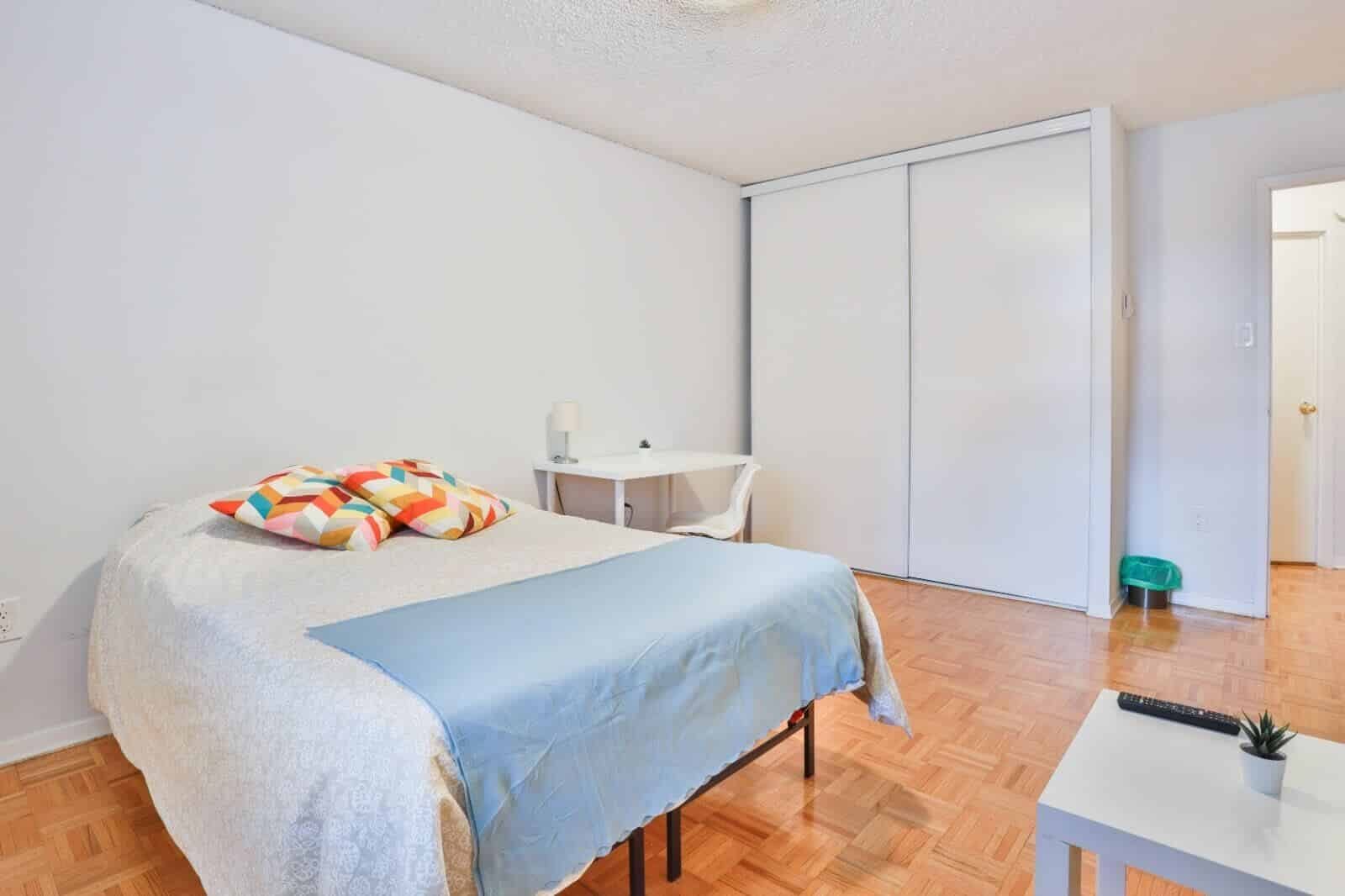
All prices below are indicative — confirm with the operator. They reflect typical weekly rents (unless noted) for a single room in a shared apartment or a studio in purpose‑built student accommodation. Exchange rates fluctuate; figures are in Canadian dollars.
- Low budget (under CAD 200/week): Shared rooms in older houses or basement apartments near Spadina and College. Often includes utilities but may lack laundry or private bathroom. Availability is limited; many units are rented by the semester.
- Mid budget (CAD 200–300/week): Private room in a shared apartment or a small studio in a purpose‑built residence. Locations include the Annex (within 10–15 min walk) or along Bloor/Danforth subway lines (20–30 min commute). Most include Wi‑Fi and basic furnishings.
- High budget (CAD 300+/week): Studio/1‑bedroom apartments or higher‑end shared rooms in new developments close to campus. Some include gym, study lounges, and all‑inclusive utilities. These often lease for 12 months and require a deposit.
The sample data shows a starting price of CAD 150/week, which likely refers to a room in a shared unit with a longer lease. However, you will find most listings in the CAD 200–350 range for 2026/27.
Walk vs Transit: The Trade-Off
Walking to the St. George campus is feasible if you live within a 2‑kilometre radius. That area covers most of the Annex (west), Harbord Village (southwest), and parts of Yorkville (east). A 15‑minute walk can save you CAD 100–150 per month compared to a transit pass (which costs about CAD 143.69/month for a post‑secondary student in 2025; 2026/27 fares may increase slightly). Walkers also avoid crowding and delays.
Transit becomes necessary if you rent farther out. The TTC subway runs along Bloor‑Danforth (Line 2) and Yonge‑University (Line 1). A student living near “3 Herzberg Gardens North York” (a listed residence) would take the subway from Sheppard West or Finch stations — about 30–40 minutes door‑to‑door. The trade‑off: lower rent (potentially CAD 150–200/week) vs. time and monthly transit cost. Some students prefer a longer commute to have a quieter living environment or access to larger apartments.
Bike commuting is also popular; Toronto has bike lanes on Harbord, Bloor, and College. A 5‑km ride from the Danforth area can take around 20 minutes.
Shortlist Logic: Five Residence Options
Below are the five sample residences provided in the data. They are listed to illustrate typical distances, prices (indicative), and features. Always contact the operator for current rates and availability.
- Pearson Housing Carlton Street – Located near Carlton and Church Streets, about 1.5 km east of the St. George campus. That’s a 20‑minute walk or a 10‑minute streetcar ride. The area is lively with restaurants and grocery stores. Indicative rent: CAD 200–250/week for a private room.
- Parkside – Likely in the Parkside Drive area near High Park, west of downtown. About 4 km from campus — a 15‑minute bike ride or 25‑minute subway (Bloor line). Quieter neighbourhood with park access. Indicative rent: CAD 220–280/week.
- 3 Herzberg Gardens North York – Located in North York, 12 km north of campus. Requires subway from Sheppard‑West or Finch station; total commute about 35 minutes. Expect lower rent (CAD 150–200/week) and larger living spaces. Good for students who prioritise savings over convenience.
- 77 Huntley – On Huntley Street near Bloor and Sherbourne, just east of the campus core. A 10‑minute walk to university buildings. This is a premium location; indicative rent CAD 300–350/week for a studio or one‑bedroom.
- Main Street & Danforth – The intersection of Main Street and Danforth Avenue in east Toronto. About 6 km from campus; subway from Main Street station takes 20 minutes to St. George. Rent typically CAD 180–230/week. The Danforth is known for its Greek restaurants and shops.
How to choose: Start by setting a budget and deciding your maximum acceptable commute. If you can afford CAD 250+/week and value a short walk, look at 77 Huntley or Pearson Housing Carlton Street. If you prefer lower rent and don’t mind 30+ minutes of transit, North York or Danforth options work well. Parkside offers a middle ground — moderately lower rent with a manageable bike/subway ride.
Frequently Asked Questions
How do I find student housing near University of Toronto for 2026/2027?
Start by browsing independent student‑housing platforms or directly contacting property managers. Many purpose‑built residences begin leasing in February for September move‑in. Always ask for a written contract specifying rent, utility inclusions, and lease duration. Visit the neighbourhood during a campus tour if possible. The five examples above can serve as a reference, but you should compare multiple listings in your preferred area.
What is the typical rent for a room walking distance to U of T?
Indicative range: CAD 200–350 per week for a private room in a shared apartment or a small studio. Prices depend on size, amenities (in‑unit laundry, gym), and proximity to campus. The closer you are to St. George, the higher the rent. A 15‑minute walk usually costs CAD 250–300/week. Always confirm with the operator — these figures are estimates for 2026/27.
Are there any downsides to commuting from North York or the Danforth?
Commuting from North York or Danforth can save you CAD 50–100 per week, but the daily travel time adds up — about 60–80 minutes round trip. You also need a transit pass (around CAD 140–150/month). Some students find the extra time manageable if they can study on transit; others prefer to live closer to campus to have more time for extracurriculars or work. It’s a personal trade‑off. Try a test commute during peak hours before signing a lease.
data‑date=“2026‑04”
Explore more: Browse all student housing guides