What Campus Reviews Reveal
Utrecht University holds a global QS rank of 103 and a Google rating of 4.3 based on 883 reviews, but the student experience is mixed. Positive reviews highlight the campus environment and transport links. Mansoor Sami (5 stars) wrote: “The university campus is nice, big and clean. It has fast bus connection from P+R to central station via dedicated bus path.” This suggests that getting to and from campus is straightforward, especially for students who live near a P+R (park-and-ride) facility.
Negative reviews, however, point to serious concerns about supervision and internal processes. Daniel Howelli (1 star) stated: “Cannot recommend, as a PhD student I had a terrible supervisor here and the university knew and did nothing. They have all these theoretical rules in place to avoid misuse of power, bullying, isolation of people and they didnt even have the infrastructure for my project.” This indicates that while the physical campus may be pleasant, administrative support and graduate supervision can vary. Jay Sean (1 star) added a caution about hiring based on credentials: “I feel this establishment hires prematurely based on accreditations that may not reflect well on the teaching end.”
For prospective students, these reviews suggest that housing decisions should also account for the need to access good supervision and support networks. Choosing accommodation that places you near your faculty building or within a social cluster of other students could help offset some of the isolation mentioned in the reviews.
Utrecht City Context: A Student-Friendly Hub
Utrecht is the fourth-largest city in the Netherlands and a major student city. The university’s main campus is located at Heidelberglaan 8, 3584 CS Utrecht, in the Utrecht Science Park area. The city centre is about 2–3 km away, reachable by bicycle (10–15 minutes) or bus (15–20 minutes). Utrecht’s central station is a key transport hub with trains connecting to Amsterdam (30 minutes), Schiphol Airport, and other cities. Within the city, a dense network of bus lanes and dedicated cycle paths makes getting around efficient.
The city has a population of around 360,000, of which roughly 70,000 are students (including those at other institutions). This creates a vibrant rental market with many shared houses and studios. The rental market is competitive, especially near the city centre and the Science Park. Most students cycle; parking for bikes is plentiful on campus. Groceries, cafes, and cultural amenities are concentrated in the inner city, while the Science Park hosts a mix of university buildings, student housing complexes, and green spaces.
Budget Bands (2026–2027)
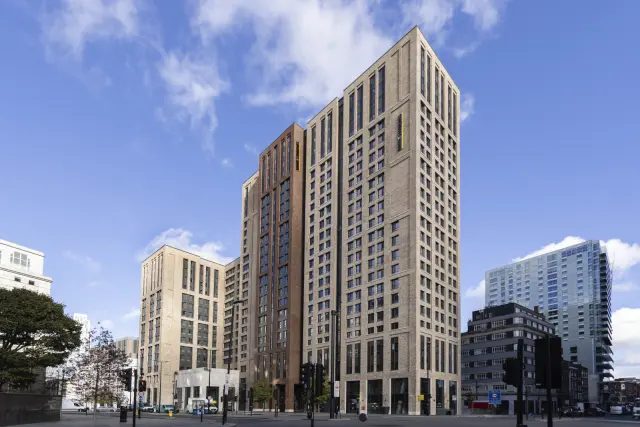
Rental prices in Utrecht vary significantly by room type, location, and whether utilities are included. The figures below are indicative — confirm with the operator before signing any agreement. These bands are typical for the 2026–2027 academic year based on current market trends in the city.
- Shared room in a student house (huiskamer)
€400–€650 per month. Often includes basic furniture and shared kitchen/bathroom. Located in older neighbourhoods like Wittevrouwen, Oudwijk, or closer to the city centre. - Studio or self-contained unit
€700–€1,100 per month. Typically unfurnished or semi-furnished, with private kitchen and bathroom. Popular in newer complexes near the Science Park or in neighbourhoods like Lombok and Zuilen. - One-bedroom apartment
€1,100–€1,600 per month. More common for couples or PhD students. Usually requires a higher deposit (2–3 months’ rent). Found in city centre or in modern developments near the station. - Short-term or furnished rooms (for exchange students)
€550–€900 per month. Often offered by commercial providers with contracts of 6–12 months. Prices tend to be higher per square metre.
Important: Rental prices in Utrecht are regulated partly through the Dutch housing valuation system (woningwaarderingsstelsel). Rooms under a certain point threshold have capped rents, but many student properties remain in the free sector. Always ask for a breakdown of service costs and check if the contract is indefinite or fixed-term.
Walk vs Transit: Choosing Your Location
Living within walking distance of the Utrecht University campus means you can reach your lectures in under 15 minutes on foot. The area immediately around Heidelberglaan (Utrecht Science Park) includes several student housing complexes, but options are limited and in high demand. Walking saves money on public transport and gives you flexibility during late study sessions. However, the immediate vicinity has fewer supermarkets and nightlife options compared to the city centre.
Transit-based living — relying on bus or bike — opens up more affordable neighbourhoods. The bus connection from P+R (park-and-ride) to central station, as noted in the review, is fast and operates on dedicated bus paths, avoiding traffic jams. Many students cycle from the city centre to campus in 10–15 minutes. Public transport costs (€50–€100 per month for a student annual travel product, if eligible) should be factored into your budget.
Trade-off summary:
- Walk: highest rent per square metre near Science Park; 0–15 min commute; more peace and quiet; fewer shops.
- Cycle: moderate rent in outer ring neighbourhoods; 10–20 min commute; good work-life balance; requires a bicycle (€150–€300 one-time cost).
- Bus/train: lowest rent in suburbs like Overvecht or Nieuwegein; 20–30 min commute; seasonal reliability issues; monthly transport pass needed.
For most students, a bicycle is the optimal balance: affordable, fast, and gives access to both campus and city centre. If you prefer walking, look for listings within 1.5 km of Heidelberglaan 8 — but expect to pay a premium.
Shortlist Logic Using Nearby Residences
When evaluating specific student housing properties near Utrecht University, use the following logic based on the campus address and typical transport corridors. (No specific residence names are provided in the given data, so this framework helps you assess any listing you find.)
- Check the walking distance to Heidelberglaan 8
Use a mapping tool (not named here) to verify actual walking time. Aim for ≤20 minutes if you plan to walk regularly. Longer distances are acceptable if you will cycle. - Look for bus stops along the dedicated bus path
The review confirms a fast bus connection from P+R to central station. Properties near a P+R (e.g., P+R Westraven, P+R De Uithof) or on bus lines 12, 28, 77 offer direct access to campus. Check frequency (>4 per hour during peak). - Prioritise areas with existing student clusters
Neighbourhoods like Wittevrouwen, Oudwijk, and the Science Park itself are traditional student areas. They have more shared houses and higher turnover. Social connections formed in these areas can help counteract the isolation mentioned in negative reviews. - Factor in supermarket and laundry proximity
Campus has limited grocery options (only a small shop). Choose a residence within 500 m of a supermarket (e.g., Albert Heijn, Jumbo) to avoid carrying heavy bags long distances. - Check contract type and deposit rules
Many student houses require a deposit equivalent to 2 months’ rent. Short-term contracts (≤12 months) are common for international students. Confirm utility costs and whether internet is included. - Use the university’s own housing help (without naming third parties)
Utrecht University provides guidance on finding housing; some faculties operate a housing database for incoming students. Always verify ownership — rental scams are not uncommon.
By applying this logic, you can create a shortlist of 5–7 residences to view. Cross-reference with the indicartive budget bands above to avoid overspending.
Frequently Asked Questions
1. Is the area around Utrecht University safe for students?
Yes, the university campus and surrounding Utrecht Science Park are generally safe. The Google rating of 4.3 reflects overall satisfaction. However, individual experiences vary. The negative reviews mentioned bullying and power misuse within academic departments, not safety of the physical environment. Standard city precautions apply: lock bikes securely, avoid poorly lit areas late at night, and use the university’s security app if available for emergencies.
2. Do I need a bicycle to live in Utrecht as a student?
A bicycle is strongly recommended but not strictly necessary if you live within walking distance (≤1.5 km) of Heidelberglaan 8 or on a direct bus line. Most students cycle because it is faster than buses at peak times, cheaper than monthly public transport, and gives access to the city centre. You can buy a second-hand bike for €100–€200. If you do not cycle, budget €50–€70 per month for a bus pass (students may be eligible for a discount through the university travel scheme — check with the operator).
3. How can I avoid bad rental experiences similar to the university supervision issues mentioned in reviews?
The review by Daniel Howelli criticises the university for failing to act on complaints about a supervisor. To avoid equivalent problems with housing, read the tenancy contract carefully, take photos of the property upon move-in, and insist on a written condition report. Join a tenant union or ask the university’s student advice desk about reliable landlords. If a landlord refuses to fix maintenance issues, you can report them to the Dutch Rent Tribunal (Huurcommissie). Always transfer the deposit into a blocked account, if possible, and keep records of all payments.
Data as of 2026. All prices are indicative and should be confirmed with the housing operator at the time of booking.
Explore more: Browse all student housing guides