What Campus Reviews Reveal
Student feedback about Zhengzhou University is mixed but revealing. One reviewer, Maliha Tasnim, gave a five-star rating and wrote: “I got admitted in September 2020 in this University. Here teachers are really helpful and talented, love this University 😍.” That positive experience is echoed by another former foreign lecturer, imran: “I would not think of giving a review, but this experience is truly worth sharing. Almost 10 or 11 years ago, I had the incredible opportunity to teach at a university in China as a foreign photography lecturer. It was a life-changing experience that I cherish deeply. The local people treated me with …”
On the other hand, a one-star review from zahra m highlights a recurring challenge: “If u want to waste ur time and money come here. 99% of teachers can’t speak English and their listening is that bad that u need to repeat a simple question like ‘does these kind questions come in exam?’ Several times and at the end some of them still dont understand, so u need to say it in chinese.” This points to a significant language barrier that international students should anticipate. The overall Google rating of 4.6 from 119 reviews suggests most experiences are positive, but the English proficiency issue is real and may affect your daily interaction with faculty and staff.
For housing decisions, this feedback matters: if you expect to rely on English for arranging utilities, negotiating rent, or communicating with a landlord, you will need Chinese language support or a bilingual agent. Living in an area with more international students or English-speaking property managers could reduce friction.
City Context: Living in Zhengzhou as an International Student
Zhengzhou is the capital of Henan Province, a major transportation hub in central China. It is a large, rapidly developing city with a population of over 10 million. Zhengzhou University’s main campus (the one at 100 Ke Xue Da Dao) is located in the Zhongyuan District, about 10–15 km west of the city centre. The surrounding area is a mix of university facilities, residential compounds, and local shops. Public transport includes an extensive bus network and several metro lines (Line 1 runs near the campus). Taxis and ride-hailing apps are widely available.
The cost of living in Zhengzhou is lower than in Tier-1 cities like Beijing or Shanghai. A student budget for rent, food, transport, and utilities typically ranges from 3,000 to 6,000 CNY per month (indicative — confirm with the operator). Rent is the biggest variable. Groceries and eating out are affordable: a basic meal at a local restaurant costs 15–25 CNY.
The climate is continental with hot summers and cold, dry winters. Accommodation with reliable heating and air conditioning is important. Most purpose-built student housing and apartments near the university come with these, but older local rentals may not. Check before signing.
Typical Budget Bands for Student Housing Near Zhengzhou University
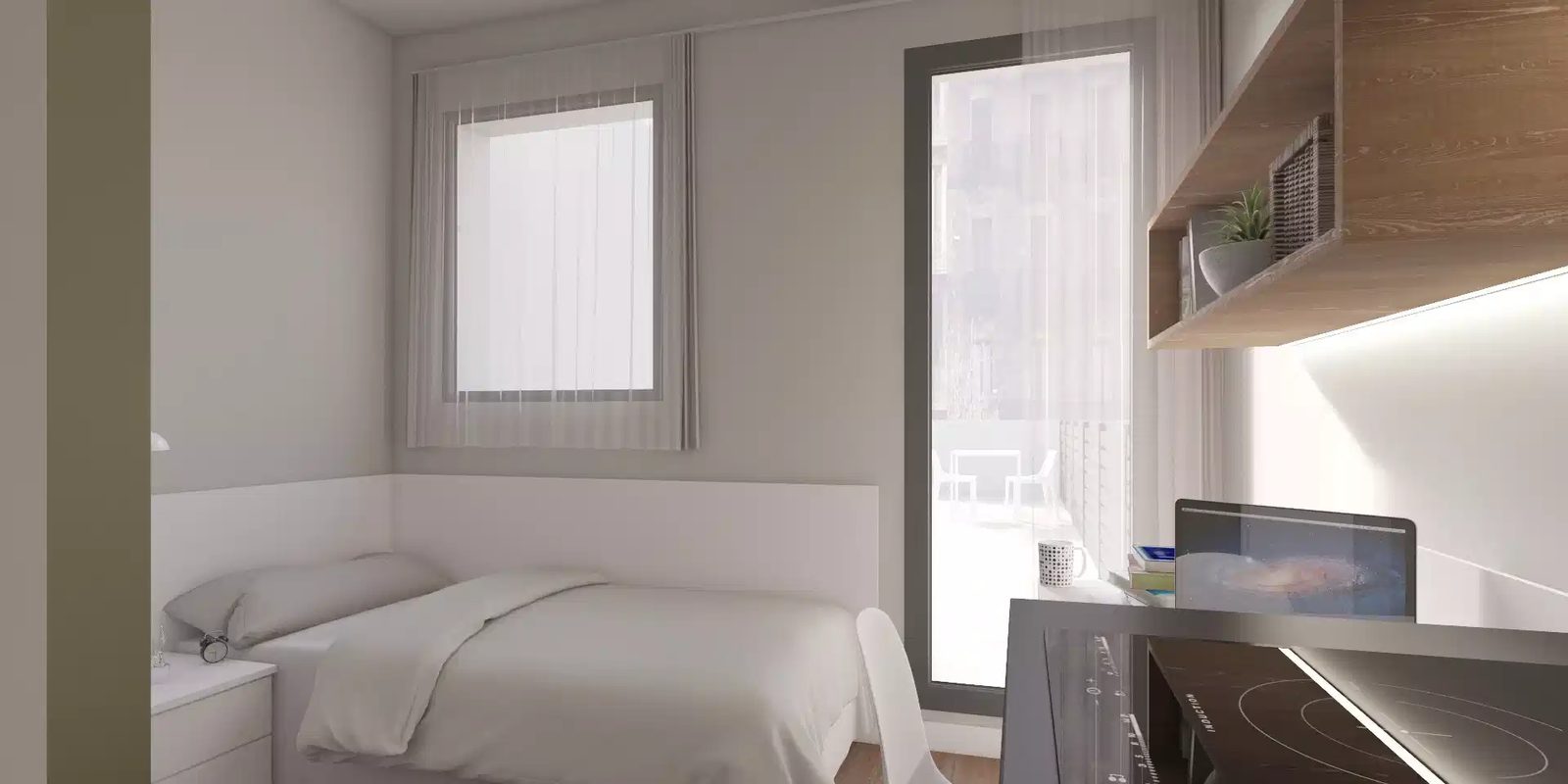
Rents in the vicinity of the main campus fall into three broad bands for the 2026–2027 academic year. All figures are indicative — confirm with the operator.
Low budget: 1,200–2,200 CNY per month
Shared apartments (hezu) in older buildings, often with 2–4 bedrooms and shared kitchen/bathroom. These are usually within 1–2 km of the campus. Furniture is basic. You may need to pay for water, electricity, and internet separately. This option suits students who prioritise low cost and are comfortable with less modern facilities.
Mid budget: 2,500–4,000 CNY per month
Studio or one-bedroom apartments in newer residential compounds. Many are within walking distance (10–20 minutes) or a short bus/metro ride from the university. These units typically have a private bathroom, small kitchenette, air conditioning, and heating. Some compound gates have security and basic amenities like a small shop.
High budget: 4,500–7,000 CNY per month
Two-bedroom apartments or serviced apartments aimed at international students and faculty. These are often in gated communities closer to the campus or near a metro station. They may include a full kitchen, larger living space, and sometimes a small gym or laundry service. Suitable for couples or students who want more privacy and comfort.
Walk vs. Transit: Choosing Your Commute
Walking distance (within 1 km)
The area immediately around Ke Xue Da Dao has several residential compounds that are within a 10–15 minute walk of the main teaching buildings. Walking saves time and money, but these apartments tend to be slightly more expensive. Noise from the main road can be an issue in some buildings. Check if the unit faces a quiet courtyard.
Short transit (1–3 km, bus or metro)
Living a bit further away — near a bus stop along Ke Xue Da Dao or close to a metro station on Line 1 — can bring cheaper rent, especially in older neighbourhoods. A one-way commute by bus takes about 15–25 minutes. A monthly transport pass costs around 100–150 CNY. The trade-off is that you trade about 30–50 minutes extra each day for a lower rent.
Longer transit (3–5 km)
Some students choose accommodations near Zhengzhou East Railway Station or in the Jinshui District, which has more international dining and services. The commute to the university via metro + bus can take 40–55 minutes each way. Rent can drop by 20–30% compared to campus-adjacent housing. This is a viable option if you prefer a more lively neighbourhood and don’t mind the travel time.
Shortlisting Logic for Nearby Residences
Because specific nearby residences are not listed in the dataset, the following logic can help you evaluate any property you find. Apply these criteria when comparing options:
- Determine your budget band (low, mid, high) and stick to it. Include utilities (water, electricity, gas, internet) which add roughly 200–500 CNY per month depending on usage.
- Map the commute using real-time data. Use Baidu Maps or Gaode Maps to check walking time, bus frequency, and metro station distance. A 15-minute walk is generally acceptable for most students.
- Check the building’s English accessibility. Visit the property management office or ask the landlord if a bilingual contact is available. If not, bring a Chinese-speaking friend or use a translation app for contract terms.
- Inspect the room and facilities. Ensure heating, air conditioning, hot water, and washing machine are in working condition. Ask about pest control and garbage collection.
- Read the lease carefully. Standard Chinese leases last 12 months. Short-term (6 months) may be possible but often at a higher monthly rate. Confirm deposit (usually one month’s rent) and notice period for moving out.
- Cross-check with other international students. Online platforms (not named here) or university notice boards sometimes list reviews of specific compounds. Ask around before signing.
Using this logic, you can shortlist three to five options within your preferred area, then physically inspect them before committing.
Frequently Asked Questions
1. Do I need to sign a lease in Chinese, and what should I look out for?
Yes, most rental contracts are in Chinese. Even if you have an English translation, the Chinese version is legally binding. Key clauses to check: rent amount, payment schedule (usually monthly or quarterly), deposit conditions (how much and when it is returned), maintenance responsibilities, and penalties for early termination. Have a Chinese-speaking friend or a professional translator review the document before signing.
2. What are typical utility costs for a student apartment near Zhengzhou University?
For a single person in a mid-budget studio, water and electricity typically cost 150–300 CNY per month in autumn/spring and 300–500 CNY per month in summer (air conditioning) or winter (heating). Gas (if used for cooking) adds roughly 30–80 CNY per month. Internet is usually 50–100 CNY per month. These figures are indicative — confirm with the operator.
3. Should I find housing before arriving in Zhengzhou, or can I search after arrival?
Ideally, arrange a short-term stay (e.g., a hostel or university guesthouse) for the first week and then search in person. This allows you to inspect the room, check the neighbourhood, and meet the landlord. If you must sign a lease remotely, use a reputable agency that offers a video tour and a written guarantee. Beware of scams asking for deposit before you see the property.
Data as of early 2026. All prices, ratings, and review excerpts are sourced from public user data and are indicative — confirm with the operator before making any commitment.
Explore more: Browse all student housing guides