Data updated: 2026
Neighbourhoods Logic by Commute
Irvine is a planned city in Orange County, California, with a street network designed around the University of California, Irvine (UCI). The housing supply for students is concentrated in a few distinct zones, each with a different commute profile. Understanding how these zones relate to UCI’s campus will help you narrow down your search.
1. On‑Campus / University‑Adjacent (0–1.5 miles)
The immediate vicinity of UCI is dominated by apartment complexes aimed at students and faculty. Walking or cycling to classes takes 5–15 minutes. The campus has dedicated bike lanes, and many complexes are within a short ride of the Aldrich Park core. Buses from the Anteater Express (free for students) and OCTA also link these areas. Because of the convenience, rents here tend to be at the higher end of the band.
2. Near‑Campus Corridors (1.5–3 miles)
Roads such as Culver Drive, Harvard Avenue, and Jamboree Road host many rental properties. By bike it’s 10–20 minutes; by bus 15–25 minutes. This zone includes neighbourhoods like University Town Center (UTC) – a mixed‑use area with groceries, restaurants, and the UTC shopping centre – and Park Place near the 405/5 freeway interchange. Commute times increase if you rely on buses, but the lower rent compared to directly on campus can be attractive.
3. Suburban Communities (3–5+ miles)
Neighbourhoods such as Woodbridge, Turtle Rock, Westpark, and Northwood are primarily family‑oriented. Renting a room in a house or a small apartment here is often quieter and cheaper, but you will need a car or a long bike ride (20–40 minutes). Bus routes serve main roads, but frequency drops in the evenings and weekends. For students without a car, living beyond 3 miles usually means a commute of 30–50 minutes by public transport.
Commute logic summary (based on typical student schedules)
- Walkers & cyclists: focus on properties within 1.5 miles of UCI.
- Bus riders: prefer corridors along Culver, Harvard, or Jamboree with frequent service.
- Drivers: can consider any neighbourhood within a 15‑minute drive, but parking on campus is limited and costs around USD 100–150 per semester (subject to change).
Given that Irvine’s rental market is tight, your budget and willingness to share housing will be the main factors in choosing between these zones.
Price Bands from the Given Data
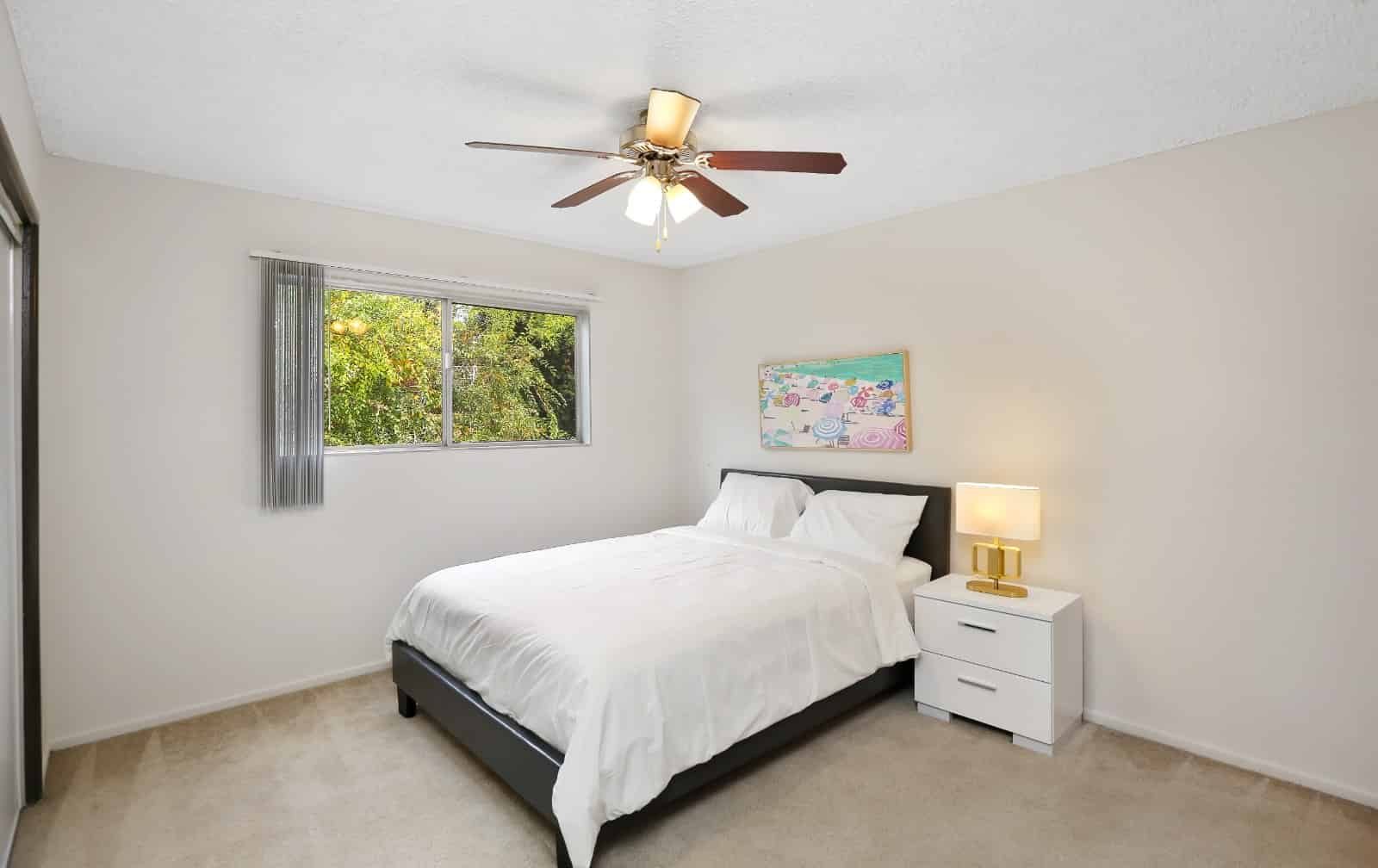
The platform currently lists 5 properties in Irvine with a minimum price of USD 975 per month. All prices below are indicative — confirm with the operator before making any decision. Actual rents vary by lease length, unit size, and season.
Band 1: Economy – USD 975 to USD 1,200
This band covers shared accommodation (private room in a 2‑ to 4‑bedroom apartment) or small studios in older buildings. The lowest listed item at USD 975 falls here. Properties at this level are rare (likely fewer than 2 of the 5 listings). They tend to be in older complexes a 20‑30‑minute walk or bus ride from campus. Expect basic amenities: shared laundry, no central air in some units, and limited parking.
Band 2: Mid‑Range – USD 1,200 to USD 1,600
Most of the 5 properties are likely in this range. A typical 1‑bedroom apartment or a larger private room in a newer complex costs around USD 1,400–1,500. These are generally within 2 miles of campus or on a direct bus line. Features may include in‑unit washer/dryer, garage parking, and a gym or pool.
Band 3: Premium – USD 1,600+
If any listing exceeds USD 1,600, it would be for a luxury 1‑bedroom or a 2‑bedroom near the campus core or in a brand‑new building. Because only 5 listings exist on this platform, the upper boundary is unknown. For reference, market‑rate studios in Irvine can exceed USD 2,000 in 2026, but these are not necessarily captured here.
Important
- The 5‑property count is small, so the price bands above are a rough guide based on the local market, not a complete picture.
- Many off‑platform rooms go for USD 800–1,100, but they may not be available through this global platform.
- Always ask about utilities (electricity, water, internet) – some rents include them, others add USD 100–150 per month.
How University of California, Irvine Maps to Areas
The only university in the data is University of California, Irvine (UCI), ranked 293 globally (according to the provided reference). UCI’s main campus is located at 3111 Peltason Drive, near the intersection of University Drive and Culver Drive. The campus is roughly 1,500 acres and is divided into academic units (social sciences, engineering, medical centre, etc.), but all are walkable from the central ring.
Directly adjacent areas (best for walking/cycling)
- Campus Village / Verano Place: faculty‑staff housing, but some units are available to graduate students.
- University Town Center (UTC): a commercial hub with apartments above shops, a 5‑minute walk to the eastern edge of campus.
- Palo Verde / Cornell: apartment complexes between Campus Drive and the 405 freeway.
Secondary areas (5–10‑minute drive)
- Woodbridge: a large residential village with two lakes, shopping centres, and many duplexes/townhomes. Bus route 167 connects to UCI.
- Turtle Rock: hilly neighbourhood just south of campus, with some rental houses and a small shopping plaza.
- Westpark: between the 405 and 5 freeways, about 3 miles northwest. Bus route 79/473 serve the area.
Distribution of the 5 listed properties
Without exact addresses, we can infer that the platform’s 5 properties are likely concentrated in UTC (close to campus) and along the Culver/Harvard corridors, as those are the most often listed by student‑focused operators. You can filter by “distance to UC Irvine” on the platform to see which ones fall within 1 mile versus 3 miles.
3 Pitfalls When Renting in Irvine
1. Lease Rigidity and Early Termination Fees
Many Irvine apartment complexes require a 12‑month lease and charge a penalty of one to two months’ rent if you leave early. Subletting is often prohibited or requires written approval. Before signing, ask:
- What is the penalty for breaking the lease?
- Is subletting allowed?
- Can you transfer to another unit within the same complex?
Some student‑oriented properties offer 9‑month leases aligned with the academic year, but they may cost more per month.
2. Parking Scarcity and Cost
On‑campus parking permits are limited and expensive (USD 900–1,200 per academic year in 2026, depending on the lot). Off‑campus parking at your apartment might also be limited: many complexes assign one space per unit, and additional spaces cost USD 50–150 per month. If you plan to have a car, verify parking availability and cost before renting. In dense neighbourhoods like UTC, street parking is scarce and regulated by permits.
3. Utility and Fee Surprises
Listed rent often does not include electricity, gas, water, sewer, trash, or internet. In Irvine, summer electricity bills can reach USD 150–200 due to air conditioning. Some apartments charge mandatory “amenity fees” (e.g., for pool or gym) of USD 25–50 per month. Always request a total monthly cost breakdown in writing. Also, check whether the unit has central air or only window units – this affects both comfort and utility costs.
Booking Calendar
For a start date in August or September 2026 (the typical academic year), use the following timeline:
- January – March 2026: Start researching neighbourhoods and budgeting. Contact the 5 listed operators to check availability and lease terms. Many release rooms for the following fall during this period.
- April – May 2026: Best window to sign a lease. Inventory is highest, and you have negotiation power. Confirm that the property will be available for your intended move‑in date (some require a mid‑month move‑in).
- June – July 2026: Late booking. Most desirable units are gone. You may need to accept a higher price or a less convenient location. Some operators charge a late booking fee.
- August – September 2026: Move in. Expect possible delays in key handover and maintenance requests. Have a backup plan (temporary housing) if your unit isn’t ready.
If you need to arrive earlier (e.g., for summer session or orientation), you can look for short‑term sublets (June–August) through the platform or campus bulletin boards, but these are not covered by the 5 listed properties.
Frequently Asked Questions
FAQ 1: When should I start looking for student housing in Irvine?
Start your search at least 4–5 months before your planned move‑in. The busiest period is March–May for fall arrivals. If you start later (June‑July), choices drop significantly. For a spring start (January), look in September–October.
FAQ 2: What are the main transportation options from off‑campus housing to UCI?
The Anteater Express (free with student ID) runs several routes covering UTC, Park Place, and the main campus. OCTA buses (fare about USD 2 per ride or a monthly pass) serve broader areas like Woodbridge. Cycling is common year‑round. A few students drive, but parking is expensive and competitive.
FAQ 3: Are utilities typically included in the listed rent?
Not always. Most listings on this platform show rent only. Confirm whether electricity, gas, water, sewer, trash, and internet are included or billed separately. A typical all‑inclusive rent might be USD 100–200 higher than the base rent.
FAQ 4: Do I need a co‑signer or guarantor to rent in Irvine?
Many landlords require a US‑based guarantor with a credit score above 650–700. International students without a US credit history may need to pay a larger security deposit (e.g., one month’s rent) or provide proof of sufficient funds. Some student‑focused operators accept international guarantors or offer a surety bond program – ask the operator directly.
See also: listing details · browse more