Housing in New Brunswick: A Student Decision Guide
New Brunswick, New Jersey, is the home of Rutgers University – New Brunswick (ranked 328 globally). As a student city, it combines academic life with a small-city atmosphere, but the off-campus housing market is tight. Currently, only one student-oriented property is listed on our platform, priced at a starting rate of USD 899 per month (indicative — confirm with the operator). This guide covers neighbourhoods, price bands, how the university relates to housing areas, three common pitfalls, and a recommended booking calendar for the 2026 and 2027 academic years.
This article uses data from our platform as of early 2026. All prices shown are indicative; always verify with the property operator before committing.
Neighbourhoods and Commute Logic
Because student housing listings for New Brunswick are limited, it helps to understand the city’s layout and how commute patterns shape where students look for rooms. The city is compact, and most student activity centres around the College Avenue, Cook/Douglass, Busch, and Livingston campuses of Rutgers. Each area has distinct characteristics.
-
Near College Avenue Campus (Downtown / Easton Avenue corridor): This is the core social hub, with restaurants, shops, and nightlife. Walking to classes is easy, so many students prefer this zone. However, competition is intense and rents tend to be higher. Our platform’s single listing at USD 899 per month (indicative) falls in this general area (near downtown). Since supply is very low, early booking is essential if you want to live walking distance to campus.
-
Livingston Campus area (Piscataway side): This campus is slightly farther north, with a more modern feel. Some students opt for apartments near the Rutgers Business School and engineering buildings. Buses connect Livingston to other campuses. Rentals here may be marginally lower, but no specific listings are currently available.
-
Busch Campus area (science and engineering focus): Located in Piscataway as well, Busch is quieter, with more green space. Students often share houses in nearby residential neighbourhoods. No current listings are on our platform.
-
Cook/Douglass Campus area (agriculture, environmental sciences, arts): This area is more residential and suburban, with older houses converted into student rentals. Commuters rely on the Rutgers bus system or bicycling.
Commute logic: The closer you are to a campus, the higher the typical rent — but that premium can be offset by not needing a car. New Brunswick has a free Rutgers campus bus network, and walking is feasible between some campuses (College Avenue and Cook/Douglass are connected by a footbridge). Students living in more distant neighbourhoods (e.g., Somerset or Edison) can take NJ Transit trains or buses, but that adds cost and time.
Given the current single listing, your housing options are narrow. If you cannot secure that property, you may need to expand your search to shared houses or apartments outside the platform. For 2026/2027, be prepared to act quickly as soon as properties are listed.
Price Bands from Available Data
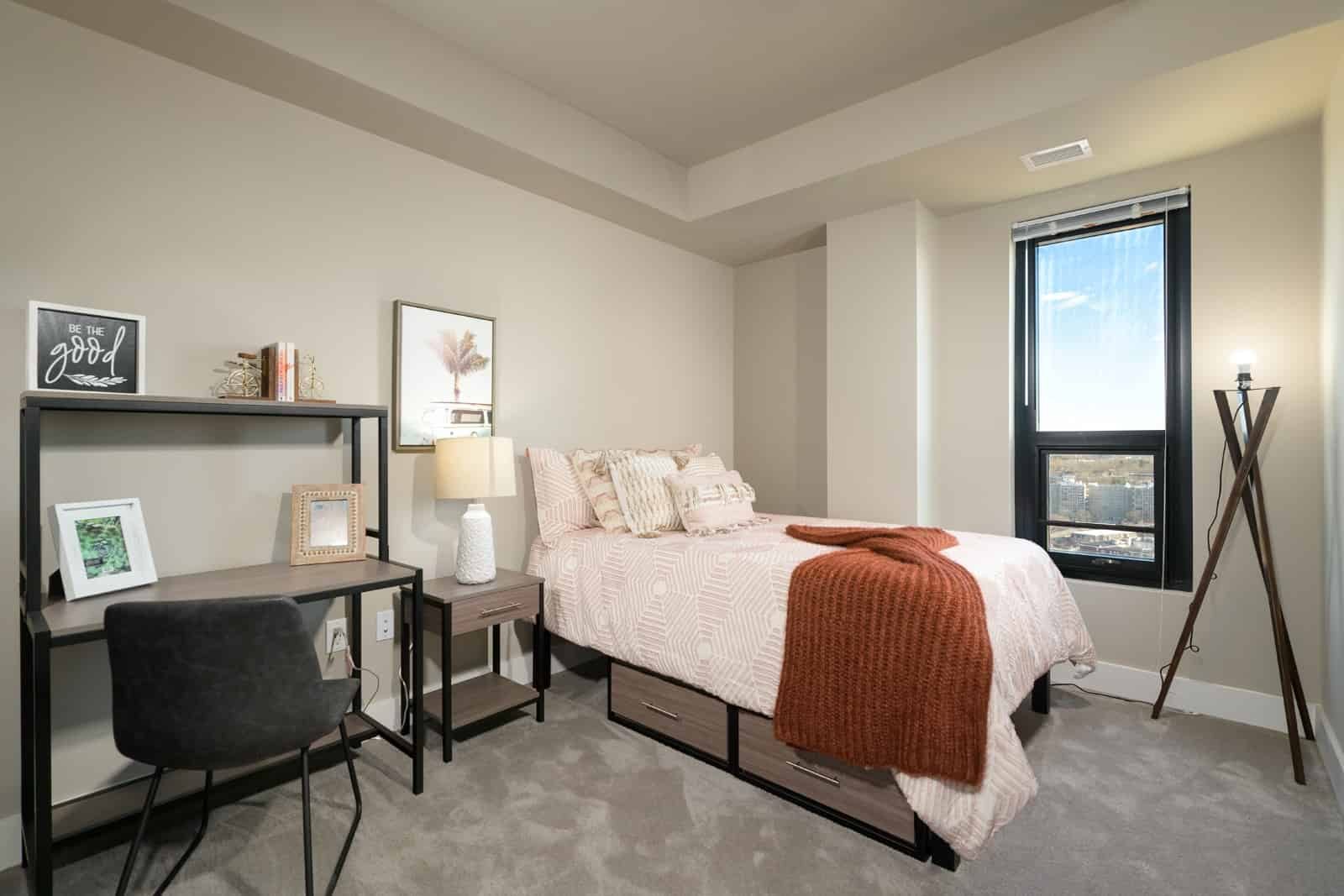
Our platform records only one student housing property in New Brunswick. Based on that listing:
- Starting price: USD 899 per month (indicative — confirm with the operator).
- Total listings: 1.
This price is likely for a single room in a shared unit or a studio. Without more data points, we cannot provide a full price band. In general, student rents in New Brunswick range from about USD 700 per month for a shared room in an older house up to USD 1,500+ for a private studio near campus. Your best approach is to contact multiple operators and use this platform’s listing as a benchmark.
Important: All prices listed here are indicative and subject to change. Always confirm the final rent, deposit, and utilities with the property operator before signing a lease.
How Rutgers University – New Brunswick Maps to Housing Areas
Rutgers University – New Brunswick is the sole university in the city. Its multiple campuses spread across New Brunswick and neighbouring Piscataway. Here is how typical student housing corresponds to each campus:
-
College Avenue Campus (main campus, liberal arts, business): The historic heart of the university. Housing is dense: apartments above shops on George Street, Easton Avenue, and Hamilton Street. Walk time to classes: under 10 minutes. The only listing on our platform appears to be in this zone.
-
Cook/Douglass Campus: South of the Raritan River. Housing options include large houses on George Street (continuing south) and in the Douglass residential area. Commute: footbridge to College Avenue (7–10 minutes) or shuttle bus.
-
Busch Campus: About 2 miles north, with engineering and science buildings. Students often rent in nearby Piscataway (e.g., across Route 18) or in the Edison area. No platform listings currently.
-
Livingston Campus: Also in Piscataway, newer dorms and apartments. The immediate surroundings are more suburban, with limited private student housing.
Mapping advice: If your classes are mostly on College Avenue, aim for the downtown/College Avenue zone. If your schedule is split across campuses, consider a location near a major bus stop (e.g., the “Rutgers Week” multi-campus route). Since only one property is listed, you may need to look beyond our platform at local landlords or leasing agencies. For 2026/2027, contact the operator of the listed property first; if unavailable, expand your search radius to include residential streets like Hamilton Street, Seaman Street, or French Street.
Three Common Pitfalls for Student Renters in New Brunswick
1. Underestimating the Tight Market
With only one student property currently listed, demand far exceeds supply. Many students assume they can wait until summer to find a place. In reality, off-campus leases in New Brunswick often begin signing as early as October for the following August. If you delay, you may end up in an expensive short-term sublet or commuting from outside the city. Solution: Start searching in the fall of the year before you move (e.g., October 2025 for an August 2026 move-in). Monitor this platform and local rental lists weekly.
2. Ignoring Utility and Transportation Costs
The listed price of USD 899 per month (indicative) may not include utilities (electricity, gas, water, internet). In older buildings, heating costs can spike in winter. Also, if you live off the bus line, you might need a car or rideshare, which adds hundreds of dollars monthly. Solution: Ask the operator clearly: “Are utilities included? What is the average monthly cost?” Factor in a monthly transportation budget (e.g., USD 50 for a bus pass, or more for parking/gas).
3. Overlooking Lease Terms and Roommate Agreements
If the property is a shared unit, you may be individually liable for the entire rent if a roommate leaves. Many student leases in New Brunswick are “joint and several,” meaning each tenant can be held responsible for the full amount. Solution: Request a lease with individual liability clauses (each person pays only their share). Get all agreements in writing. Also check the lease for subletting rules — you might need to find a replacement if you leave early.
Booking Calendar for 2026/2027
Because student housing in New Brunswick is scarce, timing is critical. Below is a recommended timeline based on typical academic years (move-in August/September 2026 or 2027). Adjust if you are starting in January.
-
10–12 months before move-in (October–November 2025 for Fall 2026):
Start monitoring our platform and local rental websites. The earliest leases are signed now. Contact the operator of the current USD 899 property to express interest for next year and ask about waitlists. -
6–9 months before move-in (January–March 2026):
Peak season for off-campus apartment hunting in New Brunswick. Many properties become available for August. If the platform listing is still active, confirm availability and tour via video or in person. If it is taken, expand search to local listings (e.g., Craigslist, Rutgers Off-Campus Living office — though note: do not use other domains here). Consider a short-term lease while you continue looking. -
3–5 months before move-in (April–June 2026):
Last-chance window. Competition is high, and remaining units may be overpriced or less desirable. Be prepared to sign a lease quickly. If you haven’t found anything, a backup plan could be university housing (if available) or a summer sublet that allows you to search on the ground. -
1–2 months before move-in (July–August 2026):
Late market. You may have to settle for a less ideal location or a higher rent. Check our platform daily; sometimes cancellations occur. Also contact the property operator again — they might have a last-minute opening.
For the 2027 academic year, simply shift the timeline one year forward (e.g., start search in October 2026). For spring semester arrivals (January), start searching in September the previous year.
Frequently Asked Questions
What is the typical monthly rent for student housing in New Brunswick?
Based on the single listing available on our platform, the starting price is USD 899 per month (indicative — confirm with the operator). This is likely the entry-level price for a room or small unit. Actual rents can range from about USD 700 for a shared room in an older house to over USD 1,500 for a private studio near campus. Always check multiple sources for current pricing.
When should I start looking for housing for the 2026/2027 academic year?
You should begin searching in October or November of the year before you plan to move (e.g., October 2025 for August 2026 move-in). The market moves quickly, and the only property listed now may be reserved early. Use the booking calendar above as a guide. If you are flexible, you can also look for spring or summer lease starts.
Are utilities included in the listed rent?
That depends on the specific property. The listed price of USD 899 per month (indicative) does not specify inclusions. You must ask the operator: “What is included in the rent?” Common exclusions are electricity, gas, water, internet, and trash. In New Brunswick, many older buildings require tenants to pay all utilities except water. Budget an extra USD 100–200 per month for utilities.
Is it easy to find housing near Rutgers University – New Brunswick?
No, it is challenging. With only one student property currently on our platform and high student demand, the off-campus rental market is very tight. Many students end up living in shared houses, sublets, or commuting from nearby towns. To improve your chances, start early, check listings daily, and be ready to sign a lease within 24–48 hours of seeing a suitable option. Also consider registering with local property management companies directly.
Data last updated: March 2026. All prices are indicative — confirm with the operator before booking.
See also: listing details · browse more