Rennes at a Glance: A Student City with One Indicative Listing
Rennes, the capital of Brittany in north-western France, is a midsized city known for its historic centre, lively student population, and relatively affordable living costs compared to Paris or Lyon. For the 2026–2027 academic year, our platform currently lists 1 property with a starting rent of €705 (indicative — confirm with the operator). This single entry does not reflect the full rental market — Rennes offers a wide variety of student housing options, from shared flats near the main campuses to studios in the picturesque old town. The figure serves as a baseline: you will likely find cheaper rooms in outer neighbourhoods or older buildings, and more expensive apartments in prime locations.
Rennes is served by the Métro (line A and line B), a bus network, and bicycle-friendly streets. Most university buildings and faculties are within 20–30 minutes of the centre by public transport. The city’s student population exceeds 60,000, making it one of France’s most vibrant academic hubs. This guide focuses on how to choose a neighbourhood based on commute times, what price bands to expect given the available data, how the city’s universities are distributed, three common renting pitfalls, and a practical booking calendar for 2026 and 2027.
Neighbourhoods by Commute Logic
Choosing where to live in Rennes depends heavily on where your classes are held. The city has four main zones for students:
1. Centre-Ville (Old Town)
This is the historic heart, with half-timbered houses, cobblestone streets, and a dense concentration of shops, restaurants, and bars. The Métro lines A and B intersect at the station “République.” Many university faculties have satellite buildings in the centre (e.g., law, economics, and arts). Commute to the major campus areas:
- To Beaulieu campus (east): 15–20 minutes by Métro line A (direction La Poterie) from République.
- To Villejean campus (north-west): 15–20 minutes by Métro line A (direction J.F. Kennedy) or bus.
- To the hospital/university area (Pontchaillou): 10–15 minutes by bus or bike.
Rents in Centre-Ville are generally the highest: expect studios above €700 (indicative — confirm with the operator) and shared flats around €500–600 per person.
2. Thabor – Saint-Hélier
An upmarket residential area east of the centre, bordering the Parc du Thabor. Popular with students who prefer quiet, green surroundings. Commute to Beaulieu is about 20 minutes by bus or bike; to Villejean about 25 minutes. Rent levels are similar to Centre-Ville but with more spacious apartments. The single listing at €705 (indicative — confirm with the operator) could be located in this band, though our data does not specify the exact address.
3. Beaulieu – Le Blosne (East)
Beaulieu is the main science and engineering campus (often called the “Campus de Beaulieu”). This area is dominated by student residences and modern apartment blocks. Rent is generally lower than the centre: studios from €450, shared rooms from €350 (indicative — confirm with the operator). Commute to Centre-Ville: 15–20 minutes by Métro line A. The neighbourhood is functional, with supermarkets and a few cafés, but less lively than the centre.
4. Villejean – Pontchaillou (North-West)
Villejean houses the humanities and social sciences faculties (the “Campus de Villejean”) and the university hospital. Many purpose-built student residences are located here. Rent levels are comparable to Beaulieu: studios from €430, shared flats from €330 (indicative — confirm with the operator). Commute to Centre-Ville: 15 minutes by Métro line A. The area has a young, international feel, with plenty of cheap eateries and a large supermarket.
5. Maurepas – Patton (North)
A residential neighbourhood with a mix of private apartments and CROUS residences. Less popular among international students due to longer commute times (25–30 minutes to both campuses by bus). Rents can be cheaper: studios from €380 (indicative — confirm with the operator). Good for those who don’t mind a longer travel time and want to save money.
Note: Our platform’s single listing at €705 (indicative — confirm with the operator) may represent a studio or one-bedroom in a central or mid-range area. Always verify the exact location and condition with the operator before booking.
Price Bands from Our Data (and What They Mean)
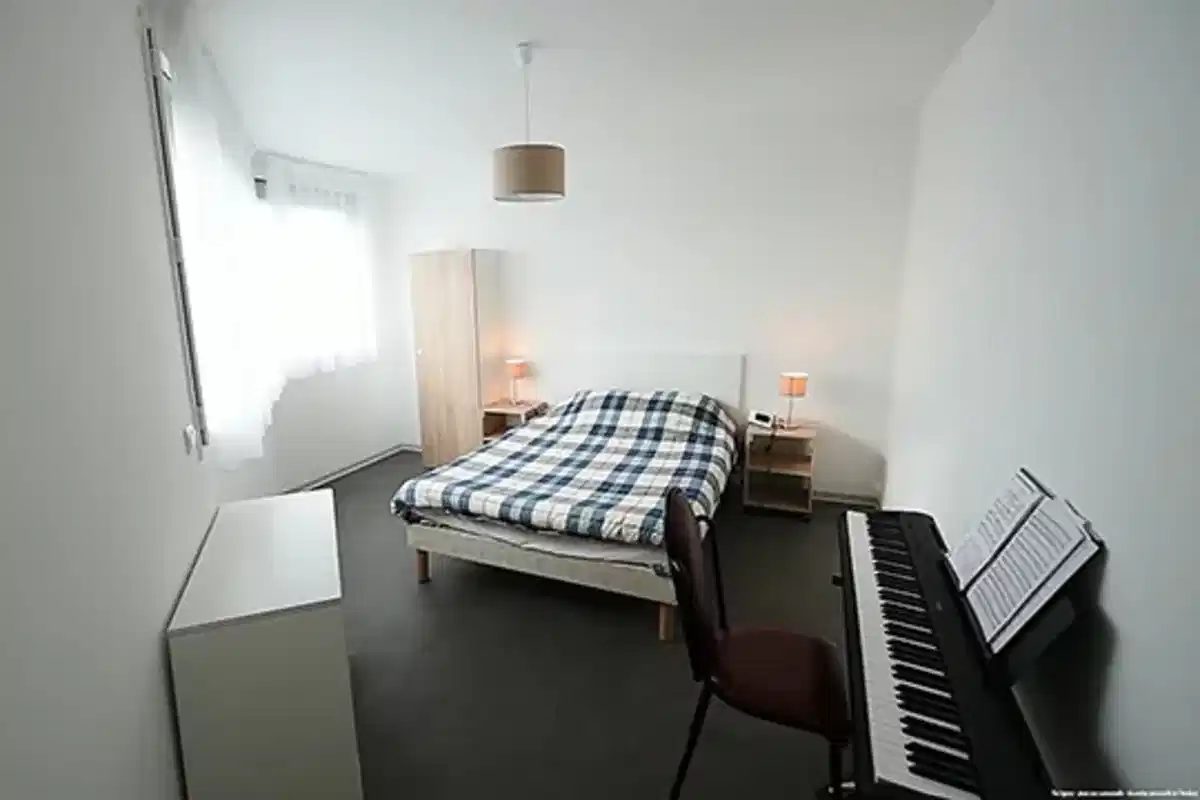
Our current data for Rennes shows 1 property at a minimum price of €705 (indicative — confirm with the operator). This is likely a fully equipped studio or a two-room apartment in a convenient location. Because only one unit appears, a broader market overview is needed.
In practice, the Rennes student rental market offers the following typical price bands (all indicative — confirm with the operator):
- Budget option (shared room in a private flat): €300–€450 per person, usually in older buildings in Villejean, Beaulieu, or Maurepas.
- Standard studio (20–25 m²): €450–€600 in outer neighbourhoods, €600–€750 in Centre-Ville or Thabor.
- One‑bedroom apartment (T2, 30–40 m²): €650–€900, with higher prices near the centre.
- High‑end (new build or furnished, large): €900–€1,200, often reserved for professionals or Erasmus students with higher budgets.
Our €705 figure sits in the lower end of the centre’s studio market or the upper end of a standard studio in a good area. It is a single data point — do not assume all central housing costs exactly that amount. Use it as a reference point when comparing offers.
Key takeaway: If you find a property below €500 (indicative — confirm with the operator), check the condition, neighbourhood safety, and transport links. If you see something above €900, ensure it is genuinely worth the premium (furnishing, utilities included, location).
How Universities Map to Areas
Rennes hosts several higher‑education institutions, though we are not naming specific brand names. Here is how the major academic clusters map to the neighbourhoods described above:
-
Science, engineering, technology: Concentrated in the Beaulieu campus (east). Students in these fields should prioritise Beaulieu, Le Blosne, or the eastern part of Centre‑Ville for a short commute. Metro line A serves Beaulieu directly (station “Beaulieu–Université”).
-
Humanities, social sciences, languages: Based at the Villejean campus (north‑west). Villejean, Pontchaillou, or the north‑western edge of Centre‑Ville are ideal. Metro line A stops at “Villejean–Université” and “J.F. Kennedy.”
-
Law, economics, management: Located partly in the Centre‑Ville (near the Parliament of Brittany) and partly on the Villejean campus. A central neighbourhood gives flexibility.
-
Medicine, pharmacy, health sciences: The Pontchaillou hospital complex (north‑west, adjacent to Villejean). Villejean or the area around “Pontchaillou” metro station works best.
-
Business schools, engineering schools, private institutes: Many are scattered around the city centre or in dedicated campuses (e.g., near the “Cleunay” area or “La Harpe”). Check the exact address and public transport connections.
Because our data does not list any specific universities, this mapping is general. When you know your institution (but we cannot name it here), use the Rennes Métro map to identify the nearest station. The network is reliable and operates until around 0:30 on weeknights, later on weekends.
Three Common Pitfalls When Renting in Rennes
Pitfall 1: Underestimating the Cost of Utilities and Agency Fees
Many advertised rents in France are “charges comprises” (utilities included), but not always. Check whether water, electricity, gas, internet, and building maintenance fees are included. Agency fees (frais d’agence) can be up to one month’s rent if you go through a private agency, and you may also need to pay a deposit (dépôt de garantie) of one to two months’ rent. Our indicative price of €705 is the rent only — confirm with the operator exactly what it covers. A rental that appears cheaper might become more expensive once you add utilities.
Pitfall 2: Signing a Contract Without a Solid Guarantor (Garant)
In France, landlords almost always require a guarantor (“garant”) who earns at least three times the rent. This can be a parent or relative residing in France or the EU. International students without a local guarantor often struggle to secure housing. Services like “Garantme Visale” (from the French government) are free solutions — check eligibility. Avoid paying large sums upfront to questionable “guarantor” agencies. Always ask the operator if they accept Visale or a deposit alternative.
Pitfall 3: Assuming the Single Listing Represents the Market
Our platform currently lists only one property for Rennes. This does not mean the entire city has only one available unit. Many student rooms are rented through CROUS (public residence halls), local estate agents, or word of mouth months before the academic year starts. Relying on a single listing may lead to limited options or a price that is not representative. Broaden your search to other legitimate channels (but remember: we cannot name other websites here) and start early.
Booking Calendar for 2026/2027
The rental cycle in Rennes follows the French academic calendar. Plan ahead to secure housing before the September rush.
January – March 2026 (early bird)
- For the 2026–2027 academic year, private landlords and residences begin listing for September move‑in as early as February.
- CROUS applications for public residences usually open in late January or February. Submit your Dossier Social Étudiant (DSE) by mid‑May 2026 to be considered for social housing.
- The single property we list (€705, indicative — confirm with the operator) may be available for booking now; contact the operator to secure it.
April – June 2026 (peak applications)
- Most private flats are advertised. Be prepared to act quickly — popular neighbourhoods are rented within days.
- If you need a visa, start the process now. Some landlords require you to view the property in person, but many accept video calls.
July – August 2026 (last‑minute scramble)
- Many students who didn’t plan ahead will still find options, but choice diminishes. Prices may increase slightly due to demand.
- Short‑term rentals (July–August) are common for students arriving early for language courses or orientation.
September – October 2026 (move‑in)
- Standard lease start dates are 1 September or 1 October.
- Sublets may become available from students who are abroad for a semester. Check for “colocation” (shared flat) openings.
- The single listing from our platform might already be occupied; keep an eye on updates.
For the 2027–2028 academic year
- Repeat the same timeline. Begin researching in early 2027.
Note: Indicative prices from our data are valid as of the time of writing. Always confirm current rent and availability directly with the operator.
FAQ
1. Is €705 per month (indicative — confirm with the operator) a typical rent for a student in Rennes?
It is at the higher end for a studio in the centre, but within the normal range. Many students pay €450–€600 for a shared flat or a studio in outer neighbourhoods. Confirming with the operator is essential because the listed price may not include utilities or agency fees.
2. Which neighbourhood should I choose if I don’t know my campus yet?
Pick Centre‑Ville or a location near a Métro station (especially along line A, which connects both major campuses). This gives you flexibility. However, rents are higher there. Alternatively, look at areas near a bus line that runs frequently to several academic zones.
3. How far in advance should I book a rental for September 2026?
Start searching in March–April 2026. Sign a lease between May and July. Waiting until August is risky, as the best units go quickly. Our single listing could be snapped up early; contact the operator immediately if it interests you.
4. What should I do if I cannot find a guarantor?
Use the French government’s “Garantme Visale” scheme, which is free and covers rents up to €1,500 for students. It is accepted by many landlords. You can also ask the operator if they accept a bank deposit (caution) or a higher rent advance. Avoid paying a full year upfront unless the operator is verified and you have a signed contract.
Data based on the property listing available as of early 2026. Prices are indicative and subject to change — confirm with the operator before committing.
See also: listing details · browse more