Understanding Zaragoza’s Student Housing Landscape
Zaragoza, a mid-sized city in northeastern Spain, is home to the Universidad de Zaragoza — the region’s primary public university. For students planning to enrol in the 2026-2027 academic year, the city offers a relatively compact urban layout, making commute times from most residential areas manageable by foot, bike, or public transport. Currently, there are 5 student properties available on the independent platform that this guide draws from. The lowest monthly rent starts at €594 (indicative — confirm with the operator). This figure provides a baseline for budgeting, though actual rental costs vary by neighbourhood, property type, and proximity to campus facilities.
The student population in Zaragoza is concentrated in several distinct areas, each offering different trade-offs between rent, travel time to university buildings, and access to amenities. Because the Universidad de Zaragoza’s main campus (Campus Plaza San Francisco) and other faculties are spread across the city, knowing which neighbourhood aligns with your daily commute is essential. This guide breaks down those neighbourhoods by commute logic, outlines price bands based on the limited available data, maps the university to areas, highlights three common pitfalls, and provides a booking calendar for the 2026-2027 academic year.
Neighbourhoods Logic by Commute
Zaragoza is not a sprawling metropolis; its historic centre and main university precincts are within a 3-4 kilometre radius. Students typically choose between living close to the campus (within a 10-15 minute walk), in the city centre (El Centro or Casco Histórico), or in more residential districts slightly further out. The following descriptions are based on general city knowledge rather than specific platform listings, but they reflect typical student housing patterns.
1. Campus Area (Campus Plaza San Francisco & Adjacent Zones)
The Universidad de Zaragoza’s main campus lies just south of the city centre, around Plaza San Francisco. Many faculties – including humanities, sciences, and engineering – are located here or within a 1-2 kilometre radius. Living in the immediate vicinity (neighbourhoods such as San José, Miraflores, or the southern edge of El Centro) means you can walk to class in under 15 minutes. Bicycle use is common, and there are bike lanes along the Ebro River. Rent tends to be moderate to high due to demand from students, but you save on transport costs and time.
Commute advantage: Walking distance to main university buildings, student bars, and libraries.
Trade-off: Fewer large supermarkets and quieter surroundings compared to the centre; noise from student parties can be an issue.
2. El Centro / Casco Histórico (City Centre)
The historic core, from Plaza del Pilar to Calle Alfonso I, is the heart of Zaragoza’s social life. Many students opt for flats here because of the concentration of cafes, restaurants, and cultural attractions. Commute to the main campus is roughly a 15-25 minute walk (or a short bus/tram ride). Tram lines L1 and L2 connect the centre to the campus area. Rent in the centre can be higher, especially for modernised apartments, but the trade-off is vibrant street life and 24/7 amenities.
Commute advantage: Pleasant walk along the Ebro or quick tram journey.
Trade-off: Higher rent, potential noise from tourism and nightlife, and older building conditions.
3. Delicias / La Almozara (West side)
These working-class neighbourhoods west of the city centre are more affordable. Delicias, in particular, has good transport links – bus lines 21, 32, and 39 reach the campus in about 20-30 minutes. The area is well-stocked with supermarkets, parks, and local markets. Rent is generally lower than in the centre, but you will need a transport pass (around €30-40/month for unlimited bus/tram). Delicias is home to the train station and a large immigrant community, offering diverse cuisine.
Commute advantage: Reliable bus connections; lower rent.
Trade-off: Longer commute (20-30 minutes), less lively at night, and some streets can feel less safe after dark.
4. Actur / Parque Goya (North-east)
Actur is a newer residential district with modern apartment blocks and wide boulevards. It is further from the main campus (around 25-35 minutes by bus), but it is close to the university’s veterinary and agricultural faculties (Campus de Veterinaria). For students of those specific programmes, Actur can be convenient. Otherwise, the commute to the main campus is longer. Rent is moderate and often includes newer amenities like lifts, central heating, and parking.
Commute advantage: Ideal for certain faculties; modern housing.
Trade-off: Less central, requires a bus or car for most activities.
Price Bands from Available Data
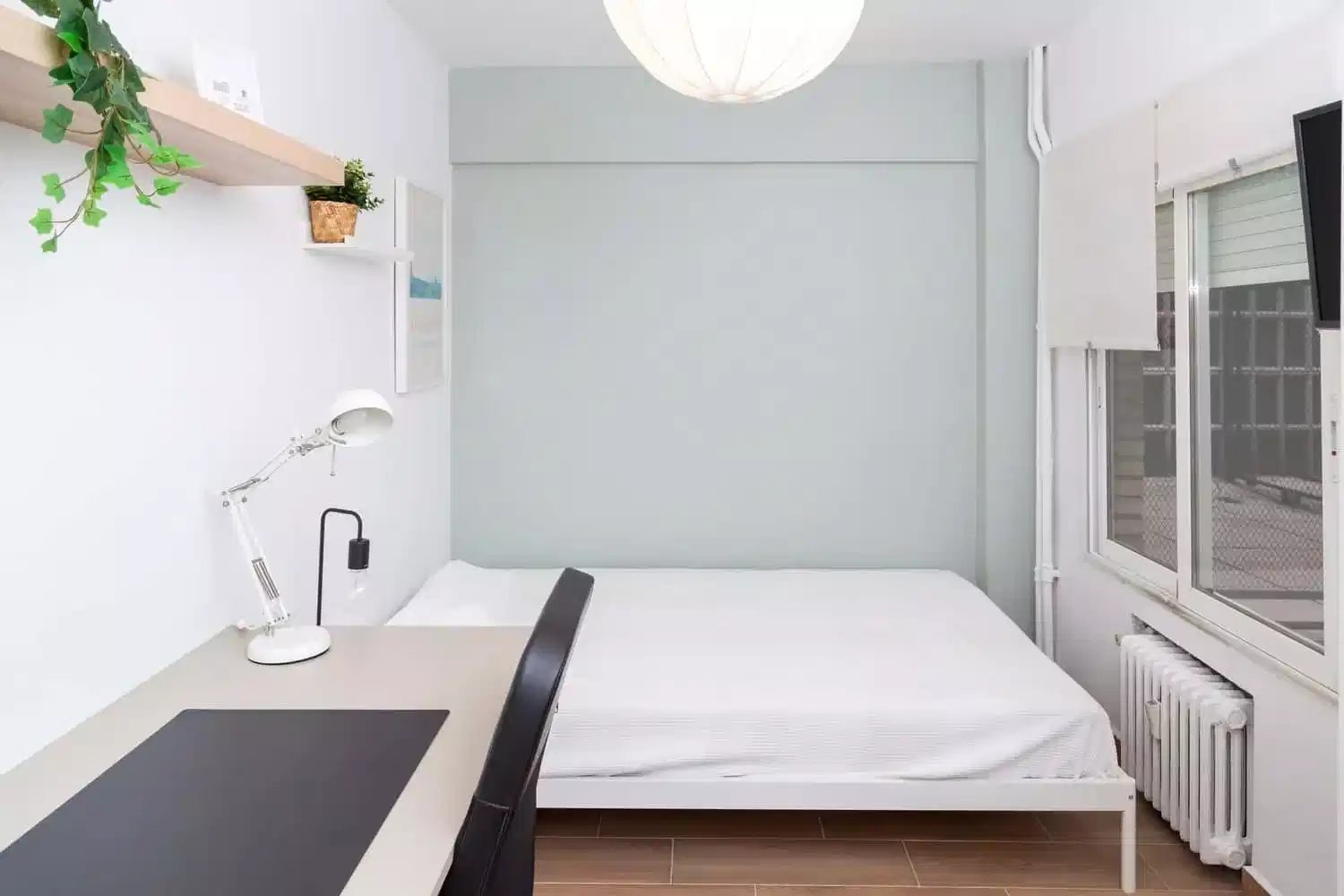
The platform currently lists 5 student properties in Zaragoza. The lowest advertised price is €594 per month (indicative — confirm with the operator). Without specific breakdowns of each listing, we can infer the following general pricing structure based on typical market patterns in the city (note: these are illustrative ranges, not exact figures from the platform):
- Budget range (€400–€550 per month): Shared rooms or older flats in Delicias, La Almozara, or the outer edges of San José. These are rarely represented in a small inventory of 5 properties, but may become available during peak booking periods.
- Mid-range (€550–€700 per month): The starting point of €594 fits here. Properties in this band are likely to be en-suite rooms in shared flats or small studios within a 15-20 minute walk of the campus. Most of the 5 available listings probably fall in this bracket.
- Upper range (€700–€900+ per month): Modern studios or one-bedroom apartments in El Centro or near Plaza San Francisco. Demand is high, and supply is limited.
Because only 5 properties are listed, options are scarce. Students should expect to book early — ideally 4-6 months before the start of the academic year — to secure a place in their preferred area. Prices are always indicative and should be confirmed directly with the operator before signing any contract.
How the Universidad de Zaragoza Maps to Areas
The Universidad de Zaragoza (ranked 638 in global university rankings) is not a single-campus institution. Its main teaching and research activities are concentrated in the following zones:
- Campus Plaza San Francisco: Houses the faculties of Philosophy, Economics, Law, Education, Sciences, and Engineering. This is the largest cluster and the primary destination for most students.
- Campus Río Ebro: Located east of the centre, near the river, it hosts the School of Engineering and Architecture. It is accessible by tram (line L1) and bus from the centre and Delicias.
- Campus de Veterinaria (Actur): Veterinary and agricultural studies are based here, in the Actur district.
- Faculty of Medicine: Located in the Hospital Clínico Universitario area, to the west of the centre.
Given that the majority of students attend Plaza San Francisco, the most logical housing choices are neighbourhoods within walking distance (San José, Miraflores, southern El Centro) or those with good tram/bus connections (Delicias, La Almozara, Actur if your faculty is there). The 5 platform listings are likely concentrated near the main campus, as that is where student housing demand is highest.
Three Common Pitfalls to Avoid
1. Underestimating Utility Costs and Deposit Rules
Many student rentals in Zaragoza are advertised with a monthly rent that excludes utilities (water, electricity, gas, internet). These can add €60–€120 per month, especially in older buildings with poor insulation. Always ask the operator for an estimate of average utility bills. Additionally, Spanish law often requires a deposit of one or two months’ rent, plus a management fee (sometimes one month’s rent). Ensure you understand the total upfront cost before committing. The €594 figure on the platform may not reflect these extras.
2. Signing a Lease Without Checking the Commute Time
Because the Universidad de Zaragoza has multiple campuses, a property that seems close “to the university” on a map might actually be far from your specific faculty. For example, a flat near Plaza del Pilar is within walking distance of some faculties but is a 30-minute walk to the Río Ebro campus. Always verify the address against the location of your classes. If you rely on public transport, check bus/tram schedules (frequencies drop after 10pm) and whether a monthly transport pass is budgeted.
3. Relying Solely on Online Platforms for Viewing
With only 5 properties listed on the platform, virtual tours and photos can be misleading. Refurbished images of “student flats” may not show damp walls, faulty heating, or noisy neighbours. For the 2026-2027 year, consider visiting Zaragoza in person (or asking a trusted contact to view) before signing. If that’s not possible, request a live video call and ask specific questions about the condition of appliances, window insulation, and internet connectivity. Scams involving fake listings are not uncommon; never transfer money without a signed contract and proof of ownership.
Booking Calendar for the 2026-2027 Academic Year
The academic year at Universidad de Zaragoza typically runs from mid-September to mid-June, with exams in January/February and June/July. The following timeline is based on typical booking patterns and should serve as a general guide:
- January – March 2026: Early bird planning. Research neighbourhoods, contact operators, and shortlist properties. Many student housing platforms open bookings for the next academic year during this window. The 5 available listings may be freshened with new inventory.
- April – May 2026: Peak booking period. Supply is highest, but demand also rises. Secure a property by the end of May to avoid the rush. Prices are still at opening levels (starting from €594, indicative — confirm). Be prepared to pay a deposit to hold the room.
- June – July 2026: Late booking. Remaining rooms may be less desirable (higher floors without lifts, smaller rooms). Some operators increase prices during summer. If you haven’t booked by July, expect limited choices.
- August – September 2026: Emergency window. Only a few leftover listings, possibly at inflated rents. Some landlords accept short-term contracts for the first semester, but long-term options are scarce.
Recommendation: Start searching in early March 2026, and aim to sign a contract by mid-May. This gives you time to compare the 5 properties and any new ones that may appear.
Frequently Asked Questions (FAQ)
1. Is €594 per month a realistic budget for a student in Zaragoza?
€594 is the lowest listed price among the 5 current properties, but it is indicative — confirm with the operator. For a single room in a shared flat within a 15-minute walk of the main campus, €594 is reasonable. However, this price likely excludes utilities and may require a deposit of €600–€1,200 upfront. Total monthly costs (rent + utilities + transport + food) for a student typically range from €800 to €1,100. Always verify the all-in cost before budgeting.
2. Which neighbourhood is best for a student who does not own a bike or car?
El Centro or the campus-adjacent San José area. Both offer walkable access to Plaza San Francisco (main campus). The tram line in El Centro connects to most faculties. Avoid Actur unless your faculty is Veterinary, as the bus commute to the main campus is 30+ minutes.
3. Can I find student housing outside the platform’s 5 properties?
Yes. The platform lists only 5 properties, but Zaragoza has many other student flats and residencias through local agencies, Facebook groups, and word-of-mouth. This guide focuses on the platform data, but you are not limited to it. Always compare prices and conditions from multiple sources. Be aware that non-platform listings may not adhere to the same standards of verification.
4. When should I book for the 2027-2028 academic year?
If you are planning for 2027-2028, follow the same calendar but shift it one year forward. Start looking in early 2027, with a target to book by May 2027. The prices and number of listings may change, but the €594 floor is likely to adjust with inflation — expect indicative prices to be slightly higher (possibly €620–€650) for the following year.
Data as of listings available on the independent student-housing platform in early 2026. All prices are indicative — confirm with the operator. Availability and rates may change without notice.
See also: listing details · browse more