Overview of Bremen for Students
Bremen is a mid-sized city in northern Germany with a strong maritime history and a population of about 570,000. The city is home to the Universität Bremen, one of the country’s eleven “University of Excellence” institutions (ranked 530 globally). The university campus is located in the northwestern district of Horn-Lehe, about 4 km from the city centre. Bremen’s student population exceeds 35,000, making it a moderately competitive rental market. Public transport consists of trams and buses operated by BSAG; a semester ticket covers all local travel and regional trains within the state of Bremen.
The only student housing property listed in this directory for Bremen has a starting price of €808 per month (indicative — confirm with the operator). While individual options are limited in this dataset, the city offers a broader private rental market with studios and shared flats (WG) typically ranging from €400 to €900 per month, depending on location and condition. This guide uses the listed property as a baseline and explains how neighbourhoods relate to commuting to Universität Bremen.
Neighbourhoods & Commute Logic
Choosing a neighbourhood depends on your tolerance for travel time, budget, and preferred atmosphere. The following areas are commonly considered by students at Universität Bremen. Travel times are measured from the centre of each district to the university campus using tram or bus.
-
Horn-Lehe (university district) – The campus itself is located here. Many student dorms and some private flats are within walking or cycling distance (10–20 minutes). The area is quiet, with basic shops and a few cafés. Rent tends to be moderate (€500–€750 for a WG room). The listed property starting at €808 may be a larger studio or apartment in this zone.
-
Schwachhausen – An upscale residential area south-east of the campus. It has green spaces (the Bürgerpark) and good tram connections (line 6 and 4) taking about 15 minutes to the university. Rents are higher, often €600–€900 for a room.
-
Findorff – A central district just north-west of the main station. It is popular among students for its lively bars, markets, and direct tram lines (1, 8) to campus (20 minutes). Prices range from €450 to €700 for a shared room.
-
Neustadt – Across the Weser river from the city centre. Known for alternative culture, cheap eateries, and a mix of old and new buildings. Tram lines 4 and 5 reach campus in 25–30 minutes. WG rooms here are often €400–€600.
-
Das Viertel (Ostertor/Steintor) – The core student nightlife area east of the centre. Very vibrant but noisy. Tram line 3 takes about 20 minutes to the university. Rent for a room can be €500–€800.
-
Bremen-Nord (Vegesack, Blumenthal) – Cheaper but farther. Commute by tram or bus can exceed 40 minutes. Entry-level rents can be under €400 per month for a room.
The logic is simple: living closer to campus (Horn-Lehe) minimises travel time but may cost more in rent. Living in Neustadt or Findorff offers a better social life with a slightly longer commute but lower average prices.
Price Bands & Housing Options
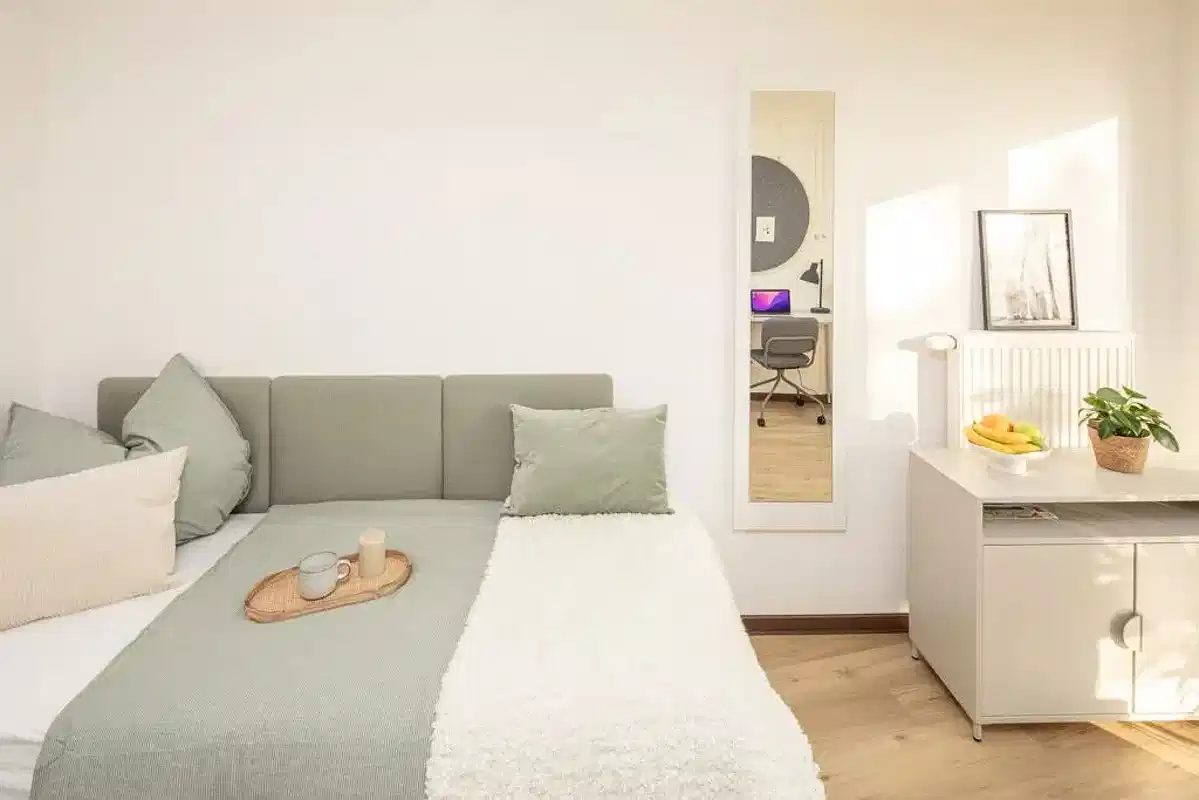
Based on the data available for this platform, there is exactly one student housing listing in Bremen, with a minimum price of €808 per month (indicative — confirm with the operator). This likely represents a self-contained studio or a shared apartment room in a professionally managed residence. For the 2026/2027 academic year, typical price bands in the broader market are:
- WG (shared flat) room in peripheral district – €350–€500 per month
- WG room in central or popular district – €450–€700 per month
- Studio / 1-room apartment (university area) – €650–€950 per month
- Studio / 1-room apartment (central) – €700–€1,100 per month
All figures are indicative — confirm with the operator or landlord before signing a contract. The listed €808 option falls in the upper range for a studio, which may reflect a newer building or inclusive utilities.
How Universität Bremen Maps to Key Areas
The university’s main campus is in the Horn-Lehe district, but several faculties also have locations in the city centre (e.g., the social sciences building near the main station). The vast majority of lectures and labs are on the main campus, so commuting from the centre is straightforward.
- Bus lines 21, 22, 30 and tram lines 1, 4, 6, 8 connect the main station with the campus. A semester ticket (included in the student fee) covers unlimited use.
- Cycling is popular: from the city centre to campus takes about 15–20 minutes on well-maintained bike paths.
- Car use is discouraged due to limited parking on campus.
Students in Horn-Lehe can walk or cycle to any building within 10 minutes. Those in Schwachhausen or Findorff can reach campus in 15–20 minutes by tram. Neustadt and Viertel add another 5–10 minutes of travel.
Three Common Pitfalls
1. Expecting Immediate Vacancy in September
Most rental contracts in Germany start on the 1st or 15th of a month, and student apartments often become available between April and October. Waiting until August to look for a place in September can lead to very limited options. For the 2026/2027 academic year, start searching in early 2026 for autumn move-ins.
2. Underestimating Utility Add-Ons
Many advertised rents are “cold rent” (Kaltmiete) and do not include heating, water, electricity, or internet. These utility charges (Nebenkosten) can add €150–€300 per month. The listed €808 price may or may not already be “warm” (incl. utilities). Always ask for a breakdown. A cheap cold rent can become expensive if utilities are high.
3. Not Registering Your Address on Time
German law requires you to register your residence (Anmeldung) at the local Bürgeramt within 14 days of moving in. Failure to do so can lead to fines and problems opening a bank account or getting health insurance. Make sure your landlord provides a signed rental confirmation (Wohnungsgeberbestätigung) immediately.
Booking Calendar for 2026/2027
The rental season for students follows the academic rhythm. Use this timeline to plan:
- January – March 2026 – Research housing options. Begin contacting private landlords and student housing operators. Some residences open waiting lists a year in advance.
- April – June 2026 – Peak application period for student dorms and the listed property (if managed by a housing company). Submit applications with required documents (proof of enrolment, ID, address of current residence).
- July – August 2026 – Lease signings for October move-in. Rooms in popular districts become scarce. Consider temporary accommodation (hostel, Airbnb) if nothing is secured.
- September – October 2026 – Move-in months. Expect high demand. Visit properties in person (or by video) before paying deposits.
- November 2026 – January 2027 – Off-peak; fewer move-outs but also fewer vacancies. Good time to find a cheaper sublet from a student who leaves for a semester abroad.
The listed property with a starting price of €808 may only be available for specific intake periods (commonly October and April). Confirm exact move-in dates with the operator.
Frequently Asked Questions
Q1: Is €808 per month a normal rent for a student in Bremen?
A1: The €808 figure applies to the single property listed in this directory. It is indicative — confirm with the operator. In the broader market, a shared room costs between €400 and €700, while a private studio typically ranges from €650 to €950. The listed price is at the higher end but may include utilities or be in a central location.
Q2: How far is Universität Bremen from the city centre?
A2: The main campus is about 4 km northwest of the centre. By tram (lines 1, 4, 6, 8) the journey takes 12–20 minutes. By bicycle, around 15 minutes. By car, 10–15 minutes depending on traffic.
Q3: Can I get a room on campus through the listed property?
A3: The only property in this directory is located somewhere in Bremen (exact address is not specified). It may or may not be on campus. Contact the operator for precise location. University-run dorms (Studentenwerk) are separate and cheaper but are not included in this data set.
Q4: When should I pay the deposit for a student flat in Bremen?
A4: Deposits (Kaution) are typically three months’ cold rent and must be paid before you receive keys. Never transfer money without a signed contract and a verified landlord identity. In Germany, the deposit must be held in a separate interest-bearing account (Mietkautionskonto) — the landlord cannot freely spend it.
Data as of April 2025 for the 2026/2027 academic year.
See also: listing details · browse more