Greenville Student Housing: A Practical Decision Guide
Choosing where to live as a student in Greenville, South Carolina, means balancing budget, commute, and lifestyle. This guide uses current platform data to help you compare neighbourhoods, understand price levels, and avoid common mistakes. All prices are indicative – confirm with the operator before signing. Data based on 2026 listings.
Overview of the Greenville Rental Market for Students
Greenville has grown rapidly in recent years, attracting students from Furman University, Bob Jones University, Greenville Technical College, the Clemson University International Center for Automotive Research (CU-ICAR), and other institutions. The student rental market is a mix of purpose-built off-campus housing, apartment complexes, and shared houses.
On our platform, Greenville currently has 7 listed properties, with a starting monthly rent of 689 USD. This is a baseline; actual rents vary widely by location, unit size, and amenities. Because many student-friendly apartments fill up early, planning ahead is essential.
Neighbourhoods by Commute Logic
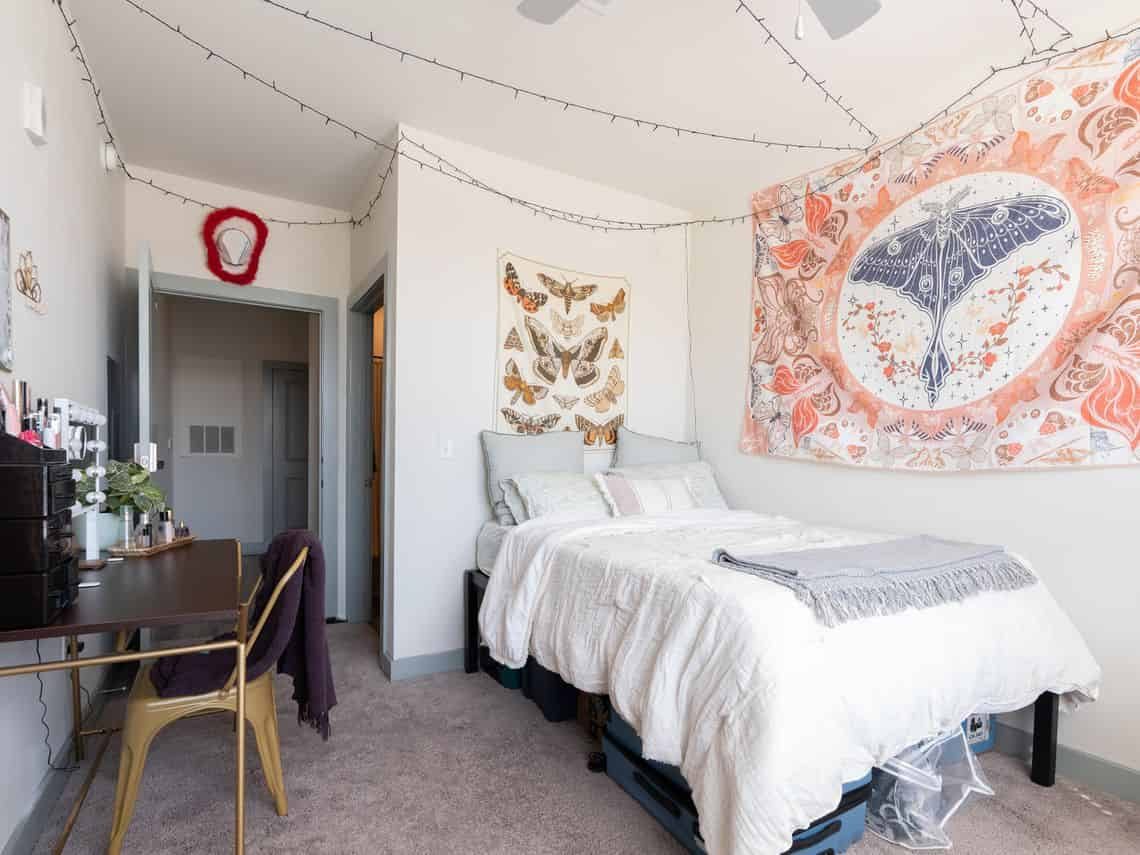
Greenville’s layout – a central downtown core, busy arterials, and quieter suburban pockets – makes commute the primary factor for choosing a neighbourhood. Below are the main zones students consider, organised by how you travel.
1. Downtown (Central Business District & West End)
- Walk score: High. Shops, restaurants, entertainment, and some university shuttle stops are within walking distance.
- Commute: Easy to most universities by bus or car (10–15 min to Furman, 15–20 to Bob Jones). CU-ICAR is about 15 min south via I-85.
- Typical housing: Apartments in mid-rise or converted buildings. Studios and one-bedrooms dominate. Parking can be an extra cost.
- Who it suits: Students who prefer urban living and can afford higher rent for a shorter commute. Good if you don’t own a car.
2. Augusta Road / South Main
- Walk score: Moderate. A corridor of shops, cafes, and bus lines.
- Commute: Direct route to downtown and CU-ICAR. About 10 min to Greenville Tech and 12 min to Furman.
- Typical housing: Duplexes, small apartment complexes, and older houses divided into flats. Prices are often slightly lower than downtown but higher than the outskirts.
- Who it suits: Students at Greenville Tech, CU-ICAR, or anyone looking for a balance between price and convenience.
3. Wade Hampton Boulevard / Eastside
- Walk score: Low. Car or bus needed for most errands.
- Commute: Major arterial connecting downtown to Furman, Bob Jones, and the eastern suburbs. 15–20 min by car to those universities. Bus lines exist but frequency varies.
- Typical housing: Large apartment complexes with pools/gyms, townhouses, and student-specific communities. Many purpose-built student housing complexes are located here.
- Who it suits: Students who prioritise amenities and space over walkability. Common for Furman and Bob Jones students.
4. West Greenville / Village of West Greenville
- Walk score: Low, though the village core has a few shops and breweries.
- Commute: 10–15 min to downtown and Greenville Tech. About 20 min to Furman.
- Typical housing: Revitalising area with older homes converted to rentals, plus a few new apartment buildings. Prices can be affordable, but quality varies.
- Who it suits: Budget-conscious students who don’t mind a longer drive to some campuses and prefer a quieter, more residential feel.
5. Cherrydale / Greenville Tech Area
- Walk score: Low. Car essential.
- Commute: Very close to Greenville Technical College (5 min). About 10 min to downtown.
- Typical housing: Strip-mall adjacent apartments and townhouse complexes. Often the cheapest options in town.
- Who it suits: Greenville Tech students, or anyone who wants the lowest rent and doesn’t need to be near nightlife.
Price Bands and What 689 USD Gets You
From the 7 properties listed on our platform, the lowest rent is 689 USD. In the broader market, one-bedroom apartments in Greenville generally range from about 750 USD to 1,400 USD, depending on neighbourhood and quality. Here is a rough breakdown of what to expect at different price points (all prices indicative – confirm with the operator):
- Under 800 USD (budget tier): Usually a studio or one-bedroom in an older apartment complex, often in areas like Cherrydale or West Greenville. Utilities may not be included. Square footage is typically 450–600 ft². You may have to share laundry.
- 800–1,000 USD (mid-range): Most common for students. A one-bedroom in Wade Hampton or Augusta Road, or a room in a shared house near downtown. Many newer complexes start around 950 USD. Some include water/trash but not electricity.
- 1,000–1,300 USD (premium tier): Newer one-bedroom or two-bedroom apartments in downtown or high-amenity complexes. Often includes gym, pool, and sometimes WiFi. Parking might be extra.
- Above 1,300 USD (luxury): Rare for students but exists in downtown. Think penthouse or large two-bedroom with premium finishes.
Given that only 7 properties are listed on our platform, you likely have fewer options directly through student-focused portals. Many local landlords lease through smaller agencies or platforms like Zillow and Facebook Marketplace. Always cross-check with the operator.
How the Listed Universities Map to Areas
While our platform does not currently list specific university affiliates in Greenville, the city’s major higher education institutions are:
- Furman University: Located northwest of downtown, near the intersection of US-25 and SC-183. Best housing areas: Wade Hampton Boulevard, downtown (if you don’t mind a 12-min drive), and neighbourhoods off Poinsett Highway. Many students live in complexes near the university or in shared houses in the Cherrydale area.
- Bob Jones University: North of downtown along US-29 (Wade Hampton Blvd). Housing similar to Furman: Eastside/Wade Hampton and the area around I-85 exit 42. Some students also live in downtown, about a 15-min drive.
- Greenville Technical College: Southeast of downtown, off South Academy Street. Neighbourhoods: Cherrydale, Augusta Road, and downtown (10 min). The college is close to a major bus route.
- Clemson University International Center for Automotive Research (CU-ICAR): South of downtown, near I-85. Housing: Augusta Road, downtown, or any location near the I-85 corridor. A commute from Wade Hampton would be 20–25 min.
When searching, ask the landlord or property manager which campus is closest. If you are attending multiple institutions (e.g., taking courses at both Greenville Tech and Furman), choose a central location like downtown or Augusta Road.
Three Pitfalls to Avoid in Greenville
1. Underestimating Transportation Needs
Greenville’s public transit (Greenlink) is limited in coverage and frequency, especially on weekends. Unless you live directly downtown or within a mile of your campus, a car is almost necessary. Many student apartment complexes are located on busy roads without sidewalks. Before signing a lease, test the bus route at the time you would actually commute. If you plan to bicycle, note that Greenville is hilly and bike lanes are patchy. A single missed bus can make you late.
2. Overlooking Utility and Parking Costs
The advertised rent often excludes electricity, water, sewage, trash, and internet. In Greenville, electricity bills can spike in summer (air conditioning) and winter (heating). A typical one-bedroom utility add-on is 100–150 USD/month. Parking is another hidden cost: downtown complexes may charge 50–100 USD/month per car, and some student communities assign only one spot. If you have a car, confirm whether parking is included, reserved, or wait-listed.
3. Lease Terms That Don’t Fit the Academic Calendar
Most standard leases run 12 months (August–July). If you are only on campus for 9 months (e.g., August–May), you may pay for empty summer months or struggle to sublet. Some student-specific properties offer 9- or 10-month leases, but they are less common. Look for “student housing” that includes shorter terms. Alternatively, find a roommate who stays over the summer. Breaking a lease in Greenville can cost 2–3 months’ rent plus a penalty.
Booking Calendar – When to Act
Greenville’s student housing market operates on a predictable cycle. Here is the typical timeline:
- October–January (11–8 months before move-in): Early bird phase. Some large complexes offer discounted rates for renewals and early sign-ups. If you know exactly where you will be, you can lock in a lower price. Not all landlords post vacancies this early.
- February–April (7–5 months before): The busiest period. Many students start touring and signing leases for August. The best units in desirable complexes go first. You should have a shortlist by February.
- May–July (4–1 months before): Late stage. Remaining options are limited, and prices may be higher. Sublets sometimes appear as students cancel plans. This is risky for first-year students.
- August (move-in): Very few vacancies remain. Expect competition and higher prices. Some landlords will not show units until July.
Rule of thumb: Start looking in February, sign by April. If you are an international student arriving in late summer, have a temporary accommodation (hotel or Airbnb) for the first week while you tour in person.
Frequently Asked Questions
Q1: Is Greenville safe for students?
Overall, Greenville is considered safe compared to other US cities of similar size. Downtown and the Wade Hampton corridor have low violent crime rates, but property crime (bike theft, package theft) does occur. Always check crime maps for specific addresses, and avoid walking alone late at night in poorly lit areas like the West Greenville industrial zone.
Q2: Do I need a car?
It depends. If you live downtown and attend a downtown-adjacent campus (Greenville Tech or CU-ICAR by bus), you can manage without. For Furman or Bob Jones, a car is strongly recommended because bus routes are indirect and limited after 7 pm. Many students find a car essential for grocery shopping and weekend activities.
Q3: Are utilities usually included in the rent?
Rarely for whole apartments. Some “all-inclusive” student complexes bundle water, electricity, and internet into a flat fee, but you should confirm the cap or limit. In private rentals, you will typically pay separately for electricity and water, while trash/sewer may be included. Always ask for a sample utility bill.
Q4: How can I find roommates in Greenville?
Many students use Facebook groups (e.g., “Greenville Sublets & Roommates”) or campus bulletin boards. Our platform does not currently offer roommate matching. If you sign a lease for a multi-bedroom unit, ensure all tenants are jointly liable – a roommate moving out can leave you responsible for the full rent. Get a written roommate agreement covering shared costs and chore duties.
Data based on 2026 platform listings for Greenville (7 properties, from 689 USD). Prices are indicative; confirm with the operator before committing. Always tour the unit or ask for a virtual walkthrough. Good planning makes your move-in smooth.
See also: listing details · browse more