Montpellier Student Housing Guide: Neighbourhoods, Prices, and Practical Tips
Montpellier is one of France’s most popular student cities, home to over 70,000 students and the historic Université de Montpellier (ranked 430th globally in 2026). The city’s warm Mediterranean climate, compact centre, and lively cultural scene attract domestic and international students alike. As of early 2026, there are 7 student properties listed on the platform, with monthly rents starting from €515 (indicative — confirm with the operator). This guide breaks down the neighbourhood logic by commute, what you can expect for different budgets, how the university maps to housing areas, and three pitfalls to avoid — plus a booking calendar and four common questions.
Understanding Montpellier’s Student Neighbourhoods by Commute
Montpellier’s geography is fairly straightforward: the historic core (Écusson) is ringed by 19th-century boulevards, then more modern residential and commercial districts extend outward. The Université de Montpellier’s main campuses are split between the historic centre (Faculty of Medicine, Law, and Economics) and the Triolet / Saint-Éloi sector to the north-east (Sciences and Engineering). Public transport is dominated by tram lines 1, 2, 3, and 4 plus extensive bus networks. Neighbourhoods fall into three commute zones.
1. Écusson & Antigone (city centre) – walking distance to central faculties
The medieval Écusson is a maze of narrow streets with shops, cafés, and bistros. Many medicine and law lectures are held in the historic medical school (founded 1220) or the law faculty nearby. A student living in Écusson can walk to most central buildings in 5–15 minutes. Antigone, just east of the old town, has modern apartment blocks designed by architect Ricardo Bofill, with broad pedestrian boulevards. Tram line 1 connects Antigone to the main train station (Gare Saint-Roch) and to the Triolet campuses in 10 minutes. Rents here tend to be higher; a studio in Écusson may cost €550–€700 per month (indicative), but the proximity to university, nightlife, and markets makes it popular.
2. Port Marianne & Richter (south-east) – modern, tram-connected
This area was developed for the city’s expansion and is home to the Richter business and technology park, which hosts some university departments and the business school. Tram line 1 runs directly to Place de l’Europe and Port Marianne stations. Commute to the central campus is 15–20 minutes by tram; to Triolet it’s about 25 minutes. The neighbourhood feels newer, with large parks (e.g., Grand Parc Maltempo) and many new student residences. Rents for a studio typically start around €500–€600 (indicative), and some purpose-built student accommodation is located here — including a few of the 7 listed properties.
3. Boutonnet / Beaux-Arts & Fontcarrade (north-west) – closer to sciences campus
These residential areas sit to the north of the centre, near the Faculty of Sciences and the Saint-Éloi hospital complex. Tram line 2 and bus lines serve Boutonnet; the university’s Triolet campus is a 10–15 minute walk or a short tram ride from Beaux-Arts station. This zone is quieter and more affordable, with some shared flats and private studios. A typical studio here might be €480–€550 (indicative — confirm with operator). Students who prefer peace and have classes in the sciences often choose this area.
4. Mosson / Paillade (west) – lower rents, longer commute
The western suburbs are served by tram line 1 and 3, but the journey to the city centre can be 25–35 minutes. Some university sports facilities and a few satellite research centres are located here. Rents are the cheapest in Montpellier — a studio can be as low as €420–€480 (indicative). However, students should factor in the tram pass (around €30 per month for a student subscription). Many of the 7 listed properties are not in this sector; it is more typical for budget-conscious students who are willing to commute.
Price Bands and What You Get for Your Budget
The platform lists 7 student properties across Montpellier, with a starting rent of €515 per month (indicative). While no maximum is given, typical student accommodation in the city ranges from around €420 (shared room or studio in the suburbs) to €750+ (central studio with amenities). Here is a general breakdown based on local market data and the available listings:
-
Under €500 (shared flats, basic studios in outer zones)
Very limited on the platform at this level — only a few listings might dip below €500. These are usually older studios or rooms in shared flats in Mosson or Fontcarrade. Expect a compact space (15–20 m²) with a kitchenette. Utilities (water, electricity, internet) may be separate; confirm with the operator. -
€500–€600 (mainstream studio in good location)
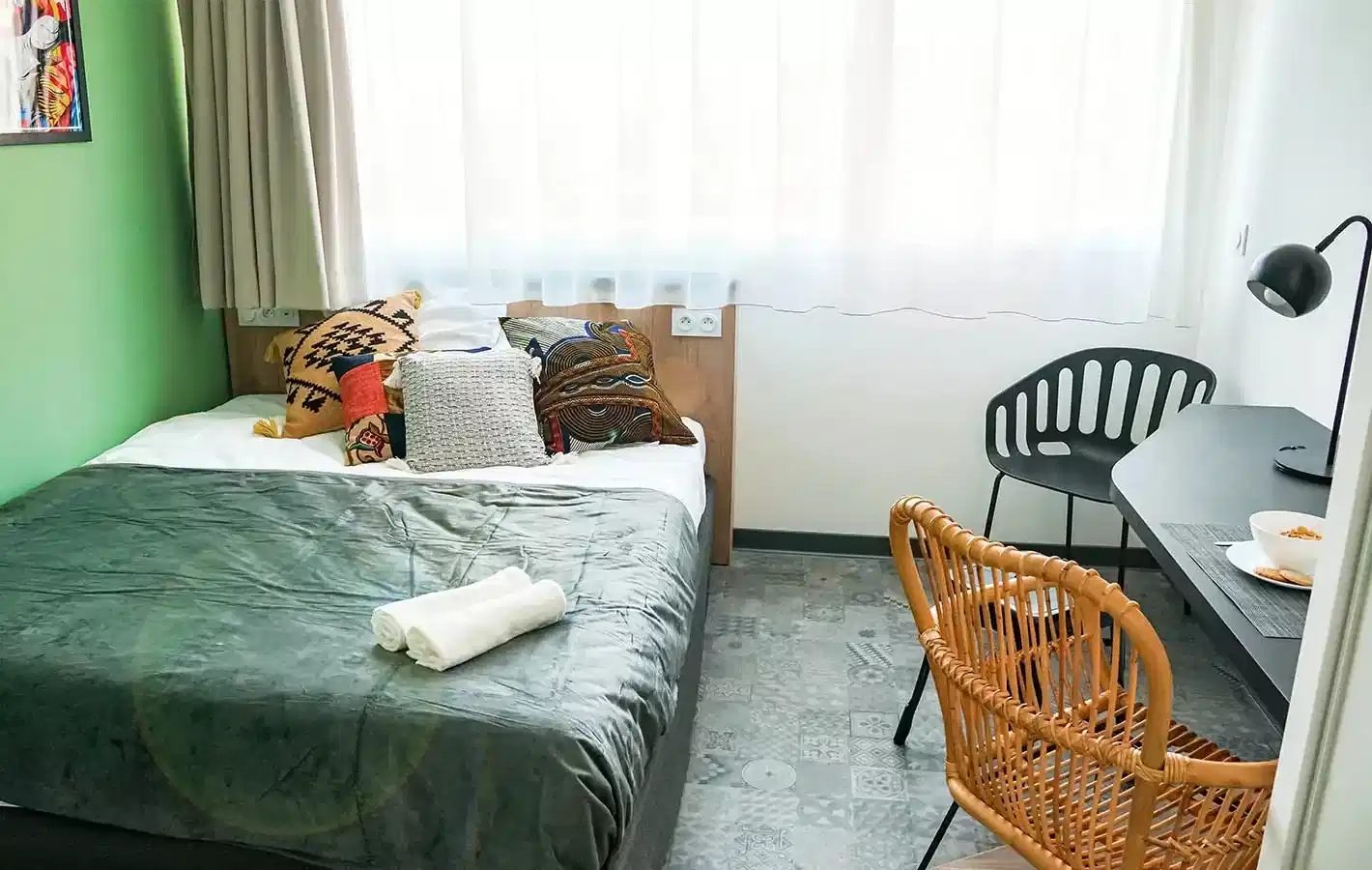
This is the sweet spot for the 7 listed properties. A studio in Port Marianne, Boutonnet, or Antigone often falls here. The unit typically includes a private bath and mini-kitchen, with a single bed or double bed. Some residences include all bills (or at least water and building insurance). Electricity may be extra. For €515 you get a functional space 15–25 m² in a modern residence close to a tram stop. -
€600–€750 (larger studio or one-bed in city centre)
At this level you can find a 25–35 m² apartment in Écusson or near Place de la Comédie. Some properties include a separate bedroom or a balcony. These are often private rentals (not managed by student residence operators). The platform’s listings may include a few such units. Be prepared for higher deposit (often one month’s rent) and the need for a guarantor. -
Above €750 (premium or shared luxury)
Rare for a single student; more common for couples or students who want high-spec finishes (fitness room, rooftop terrace). Not representative of the 7 listings.
All prices are indicative and may change. Always confirm the exact rent, included charges, and deposit amount with the property operator before signing.
How the University Maps to Housing Areas
The Université de Montpellier is not a single campus but a multi-site institution. Its main teaching locations are:
-
Historic centre (Écusson) – Faculty of Medicine, Faculty of Law & Political Science, Faculty of Economics. These buildings are concentrated around the Peyrou promenade and near the medical school on Boulevard Henri IV. Students here should prioritise Écusson, Antigone, or any tram-line 1 stop within 20 minutes walking distance.
-
Triolet / Saint-Éloi (north-east) – Faculty of Sciences (chemistry, physics, biology), Faculty of Engineering (Polytech Montpellier). This is a large campus with modern buildings, located about 20 minutes by tram from the centre (line 1 to Saint-Éloi station). Students in science fields should consider Boutonnet, Beaux-Arts, or the section of Antigone closer to the tram. A bicycle commute is also feasible (15–20 minutes from the centre).
-
Richter (south-east) – Business and management programmes (IAE), some technology departments. Richter is served by tram line 1 to the station “Place de l’Europe”. Living in Port Marianne or Richter itself means a 5-minute walk to class.
-
Other sites (La Paillade, Agropolis) – Some agricultural research labs and sports facilities. These are less central; students assigned there may need a bike or car.
The 7 listed properties are likely spread across Antigone, Port Marianne, Boutonnet, and possibly Richter. The platform’s filter by “near Université de Montpellier” will show units within a reasonable commute. For students who have classes in multiple locations (common in first year), living near a tram line 1 station is the most flexible.
Three Common Pitfalls for Student Renters in Montpellier
1. Underestimating the deposit and guarantor requirements
French law allows landlords to ask for a deposit of up to one month’s rent for unfurnished or two months for furnished. But many student residences also require a guarantor (caution) who earns three times the rent. International students without a French guarantor often resort to private guarantee schemes (e.g., Visale) or pay a higher deposit. Some of the platform’s listed properties may accept a bank guarantee or a French-government-backed guarantee (Action Logement). Always check the guarantee conditions before booking; otherwise you may lose the apartment.
2. Not checking whether utilities are included
Many student residences advertise a monthly rent that includes water, building maintenance, and sometimes garbage collection. However, electricity and internet are often separate. A studio with electric heating can add €40–€80 per month during winter. Similarly, some private landlords exclude all charges, and you will need to set up contracts for electricity, gas, and internet. The listed price of €515 may be “charges comprises” (all inclusive) or “hors charges” (without utilities) — confirm with the operator. A rough rule: if the ad says “charges locatives comprises” it includes water and building fees but not electricity. If it says “tout compris” it usually includes electricity and internet.
3. Overlooking the tram pass and distance to tram stops
Montpellier’s tram system is efficient, but some student residences are located a 15-minute walk from the nearest station. This can become tedious in hot summer months or for late-night study sessions. The student tram pass costs about €30 per month, but if you need to take a bus as well, the combined monthly cost can reach €55. Also, check the frequency: lines 1 and 2 run every 4–6 minutes during peak times, but some bus lines in outer suburbs run every 20–30 minutes. Always google-maps the walk from the property to the nearest tram stop (ideally under 10 minutes) and the total commute to your faculty.
Booking Calendar – When to Start Your Search
-
January – March
Start researching neighbourhoods and understanding the market. If you plan to arrive in September 2026, begin browsing platforms but few properties are available yet. This is a good time to save favourites and read reviews. -
April – May
Many student residences start listing for the new academic year (September move-in). The 7 properties on the platform may become available from mid-April onward. Book a virtual tour if you cannot visit. French academic year begins in September, but some intensive language programmes start in February – check your syllabus. -
June – July
This is the peak booking season for international students. Most listings are posted, and demand is high. Secure a deposit quickly (some ask for a reservation fee of one month’s rent). For September move-in, aim to book by the end of July. If you miss this window, the pickings will be slimmer and rents may be higher. -
August – September
Still possible to find last-minute studios, but competition is fierce. Some students cancel their bookings, so you may find a deal. However, you may have to accept a less desirable location or a higher price. Consider short-term (month-to-month) options if you haven’t secured a place by August. -
October – November
Off-peak. Many residences have vacancies, but these are for immediate move-in (academic year already started). If you are arriving mid-year, this is a good window.
For the 2026 intake, the recommended booking window is May to July, with a focus on properties that include bills and accept international guarantors.
Frequently Asked Questions
Q1: Do I need a French guarantor to rent a student apartment in Montpellier?
A: Many private landlords require a guarantor with a French salary. However, student residences (like the ones likely among the 7 listings) often accept the French state-backed guarantee scheme Visale (free for students) or a deposit from a bank. Always ask the operator if they accept Visale or an international guarantee. Some residences also offer an option to pay the deposit in instalments.
Q2: Is €515 per month a good price for a studio in Montpellier?
A: Yes, it is at the lower end of the market for a private studio. In central neighbourhoods, studios typically range from €550 to €700. At €515, you probably get a compact studio in a residence at a 10–15 minute tram ride from the city centre. Confirm whether that price includes utilities — if it does, it is a very good deal.
Q3: How early should I book if I start in September 2026?
A: Aim to secure a contract by mid-July to have the widest choice. If you book in May or June, you may pay a lower deposit (some operators offer “early bird” reductions, though we do not use such marketing language — just note that earlier bookings may face less competition). Late bookings (August) often result in fewer options.
Q4: Are utilities usually included in student residences?
A: It varies. Many purpose-built student residences (e.g., managed by such operators) include water, heating, and internet in the monthly rent. Private flats rarely do. The listing should clearly state “all bills included” or “partiellement chargés”. When you see €515, ask: “Ce montant inclut-il l’électricité et l’internet?” If not, budget an extra €70–€100 per month.
Price and availability data as of early 2026, indicative – confirm with the operator. The information in this guide is based on market conditions at that time and may change for the 2026/27 academic year.
See also: listing details · browse more