Introduction
Finding accommodation in Paris as an international student can be challenging. The city has a tight rental market, especially near major universities. This guide uses data from an independent student-housing platform to help you evaluate neighbourhoods by commute, understand price bands, map universities to areas, avoid common pitfalls, and plan your booking timeline. All prices are indicative — confirm with the operator. The data reflects 27 available properties with a minimum weekly rent of €365 (EUR). The guide is written for the 2026–2027 academic year.
Neighbourhood Logic by Commute
Paris is divided into 20 arrondissements (districts). Student housing is concentrated in central and southern arrondissements, but options also exist in neighbouring communes. Commute time to your campus should drive your search.
Central Arrondissements (1st–7th)
These are the most convenient but also the most expensive. The 5th, 6th, and 7th arrondissements house many university buildings, including parts of Sorbonne University, PSL University, and Université Paris Cité. Live here if you want a walkable commute (10–25 minutes on foot). Buses and metro lines 4, 7, and 10 serve these areas well. Prices in this zone typically exceed €600 per week, but some studios near the Jardin du Luxembourg might be listed around €450–€550.
Left Bank Student Belt (13th–15th)
The 13th, 14th, and 15th arrondissements offer a balance between cost and proximity. Many students choose the 14th (around Montparnasse) for its good metro connections (lines 4, 6, 13) to the Latin Quarter. The 13th has a large Asian quarter and newer apartment blocks; rents here are slightly lower (€350–€450 per week). Commute to most universities is 20–35 minutes by metro. The 15th is more residential and family-oriented, with quieter streets and good links to the 6th.
Outer Arrondissements and Suburbs (18th–20th and beyond)
The 18th (Montmartre), 19th, and 20th arrondissements are less expensive but require longer commutes (30–50 minutes). They have lively neighbourhoods, but some areas may feel less safe at night. For universities like Sciences Po (located in the 7th and 6th), a commute from the 19th can take 40 minutes by metro (line 7). Suburbs such as Boulogne-Billancourt or Saint-Denis (near Paris VIII) are more affordable but check the RER or train schedules.
Commute Time Rule of Thumb
Use the RATP app (no website promoted here) to calculate door-to-door time. A 30-minute metro ride is common; anything over 45 minutes should be justified by significantly lower rent. Many platform listings include a “distance to” feature to check specific universities.
Price Bands from the Given Data
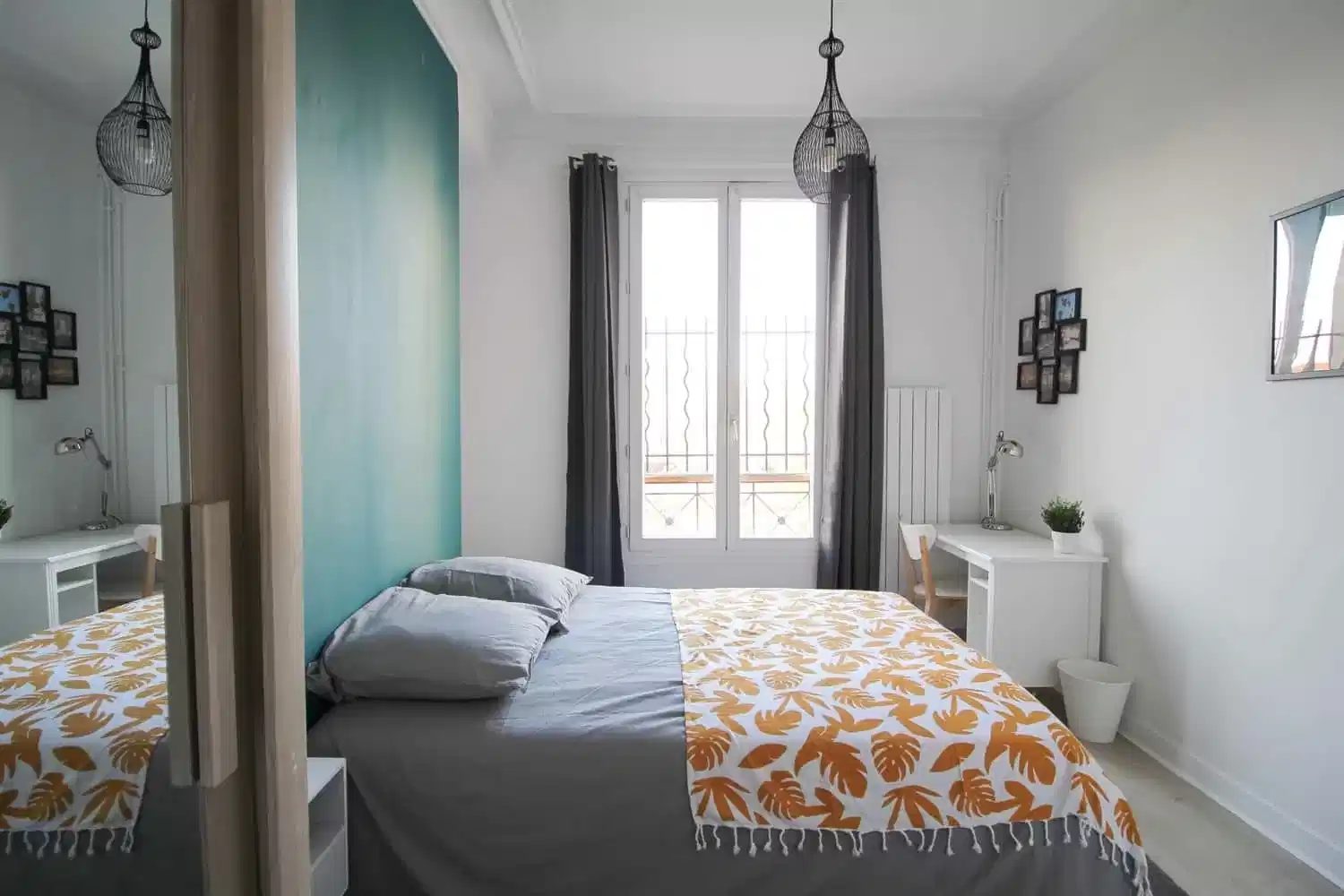
The platform shows 27 properties in Paris, with a minimum weekly rent of €365 (EUR). Since all prices are indicative, actual rates may vary by season, deposit requirements, and inclusions (utilities, internet). Here is a realistic breakdown of price bands based on typical listings:
- Entry level (€365–€450 per week): Approximately 10–12 of the 27 properties fall here. These are often small studios or shared flats (colocations) in outer arrondissements like the 13th, 19th, or 20th. Some may be private rooms in a larger apartment with shared kitchen and bathroom. Expect a commute of 30–50 minutes.
- Mid-range (€450–€600 per week): About 8–10 properties. Typically located in the 14th, 15th, or 18th arrondissements. These may be modern studios with a kitchenette and private bathroom. Commute time to central campuses is 20–35 minutes.
- Premium (€600–€800 per week): 3–4 properties. Usually in the 5th, 6th, or 7th arrondissements, or within walking distance of the Quartier Latin. These could be larger studios or one-bedroom flats with higher finishes.
- Luxury (above €800 per week): Very few (1–2) properties. Likely full apartments for couples or students with higher budgets. Often in the most central locations.
Keep in mind that the minimum price of €365 is only an entry point; most acceptable housing will cost €450 or more per week. Always check whether the listed price includes charges for water, electricity, heating, and internet. If not, budget an extra €50–€100 per week for utilities.
How the Listed Universities Map to Areas
The data includes five prominent institutions. Use the table below as a narrative guide (no markdown tables are used, so we describe in text).
PSL University (QS rank 28)
PSL (Paris Sciences et Lettres) is a collegiate university spread across several sites in the 5th, 6th, and 14th arrondissements. The main campus is near the Jardin du Luxembourg (6th). Students often live in the 5th, 6th, or 14th. Commuting from the 13th or 15th is also convenient (20–30 minutes by metro).
Sorbonne University (merged from Paris IV & UPMC, rank 72)
Sorbonne’s humanities campus is in the historic Sorbonne building (5th arrondissement), while science and medicine campuses are in the 5th/6th (Jussieu) and the 13th (Pitié-Salpêtrière). Many students live in the 5th, 13th, or 14th. The 13th is especially popular for science students because of the direct metro line 7 to Jussieu.
Université Paris 1 Panthéon-Sorbonne (rank 257)
Paris 1 is located in the 5th arrondissement (Place du Panthéon) and also has sites in the 1st, 6th, and 13th. Most students live in the 5th, 6th, or 13th arrondissements. The 14th is a good backup with lower rent.
Université Paris Cité (rank 300)
This university has campuses in the 6th (Médicis), 13th (Grands Moulins), and 5th. The 13th arrondissement is a natural choice. Many international students prefer this area for its affordable studios and easy access to the university library.
Sciences Po Paris (rank 367)
Sciences Po’s main campus is in the 7th arrondissement (Saint-Germain-des-Prés), with a second site in the 6th. Students often live in the 6th, 7th, or 15th arrondissements. The 8th and 16th are also possible but more expensive.
If you are not yet confirmed at a specific university, prioritize the areas around the Latin Quarter (5th–6th) as they are centrally located and well-served by metro.
3 Pitfalls to Avoid
Pitfall 1: Verbal Contracts and Scams
Many private landlords (especially on online platforms) offer “special deals” without a formal lease. In France, a written lease (bail) is mandatory for any stay longer than 30 days. Always insist on a signed contrat de location with an inventory (état des lieux). Never pay a deposit before viewing the property in person or via video call. The platform itself vets listings, but always verify the landlord’s identity.
Pitfall 2: Deposit and Agency Fees
French law limits deposit to one month’s rent (for unfurnished) or two months (for furnished). Some agencies charge additional fees (frais d’agence) that can total 8–12% of annual rent. Ask explicitly: “Y a-t-il des frais d’agence ?” If you rent through a private landlord, there should be no agency fee. The platform may also charge a booking fee; check the terms.
Pitfall 3: Utilities and Charges Included?
Many advertised rents exclude electricity, gas, water, and internet. In winter, electric heating can add €80–€150 per month. Confirm whether the rent includes “charges comprises” (utilities included) or “hors charges” (extra). Ask for an estimate of average monthly charges. Also check if the property has a mandatory home insurance (assurance habitation) — you will need to provide proof.
Booking Calendar for 2026–2027
Start your search early. Here is a typical timeline for the academic year starting September 2026.
- December 2025 – January 2026: Monitor the platform to see which properties are already open for 2026–2027 bookings. Some early-release rooms appear in January. Create a shortlist of 5–10 properties in your preferred neighbourhoods.
- February – March 2026: Most Paris student housing opens for applications. Prices tend to be lower at this stage. Submit your application and pay the holding deposit (if required). Many platform listings require a booking request a few months before move-in.
- April – May 2026: Peak booking period. If you have not secured a place yet, this is the time to act. Expect competition for the cheapest studios (€400–€450/week). Consider expanding your search to the 13th, 14th, or 19th arrondissements.
- June – July 2026: Last-minute options: some properties become available due to cancellations. However, inventory will be lower, and prices may be slightly higher. Be flexible with move-in date (e.g., August 15th) to secure a lease.
- August – September 2026: Move-in period. Inspect the apartment, sign the lease, and set up utilities. Note that many French landlords require a guarantor (a French resident or a bank guarantee programme). International students can use services like Garantme or Visale (no specific brand promoted); check with the platform if they facilitate this.
If you plan to study for a full year (September 2026 to June 2027), consider a lease of 10–12 months. Some properties offer 6-month contracts, which are sometimes easier to secure.
FAQ
1. When should I start looking for housing in Paris for the 2026–2027 academic year?
Start browsing in December 2025 or January 2026. The majority of bookings open in February–April. Waiting until June or July will limit your choices, especially for properties near the central universities.
2. Do I need a French guarantor to rent a student flat?
Most private landlords require a guarantor who lives in France and earns at least three times the monthly rent. International students without a local guarantor can use state-guaranteed schemes (e.g., Visale) or private insurance (e.g., Garantme). Many platform listings accept these alternatives. Always confirm with the operator before booking.
3. Are utilities included in the listed weekly rent?
Not always. The platform shows the base rent. Before you book, check the property details for “charges comprises” (utilities included) or ask the operator. Typically, water and building maintenance are included, while electricity and internet are extra. Budget an additional €40–€100 per week for these costs.
4. Can I book a room without visiting in person?
Yes, many platform listings offer virtual tours and verified photos. However, we recommend at least one live video call with the landlord or property manager. Ask to see the kitchen, bathroom, and building entrance. Never pay the full amount upfront; use the platform’s secure payment system.
Data date: June 2025 (indicative for 2026–2027 academic year). Prices are as listed on the platform and may change. Always confirm with the operator.
See also: listing details · browse more